

The British downstairs loo—often referred to affectionately as the cloakroom—is a brilliantly peculiar space. Tucked under stairs, squeezed into old coal holes, or carved out of narrow hallways, these miniature rooms are frequently the smallest in our homes. Yet, they offer the greatest opportunity for design bravery. Because you only spend a few minutes at a time in this space, you can afford to lean heavily into strong patterns, rich colours, and traditional details that might feel overwhelming if applied to a main living room or master bedroom.
Approaching the design of a tiny cloakroom requires a balance of strict practicality and unapologetic character. When we look to traditional English interiors, we find a tried-and-tested formula that works exceptionally well in tight quarters: architectural wall panelling, heritage colour palettes, and classic brassware. Whether you live in a Victorian terrace, a 1930s semi, or a modern new build, introducing period-inspired details to your downstairs loo brings a sense of permanence and charm to your home. Let us look at how to make a considered impact in the smallest room of the house.
Crafting the Quintessentially English Downstairs Loo in Miniature
Establishing a traditional English aesthetic in a micro-space begins with architectural structure. In many small UK homes, the downstairs loo is a windowless box lacking any inherent character. By introducing half-wall panelling—such as classic tongue-and-groove or more formal beadboard—you instantly ground the room and provide a hardwearing surface that protects against scuffs in tight quarters. Capping this with a wooden dado rail not only finishes the look but creates a natural dividing line for contrasting paint or wallpaper above.
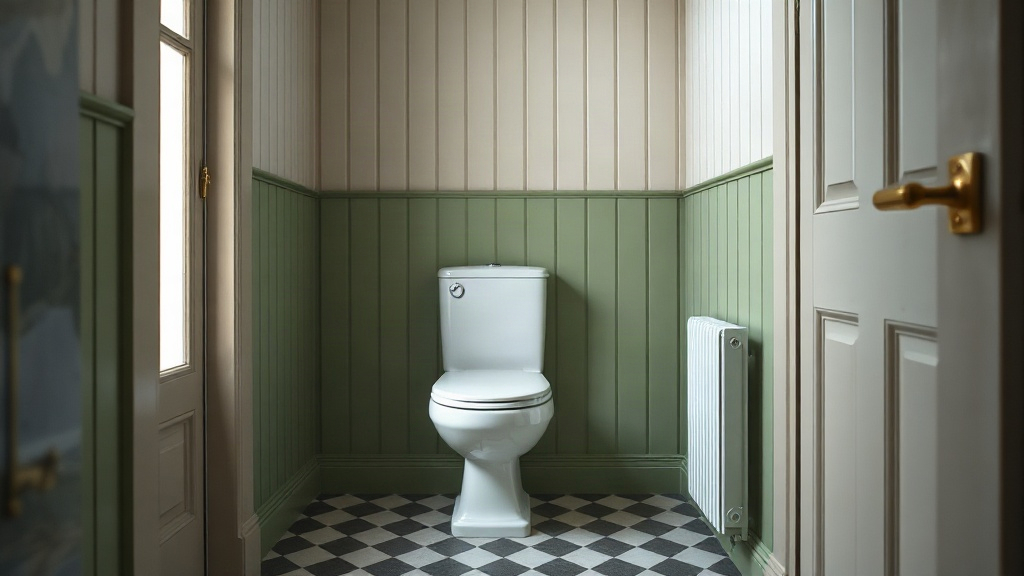
Flooring plays a crucial role in setting the traditional tone, and a classic checkerboard pattern remains a steadfast favourite. You do not necessarily need to invest in heavy, expensive ceramic or porcelain tiles, which can be tricky to cut around awkward pipework in a tiny room. Luxury vinyl tiles (LVT) from brands like Amtico or Karndean offer incredibly realistic stone and ceramic finishes, providing a warmer underfoot feel and a much simpler installation process for the average DIYer or local fitter.
When planning the layout, symmetry is your friend, even if the footprint is awkward. If your space is tucked beneath a staircase, position the WC under the lowest point of the slope where standing height is not required, leaving the taller section for your basin and mirror. Keep sightlines as clear as possible when the door opens; ideally, the first thing you want to see is a beautifully styled washstand and a glowing wall light, rather than the toilet bowl.
Embracing Heritage Hues and Tactile Textures
The cloakroom is the one room where you can confidently ignore the old rule that small spaces must be painted brilliant white to feel larger. In fact, embracing dark, heritage hues can blur the boundaries of the room, making the walls recede and creating a cosy, jewel-box effect. Deep greens, inky blues, and rich burgundies are incredibly forgiving in windowless spaces, especially when applied across the skirting boards, panelling, and even the ceiling for a fully colour-drenched look.
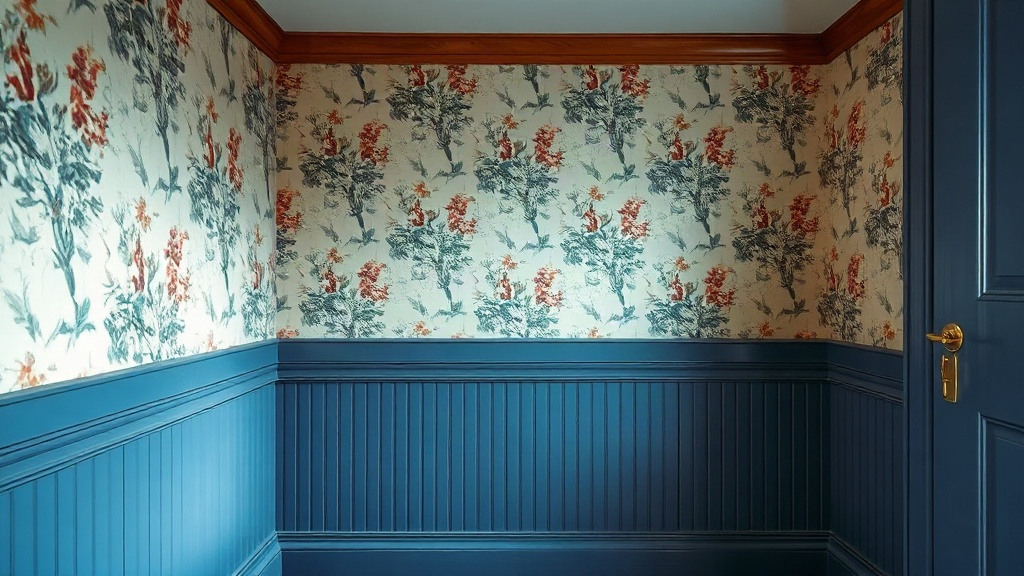
Pairing a robust paint colour on the lower woodwork with a highly decorative wallpaper above the dado rail is a hallmark of classic English interior design. Botanical prints, trailing florals, or intricate damasks work beautifully here. Because the square footage of the upper wall is so small, you can often afford to purchase just a couple of rolls of premium wallpaper from heritage brands like Morris & Co or Cole & Son without breaking the bank, giving the room a highly bespoke finish.
| Design Scheme | Paint Match (Lower Panelling) | Wallpaper Pairing (Upper Wall) | Recommended Brassware |
|---|---|---|---|
| The Victorian Botanist | Farrow & Ball ‘Green Smoke’ (Estate Eggshell) | Morris & Co ‘Willow Boughs’ or similar trailing leaf | Unlacquered Brass |
| The Moody Manor | Little Greene ‘Hicks’ Blue’ (Intelligent Satin) | Cole & Son ‘Woods’ or a dark, metallic damask | Polished Nickel |
| The Country Cottage | Dulux Heritage ‘Florentine Red’ (Eggshell) | A soft, neutral ticking stripe or vintage floral | Antique Bronze |
| The Classic Neutral | Farrow & Ball ‘Drop Cloth’ (Modern Eggshell) | Subtle plaster-effect wallpaper or chalky matt paint | Brushed Brass |
To stop the room feeling flat, introduce contrasting tactile finishes. If your walls feature a matt chalky paint, consider a glossy glazed tile for the splashback behind the basin. Bring in warmth through natural materials, such as a woven wicker basket for storing spare loo rolls, or a solid oak toilet seat. These subtle variations in texture prevent the space from feeling like a museum piece, ensuring it remains comfortable and inviting for daily use.
Curating Traditional Fixtures and UK Finds
Sourcing the right sanitaryware is critical when space is at a premium, but compact dimensions do not mean you have to compromise on period styling. For a truly authentic look, consider a high-level or low-level toilet with an exposed flush pipe and ceramic pull chain. Brands like Burlington and Victorian Plumbing offer excellent slimline versions of these classic designs, measuring just 400mm to 500mm wide, specifically engineered to fit into modern British cloakrooms while maintaining their historical proportions.
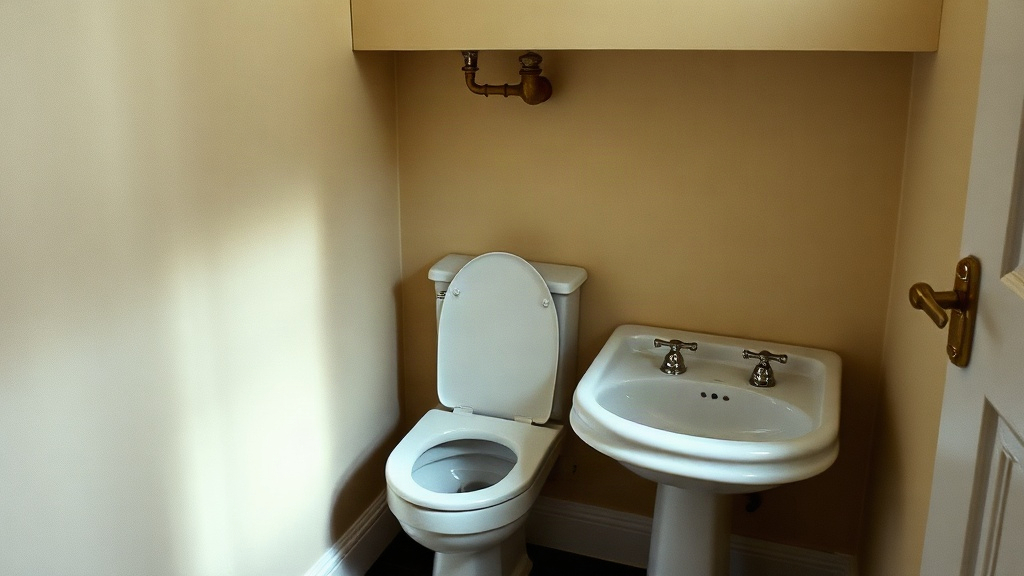
💡 Verity’s Styling Secret: When working with exposed pipework on traditional washstands or high-level toilets, never settle for standard modern chrome if you want a heritage feel. Ask your plumber for unlacquered brass pipes and fittings. They cost a fraction more upfront but will tarnish naturally over the months, giving your downstairs loo an authentic, aged patina that looks incredibly expensive.
The basin is often the focal point of the downstairs loo, and a traditional two-legged washstand with exposed pipework feels much lighter than a bulky vanity unit. If your room is exceptionally narrow, a wall-hung corner basin is a brilliant space-saver. Pair these with classic crosshead taps; unlacquered brass is currently highly sought after for its ability to develop a beautiful, dull patina over time, though polished nickel offers a slightly smarter, silver-toned alternative that requires less upkeep.
When shopping for fixtures, the UK high street and online retailers offer brilliant options across all budgets. While John Lewis and specialized bathroom showrooms are excellent for investment pieces, you can often find fantastic traditional-style brassware and ceramic basins at B&Q or Dunelm. For a truly unique space, scour local architectural salvage yards for reclaimed brackets, antique brass taps, or vintage towel rails that bring genuine history into your newly designed cloakroom.
The Art of Accessorising: Adding Warmth and Personality
Lighting is frequently an afterthought in small bathrooms, usually relegated to a single, glaring overhead spotlight. To achieve a softer, more traditional atmosphere, rely on wall sconces placed on either side of the mirror. Fittings with fluted glass shades or antique brass backplates cast a flattering, diffused glow. If hardwiring new wall lights is out of the budget, consider rechargeable LED bulbs fitted into vintage sconces, or simply swap your overhead pendant for a classic glass lantern.
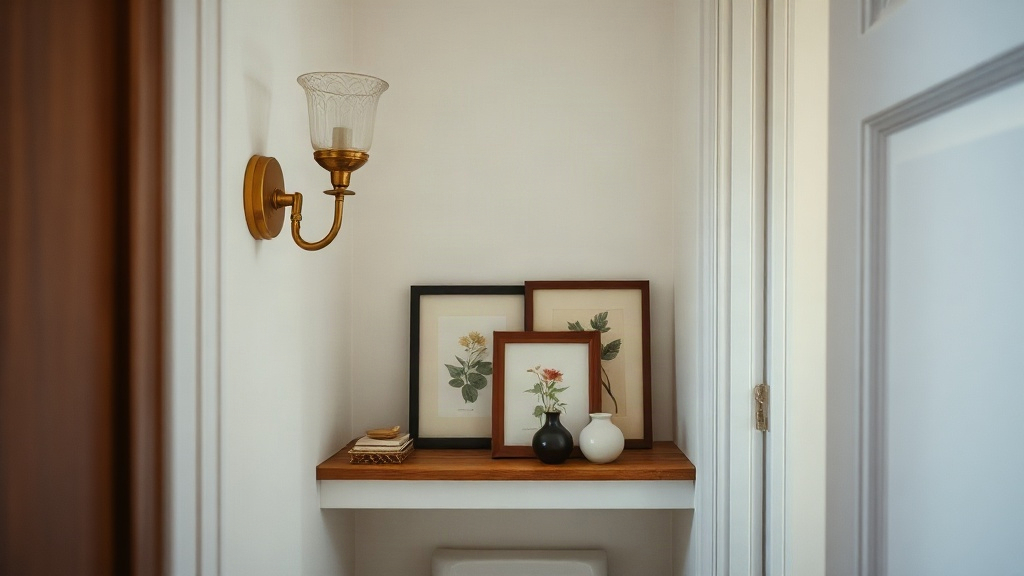
Art and mirrors are essential for breaking up the wall space and adding character. A vintage mirror with heavily foxed glass or an ornate gilt frame instantly makes the room feel established. Do not be afraid to hang artwork in the downstairs loo; it is a wonderful place to display a gallery wall of small, quirky finds. Think framed botanical illustrations, architectural sketches, or even a collection of vintage postcards sourced from local antique fairs.
The finishing touches are what transform a functional toilet into a considered room. Swap out standard chrome hardware for a traditional wooden loo seat in mahogany or oak. Install a classic brass toilet roll holder and a matching towel ring. Finally, dress the space with soft, high-quality cotton hand towels and a small ceramic bud vase on the windowsill or basin edge, filled with a few stems of dried eucalyptus or seasonal garden clippings.
Frequently Asked Questions
How do I make a small downstairs loo look bigger?
Rather than trying to make a tiny windowless room look massive, focus on making it look intentional. Using a single, continuous colour across the walls, ceiling, and woodwork blurs the sharp edges of the room, creating an illusion of depth. Wall-hung basins and toilets also free up floor space, which tricks the eye into perceiving a larger footprint.
What is the best flooring for a tiny cloakroom?
Luxury vinyl tile (LVT) is highly recommended for small UK cloakrooms. It is water-resistant, incredibly durable, and much thinner than traditional ceramic tiles, meaning you rarely have to shave down the bottom of the door to make it fit. It also comes in brilliant traditional patterns, including classic Victorian checkerboard and parquet wood effects.
Can I use dark paint in a windowless downstairs loo?
Absolutely. Windowless rooms lack natural light, so painting them white often results in a cold, dingy space rather than a bright one. Dark colours like navy blue, forest green, or deep plum absorb shadows and create a rich, moody atmosphere. Just ensure you have good quality, warm artificial lighting to balance the dark walls.