

Embrace the timeless warmth and organic charm of a rustic wood kitchen island as the true anchor of your home. Whether your aesthetic leans toward modern farmhouse, French country, or transitional rustic, integrating distressed timber and rich grains instantly grounds the entire room in sophisticated comfort.
Explore these 25 expertly curated design ideas spanning spatial layouts, architectural built-ins, tactile material pairings, layered lighting, statement seating, and artisanal styling touches to elevate your kitchen.
Anchor an Open-Concept Layout with a Dual-Sided Reclaimed Pine Island
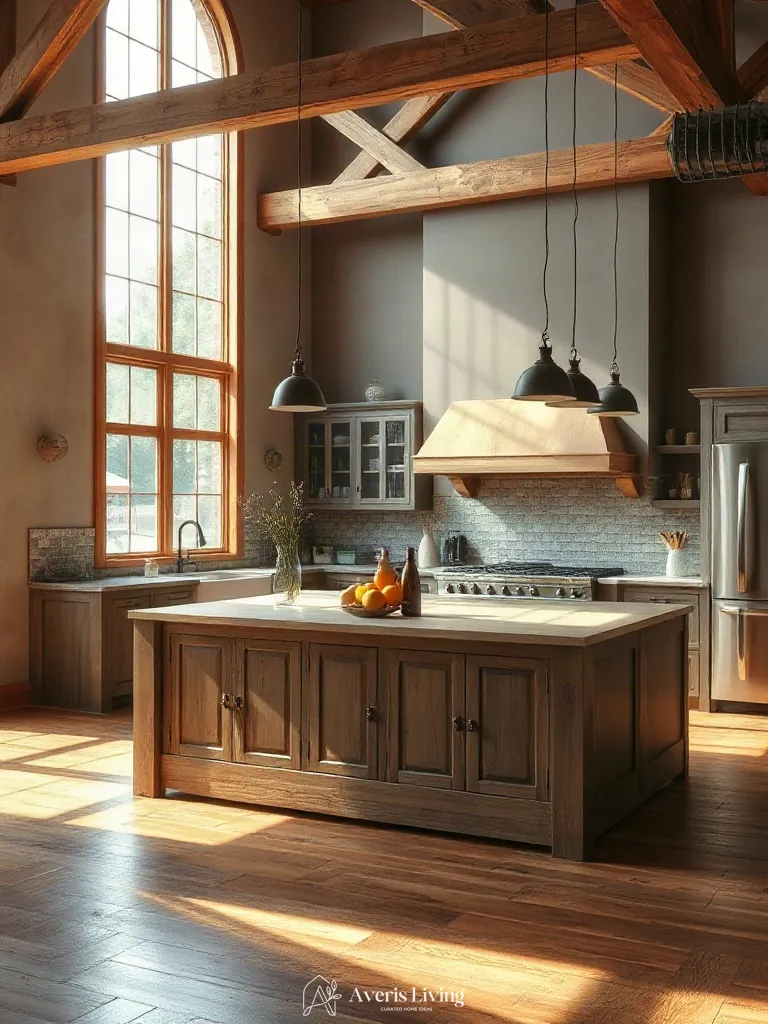
In sprawling open-concept floor plans, defining distinct functional zones without erecting physical walls is essential. An oversized **rustic wood kitchen island** acts as a stunning architectural anchor, naturally drawing the eye while establishing an effortless traffic flow. Positioned centrally, it bridges the gap between culinary preparation and social entertaining.
Crafting this focal point from weathered, salvaged timber infuses the space with historic charm and organic warmth. Pair the substantial base with a honed soapstone countertop and matte black hardware to balance the raw texture with refined, modern durability.
Define Walkways with a Low-Pile Vintage Runner Beside the Island
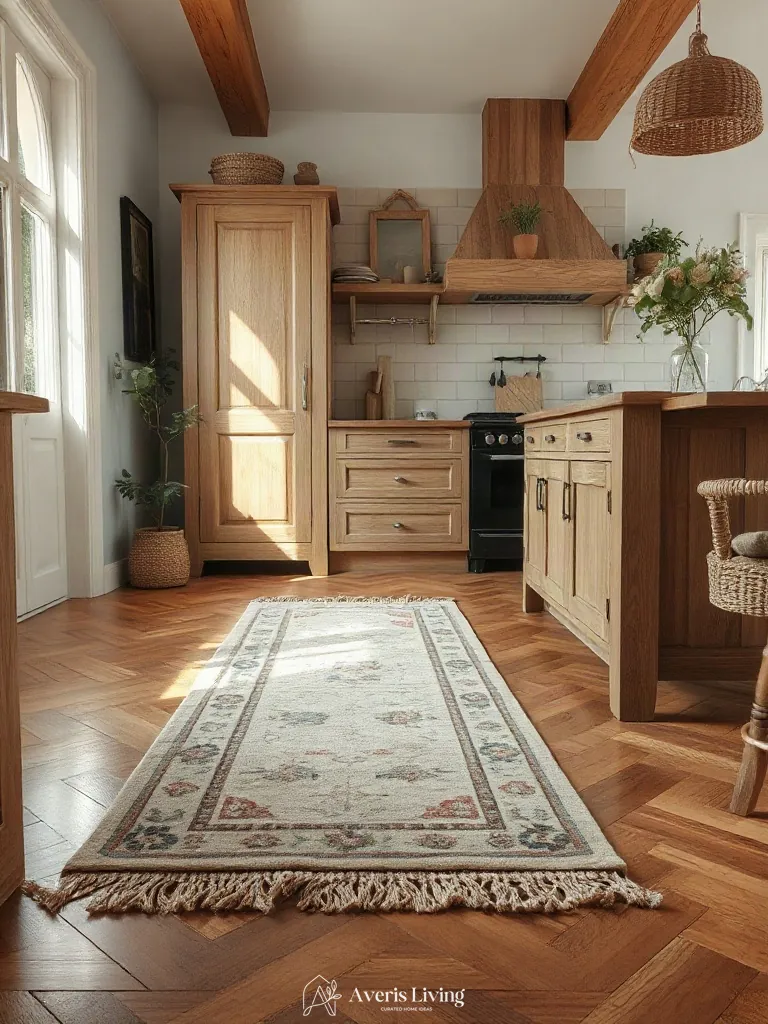
Introduce warmth and texture to hard tile or hardwood floors by anchoring your rustic wood kitchen island with a low-pile vintage runner. The faded motifs and rich, muted tones of an antique Oushak or Persian rug instantly soften the architectural weight of the cabinetry, creating a cozy and inviting culinary workspace.
Beyond aesthetics, this textile layer expertly demarcates the perimeter pathway, guiding natural traffic flow around the cooking zone. Opt for a durable wool or washable synthetic blend to effortlessly withstand high-traffic spills while protecting your flooring from daily wear and tear.
Integrate a Counter-Height Floating Wood Breakfast Bar Extension
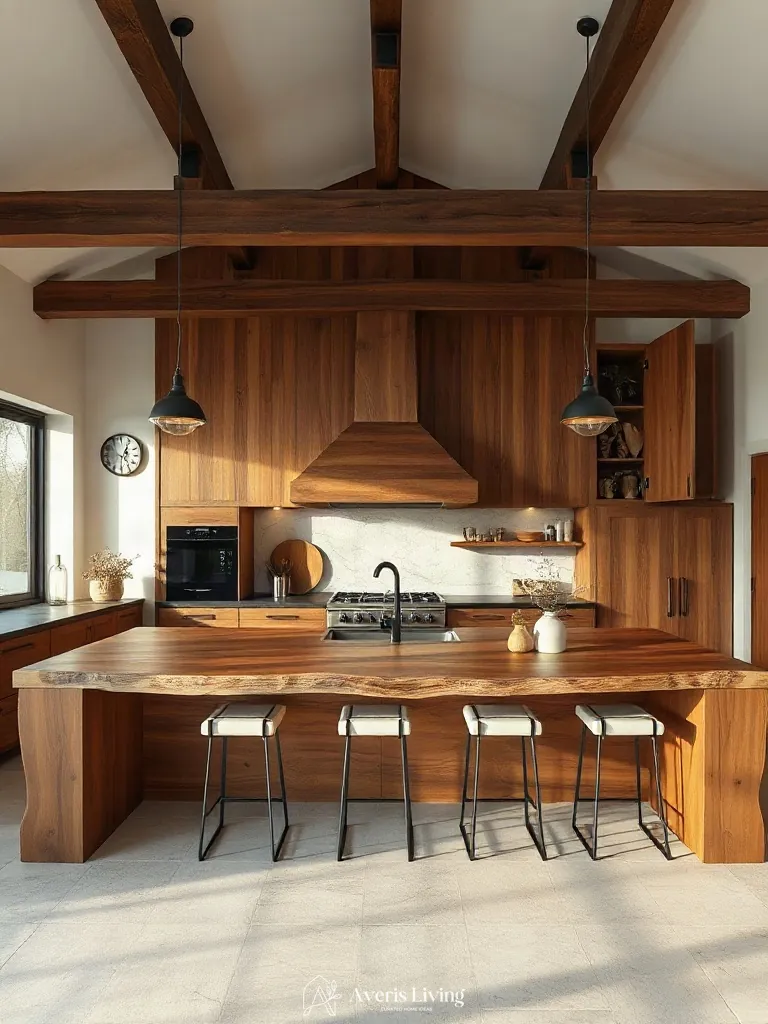
Cantilevering a raw-edge timber slab off your rustic wood kitchen island instantly introduces organic warmth and multi-level functionality. This clever architectural extension creates a seamless transition between the active prep zone and a casual dining spot.
To achieve this designer look, anchor a thick slab of live-edge walnut or white oak with heavy-duty concealed steel brackets. Finish the wood with a matte, water-resistant polyurethane to highlight natural grain patterns while protecting against daily spills.
Optimize Vertical Clearance with Open Ceiling Beams Above the Island
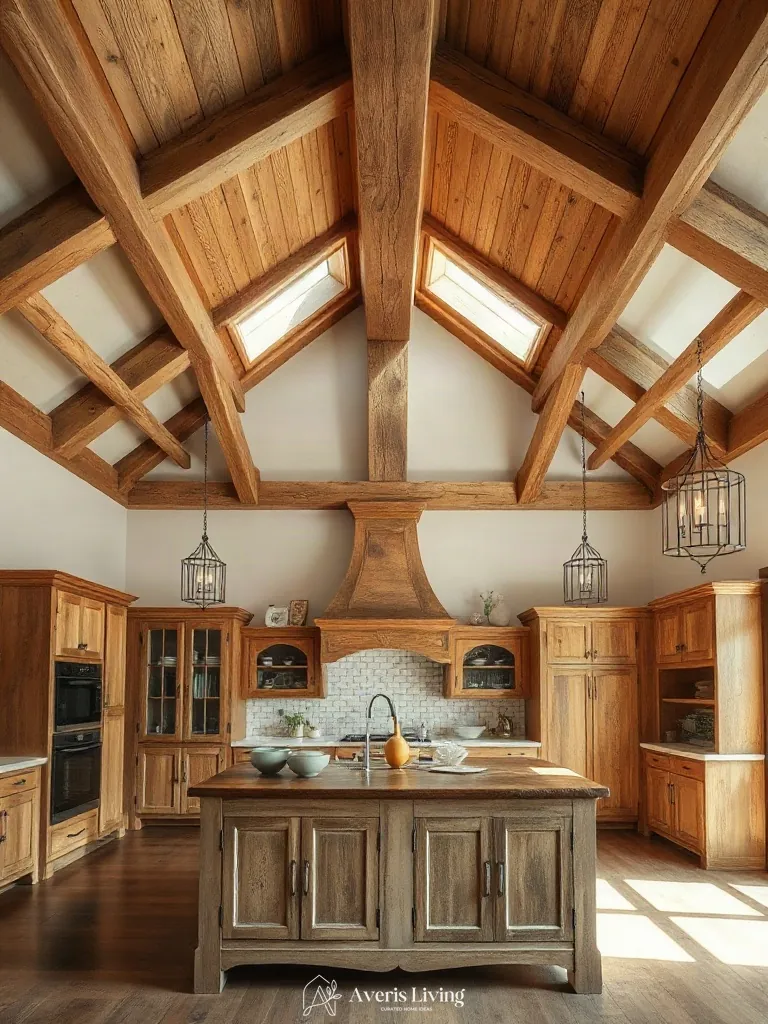
Marrying substantial lower cabinetry with architectural overhead framing creates magnificent visual equilibrium in large cooking spaces. Suspending heavy timber beams directly above a rustic wood kitchen island draws the gaze upward, instantly softening the imposing weight of heavy lower furniture and elevating the room’s overall volume.
Opt for reclaimed oak or hand-hewn cedar beams that echo the grain and tone of your base cabinetry. Leaving the wood in a natural matte finish enhances organic texture, while keeping the surrounding ceiling drywall a crisp, reflective white ensures the overhead framing feels intentionally anchored rather than oppressive.
Frame the Rustic Oak Island with Floor-to-Ceiling Shaker Wall Paneling
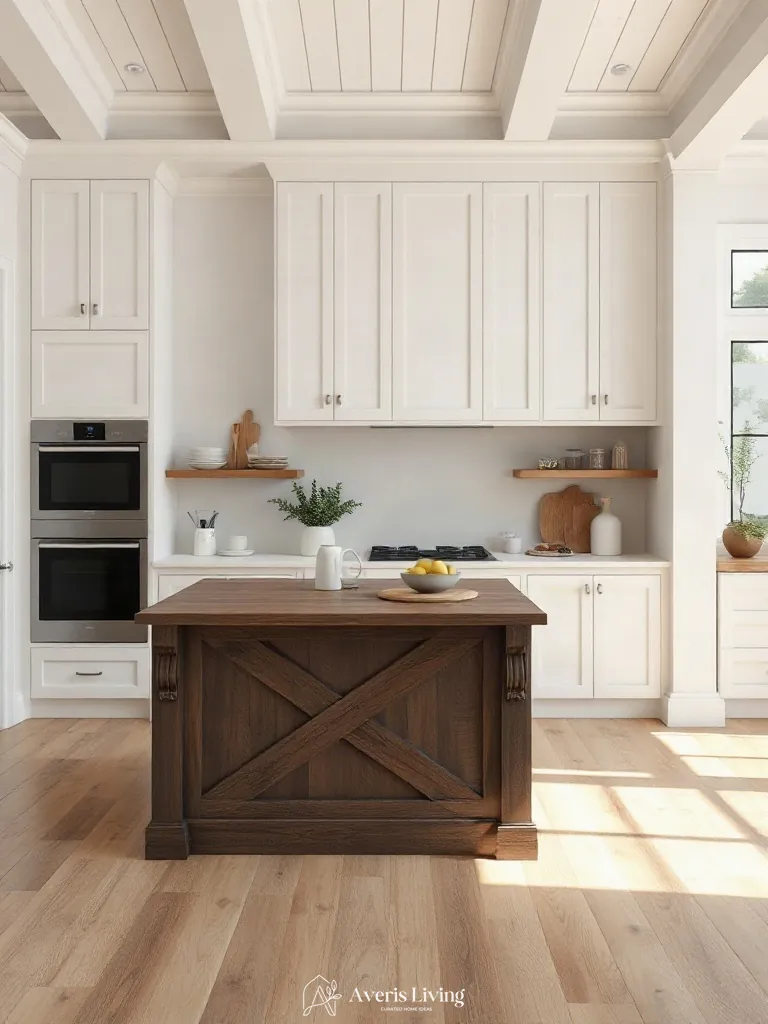
Installing floor-to-ceiling shaker wall paneling introduces a classic architectural rhythm that immediately elevates the room. This vertical detailing creates a sophisticated backdrop that beautifully contrasts against the organic, irregular grain of a rustic wood kitchen island, grounding the space with refined symmetry.
Opt for crisp white or muted sage paint on the panels to make the warm textures of the timber pop. Pairing this millwork with unlacquered brass sconces enhances the traditional charm while adding functional task lighting above the prep zone.
Wrap the Island Base in Fluted White Oak Tambour Wood
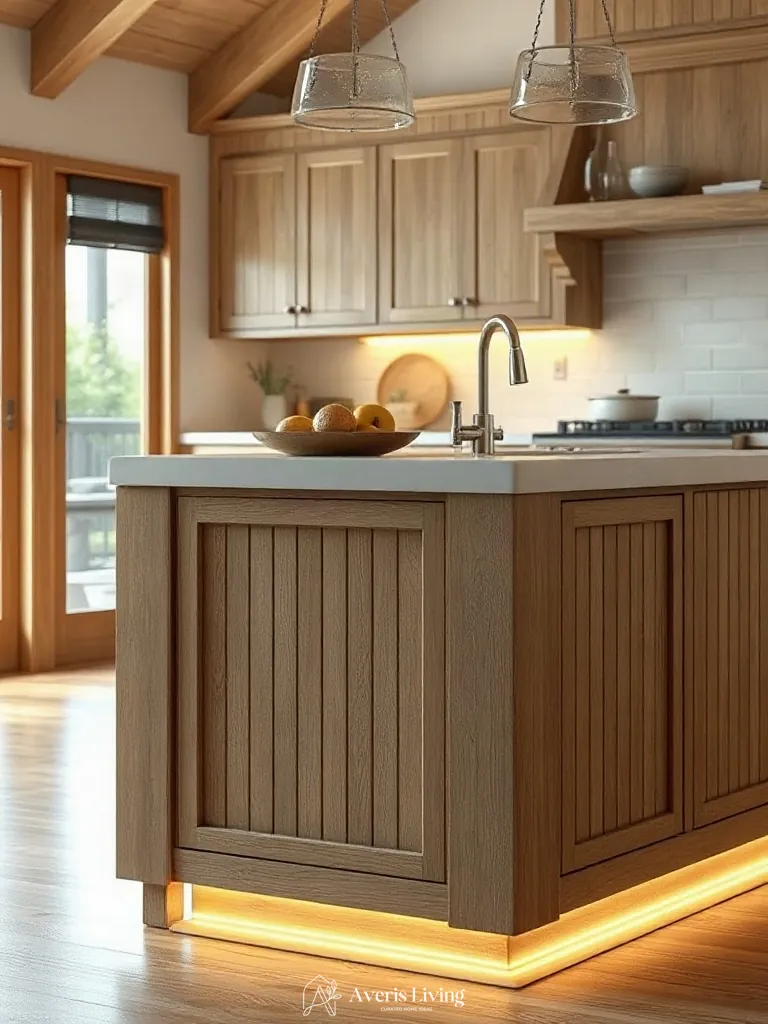
Introduce a sophisticated architectural element to your kitchen by wrapping the base in fluted white oak tambour wood. This design technique replaces hard, rigid angles with fluid, tactile movement, instantly softening a traditionally boxy rustic wood kitchen island. The vertical reed detailing catches ambient light throughout the day, creating subtle shadows and adding unexpected depth to the cooking space.
To execute this look, select white oak with a wire-brushed finish to highlight the natural grain before applying a matte, water-resistant sealer. Pair the textured base with a honed quartz or soapstone countertop to balance the warmth of the timber with sleek, durable surfaces.
Build an Arched Plaster Niche Directly Behind the Timber Island
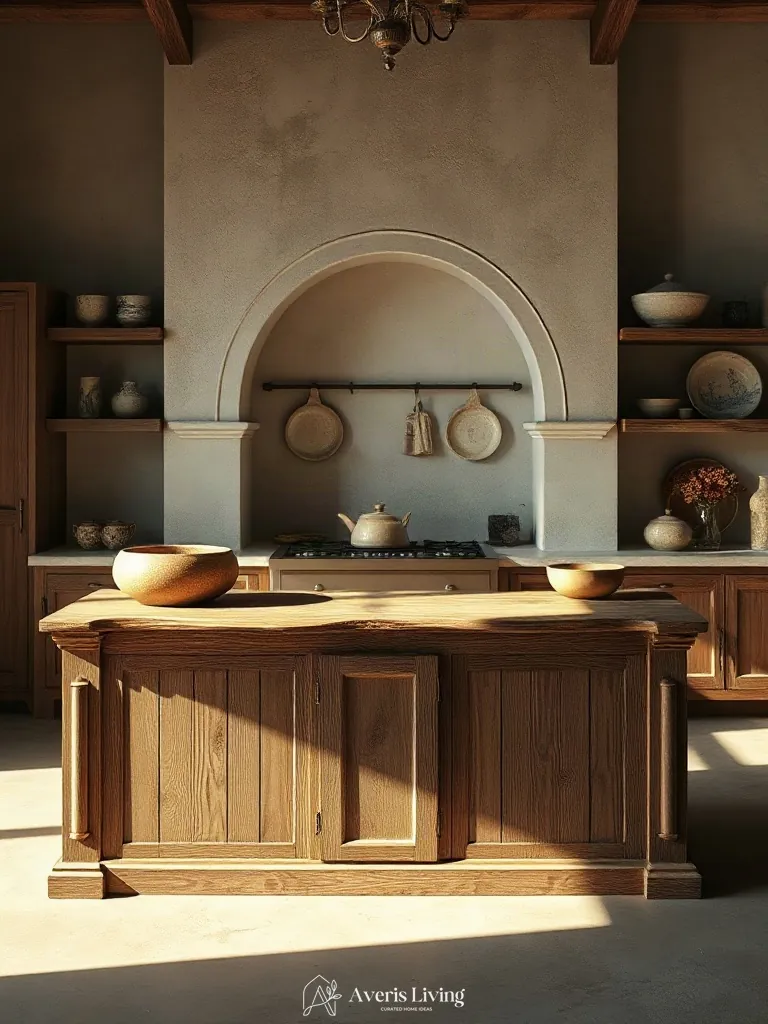
Pairing a textured, arched plaster niche with a rustic wood kitchen island introduces architectural romance and Old-World depth to modern cooking spaces. The soft curves of the lime-wash alcove contrast beautifully with the linear grain and warm knots of timber, framing the cooking zone like a bespoke art installation.
To execute this look seamlessly, apply a breathable Roman clay or micro-cement finish in chalky off-white or warm taupe behind the workspace. This tactile backdrop grounds the heavy joinery of the central furniture piece while reflecting soft ambient light across the entire culinary hub.
Combine Open Walnut Shelving with a Distressed Chestnut Island
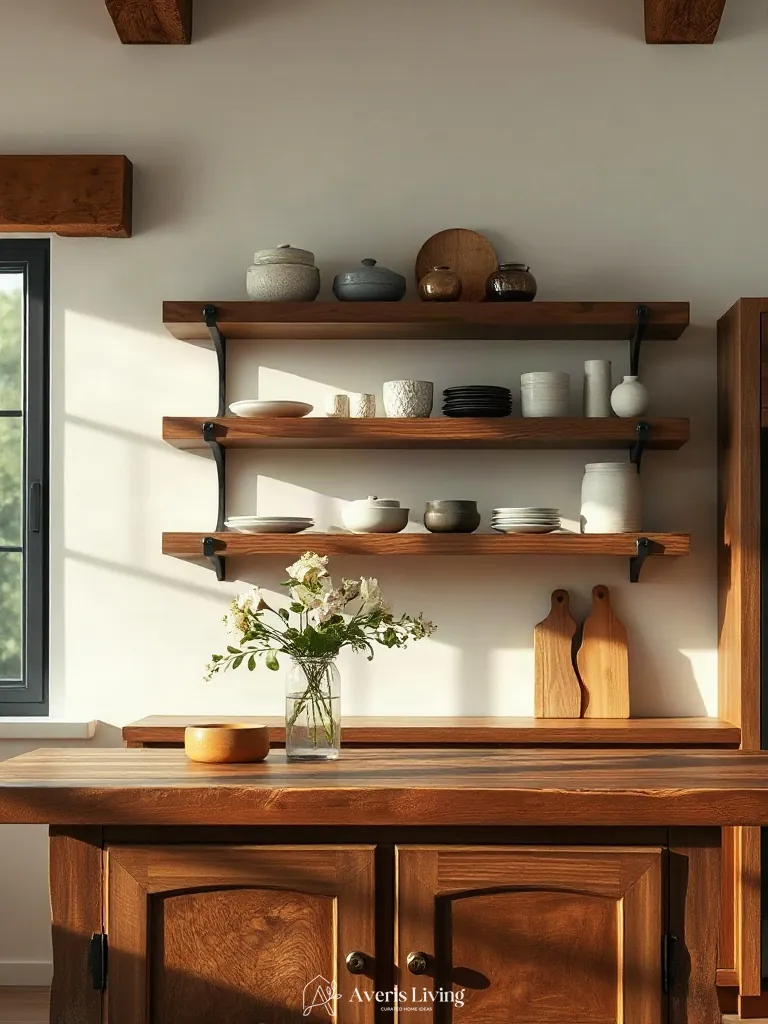
Elevate your cooking space’s vertical architecture by pairing a rustic wood kitchen island with matching floating wall shelves. Hanging coordinated walnut planks above a distressed chestnut base creates a cohesive rhythm, drawing the eye upward while maximizing storage and display potential for ceramics and glassware.
Install the shelves using heavy-duty iron brackets to anchor the organic look. Finish the chestnut base with a matte satin polyurethane to protect against daily wear while highlighting rich grain patterns, ensuring the entire setup feels intentionally curated and deeply warm.
Contrast a Weathered Chestnut Island with Honed Carrara Marble Countertops
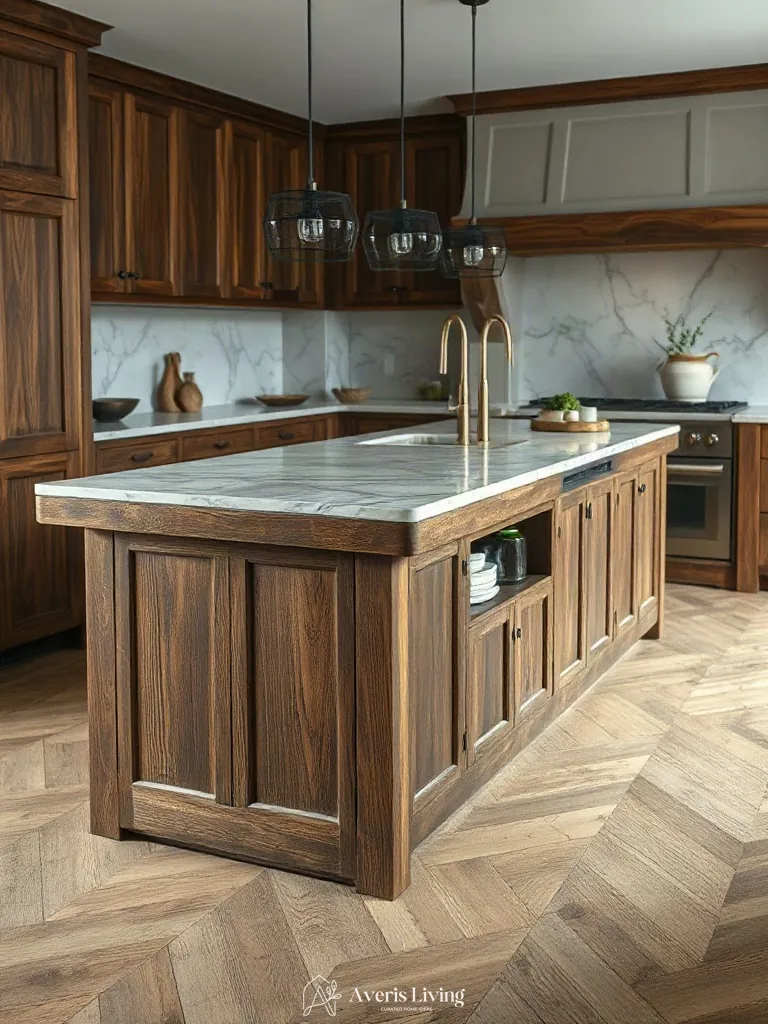
Pairing a rustic wood kitchen island crafted from weathered chestnut with honed Carrara marble countertops creates an arresting material tension. The rugged, tactile warmth of the aged grain grounds the space, while the cool, softly veined stone introduces an undeniable layer of refined elegance.
To execute this look seamlessly, apply a matte polyurethane sealer to protect the porous marble from stains without sacrificing its organic, velvety texture. Complete the design with unlacquered brass hardware to bridge the gap between earthy charm and timeless luxury.
Pair a Rough-Hewn Walnut Island with Handmade Zellige Backsplash Tile
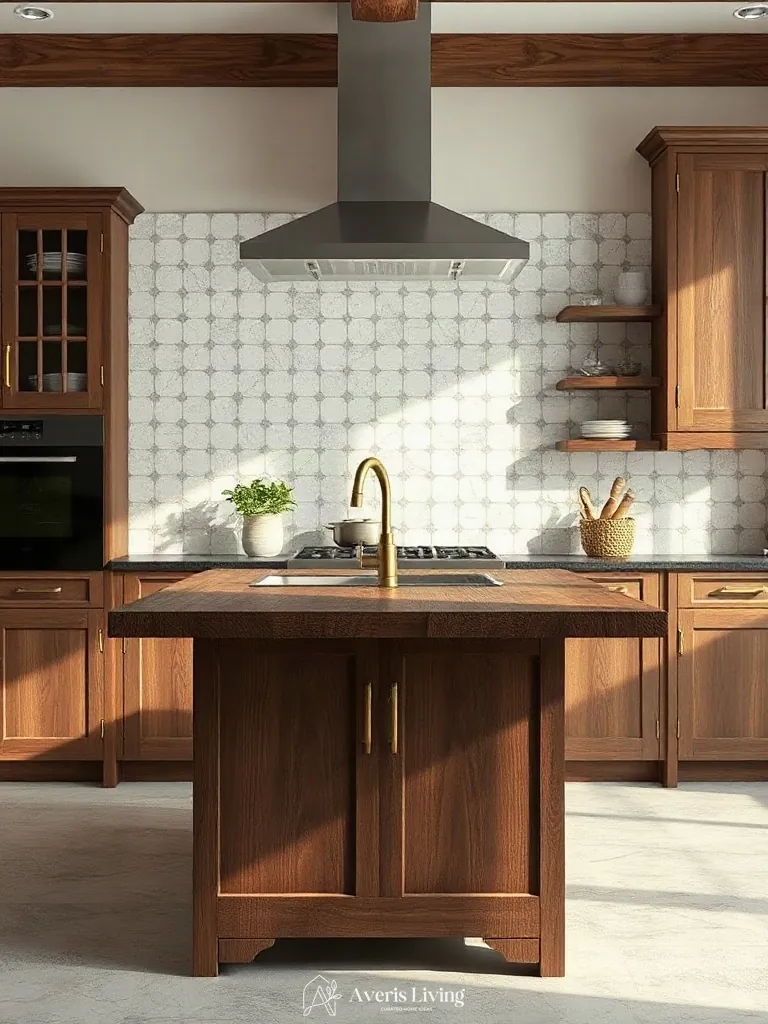
Juxtaposing organic textures creates high-end visual tension in modern organic kitchens. Pairing a rugged rustic wood kitchen island crafted from rich, dark walnut with shimmering Zellige tiles introduces a stunning interplay of finishes. The high-variation artisanal gloss of the Moroccan terracotta catches natural light, beautifully contrasting against the matte, deeply grooved timber.
To execute this look, choose unglazed-edge tiles in soft alabaster or warm ecru to complement the natural grain of the walnut base. Ground the scheme with unlacquered brass hardware and honed soapstone countertops, allowing these artisanal elements to anchor the room with effortless sophistication.
Ground the Kitchen with a Limewashed Plaster Hood Over a Pine Island
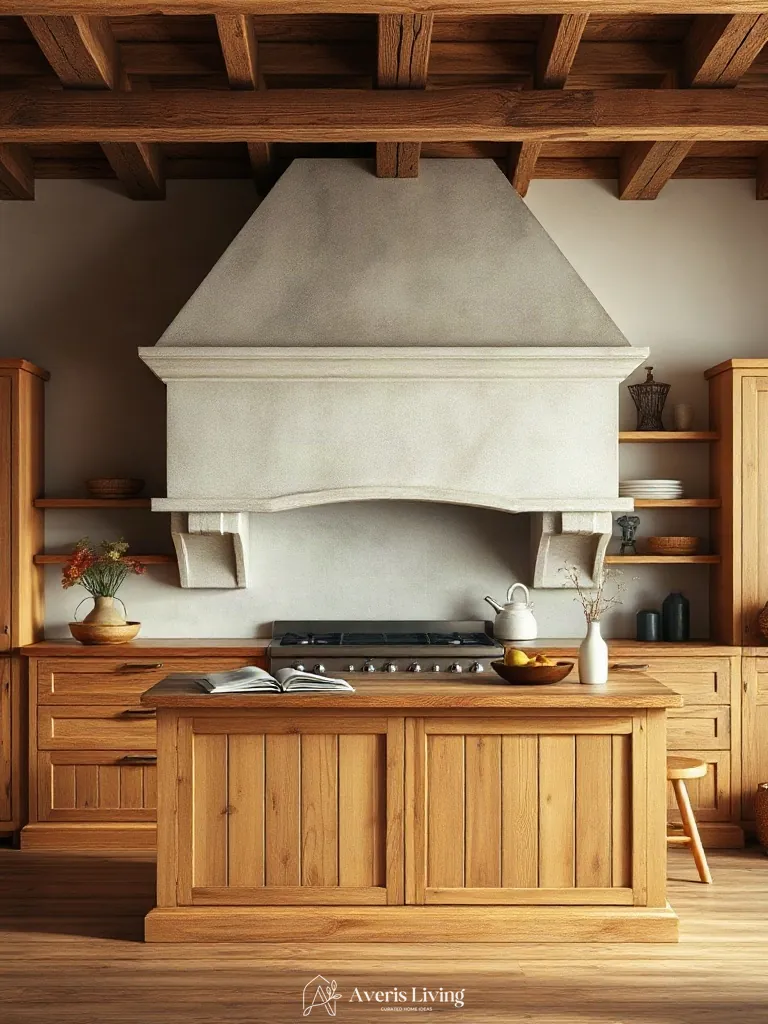
Pairing a soft, chalky limewashed plaster hood with a rustic wood kitchen island delivers a masterclass in textural contrast. The velvety, matte finish of the hood creates a serene monochromatic backdrop that visually grounds the space while allowing the rich golden tones and organic grain of reclaimed pine to take center stage.
To execute this look, select a plaster finish with subtle movement to catch the natural light. Anchor the arrangement with unlacquered brass hardware and warm soapstone countertops to enhance the earthy, time-worn aesthetic.
Accent a Distressed Oak Island with Brushed Brass Industrial Hardware
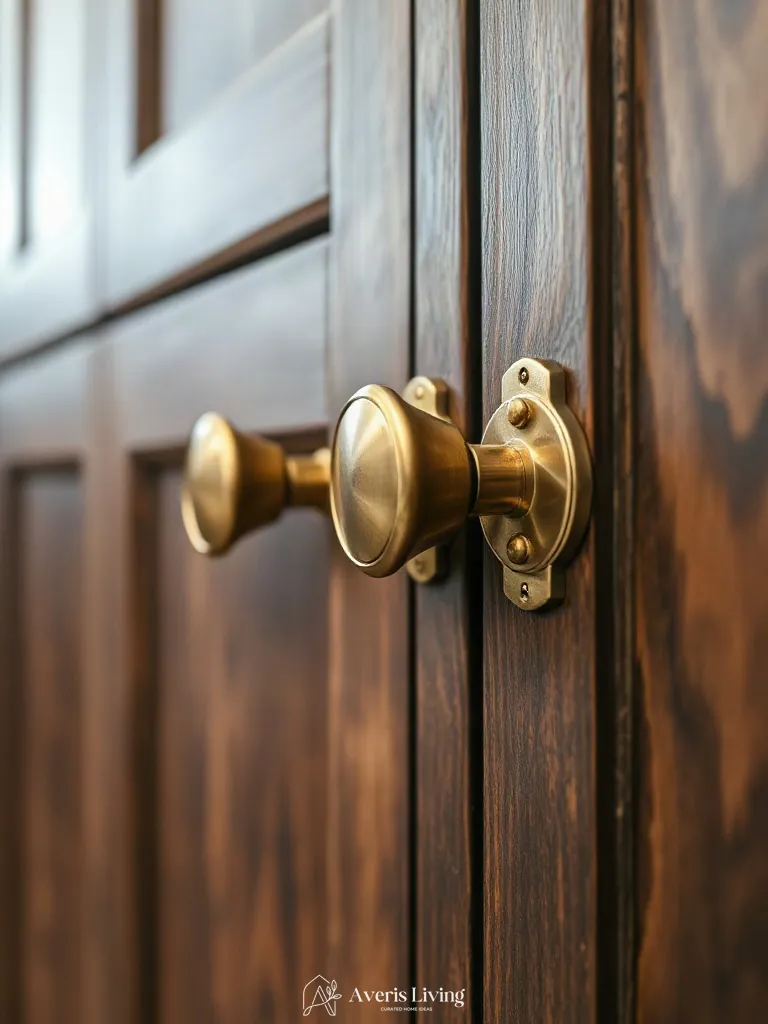
Pairing weathered wooden cabinetry with polished metal creates an irresistible tension between rugged charm and modern elegance. A rustic wood kitchen island anchors this aesthetic, its deeply grained surface offering a tactile counterpoint to the sleek, reflective sheen of brushed brass pulls and semi-industrial latches. This metallic touch introduces a subtle warmth that elevates the raw timber without overpowering its natural character, bridging the gap between farmhouse comfort and contemporary sophistication.
When selecting hardware, look for unlacquered brass that develops a living patina over time, echoing the organic aging of the wood below. Pair these warm metallic accents with a honed soapstone countertop or understated matte black fixtures to complete the balanced, high-end look.
Couple a Reclaimed Timber Island with Sleek Matte Black Steel Accents
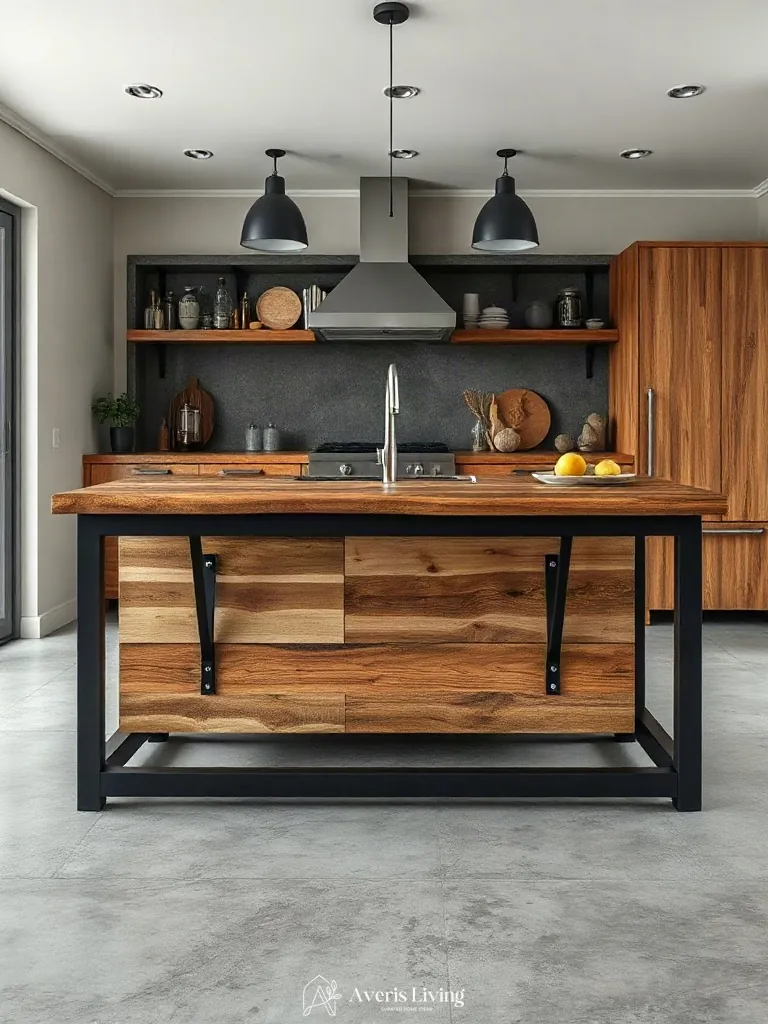
Marry old-world charm with contemporary edge by framing your rustic wood kitchen island in structural matte black steel. This dynamic contrast grounds weathered timber surfaces with architectural lines, instantly achieving a sophisticated transitional aesthetic that bridges farmhouse warmth and urban edge.
Opt for a thick, distressed oak slab top supported by a welded iron base or slim steel legs. Complement these statement materials with modern satin black hardware and minimalist pendant lighting to complete the cohesive, designer-curated look.
Suspend Oversized Woven Rattan Pendants Directly Over the Timber Island
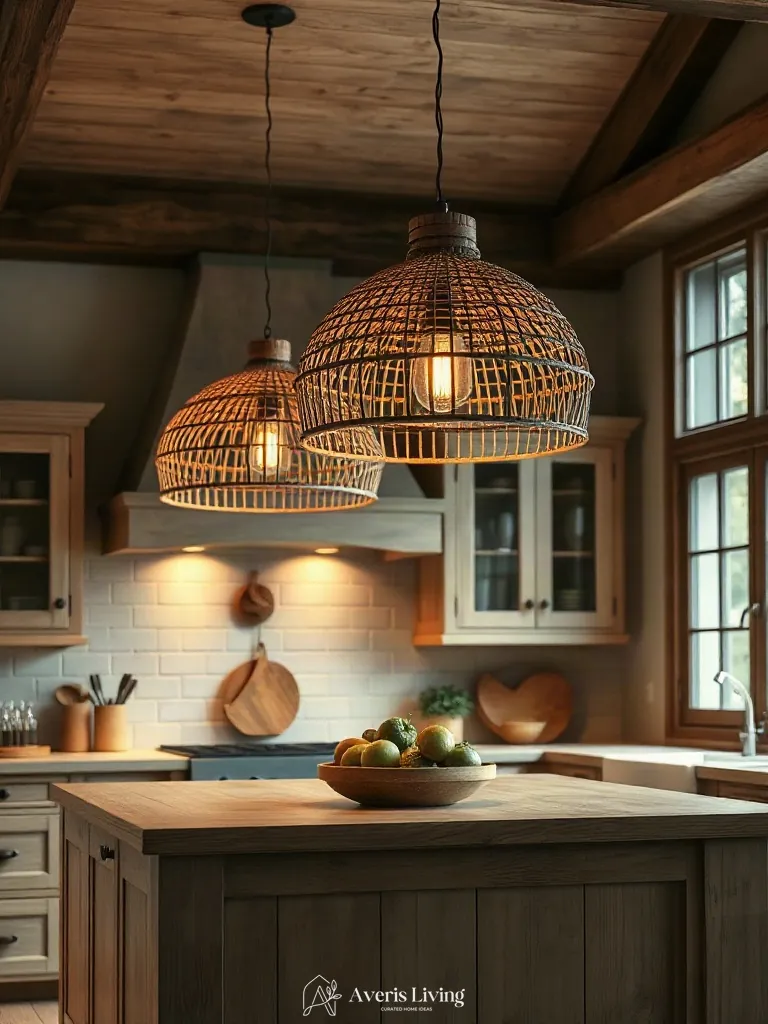
Layering natural materials is the secret to a high-end culinary space, and suspending oversized woven rattan pendants brings incredible tactile warmth to a rustic wood kitchen island. These airy fixtures draw the eye upward while balancing the heavy, substantial grain of the timber beneath them, creating an effortless interplay of organic textures that feels both grounded and light.
Opt for drum or bell-shaped shades crafted from abaca or bamboo to filter the light into a soft, ambient glow that flatters butcher block surfaces. Hang them low enough to define the prep zone intimately, ensuring the downward illumination highlights the natural imperfections and rich patina of the wood.
Install Concealed Warm-LED Cove Lighting Beneath the Island Overhang
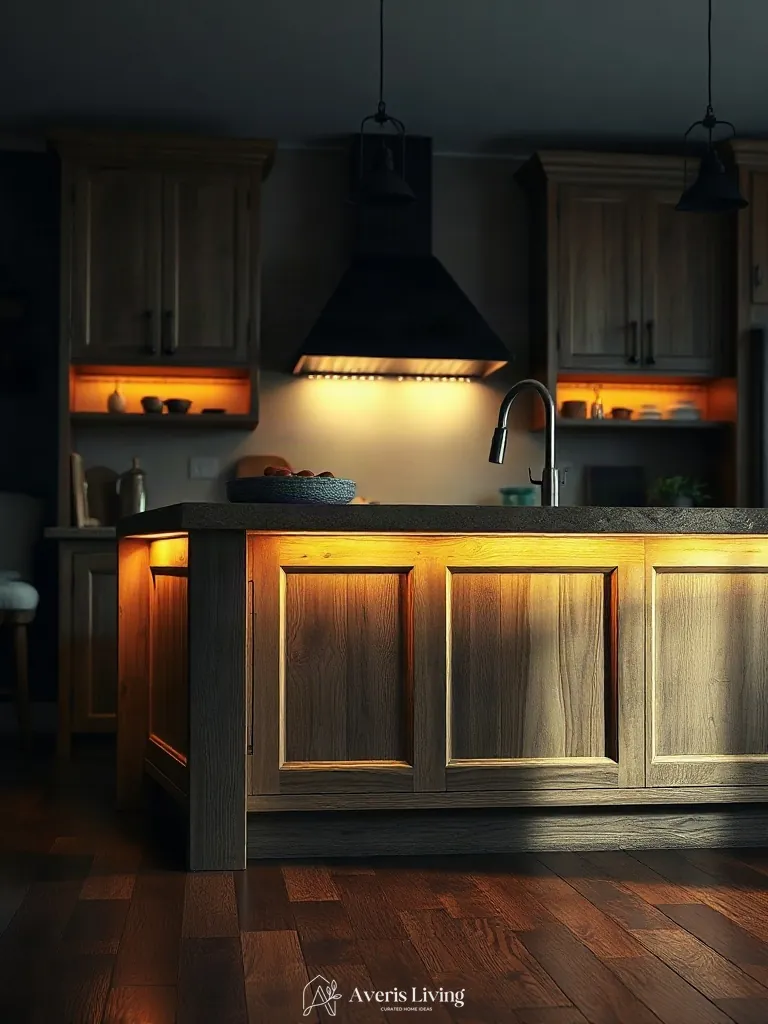
Integrating concealed warm-LED cove lighting beneath your kitchen overhang introduces a breathtaking architectural dimension. This subtle illumination creates a striking floating illusion, casting a soft, welcoming halo across the kitchen floor while accentuating the rich, organic knots and textures of a rustic wood kitchen island.
To achieve this designer finish, recess a continuous LED channel into the underside of the countertop support. Opt for a 2700K color temperature to maintain an inviting glow that enhances the natural warmth of reclaimed oak or walnut without casting harsh glares.
Mount Aged Brass Task Sconces on Flank Walls Neighboring the Island
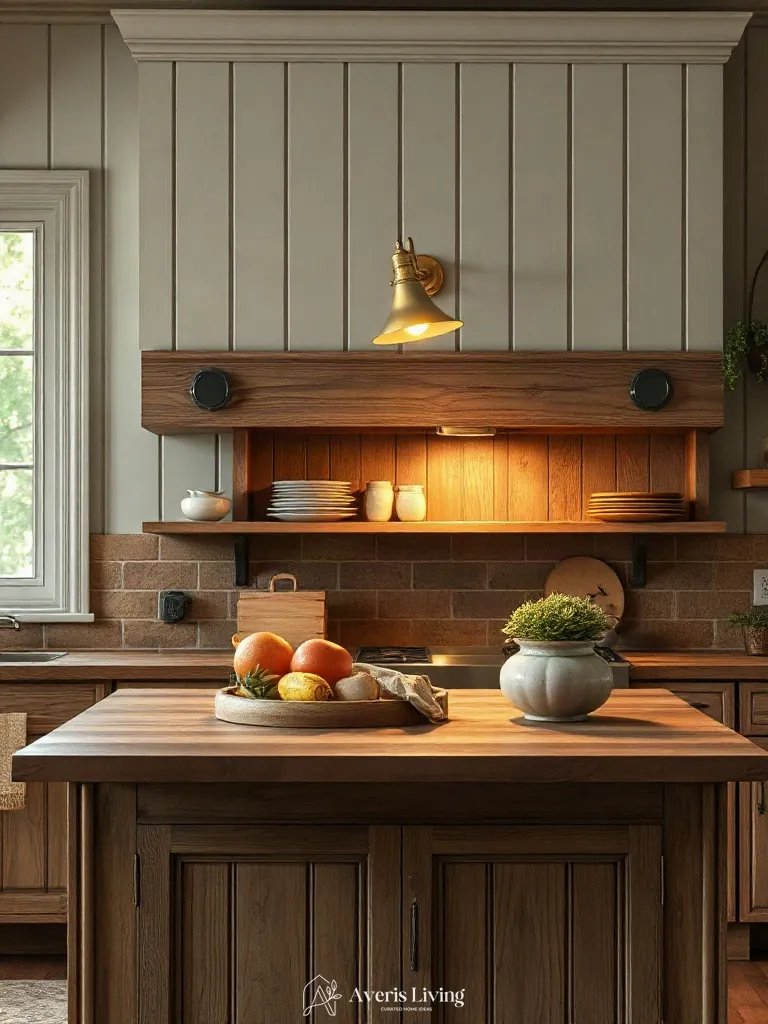
Layering light around your rustic wood kitchen island creates an intimate, inviting ambiance that harsh overhead cans simply cannot achieve. By mounting aged brass task sconces on adjacent flank walls, you introduce warm metallic accents that contrast beautifully against organic timber grains while casting a focused, adjustable glow directly where food prep happens.
Opt for fixtures with articulating arms to direct illumination precisely across countertops. The living finish of aged brass develops a rich patina over time, echoing the timeless appeal of reclaimed cabinetry and grounding the entire culinary workspace in effortless elegance.
Layer Amber Glass Globe Pendants to Illuminate a Reclaimed Wood Island
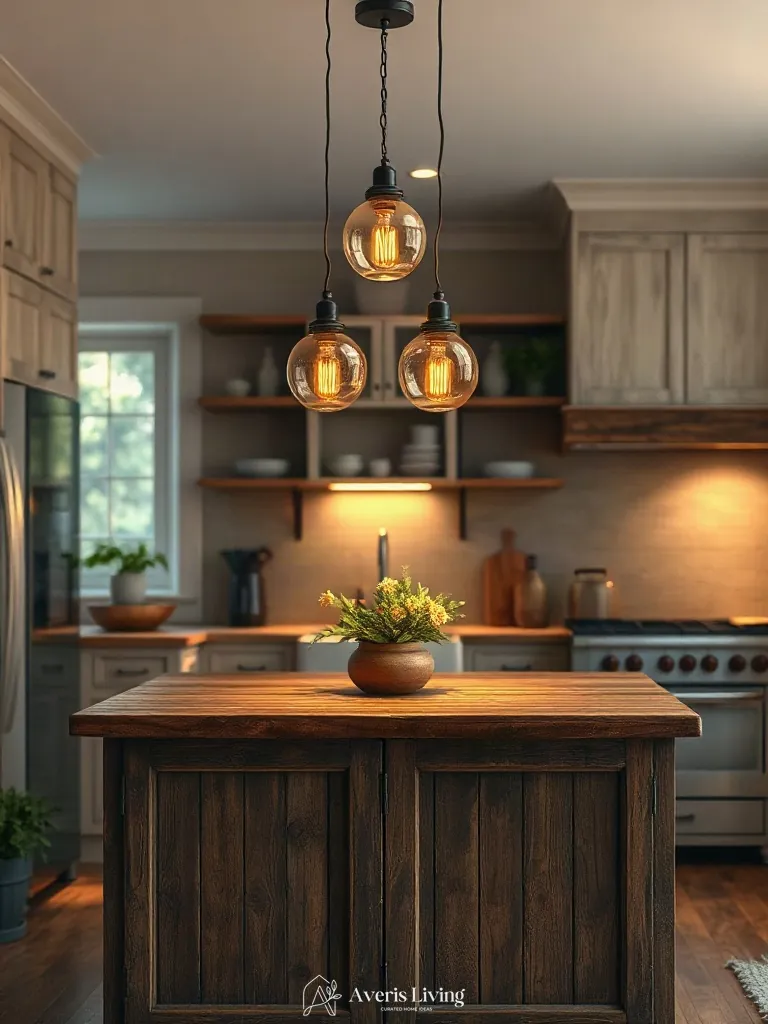
Suspending a cluster of warm amber glass globe pendants above a rustic wood kitchen island instantly infuses the space with retro-chic charm. The rich, golden hue of the vintage-inspired glass casts a soft, inviting glow that beautifully accentuates the weathered grain and time-worn patina of antique timber.
To achieve this curated look, stagger the drop heights of the globes using antique brass or oil-rubbed bronze hardware. Pair the warm overhead illumination with seeded glass details and Edison bulbs to amplify the nostalgic aesthetic.
Pair the Rustic Island with Sculptural Cane-Back Counter Stools
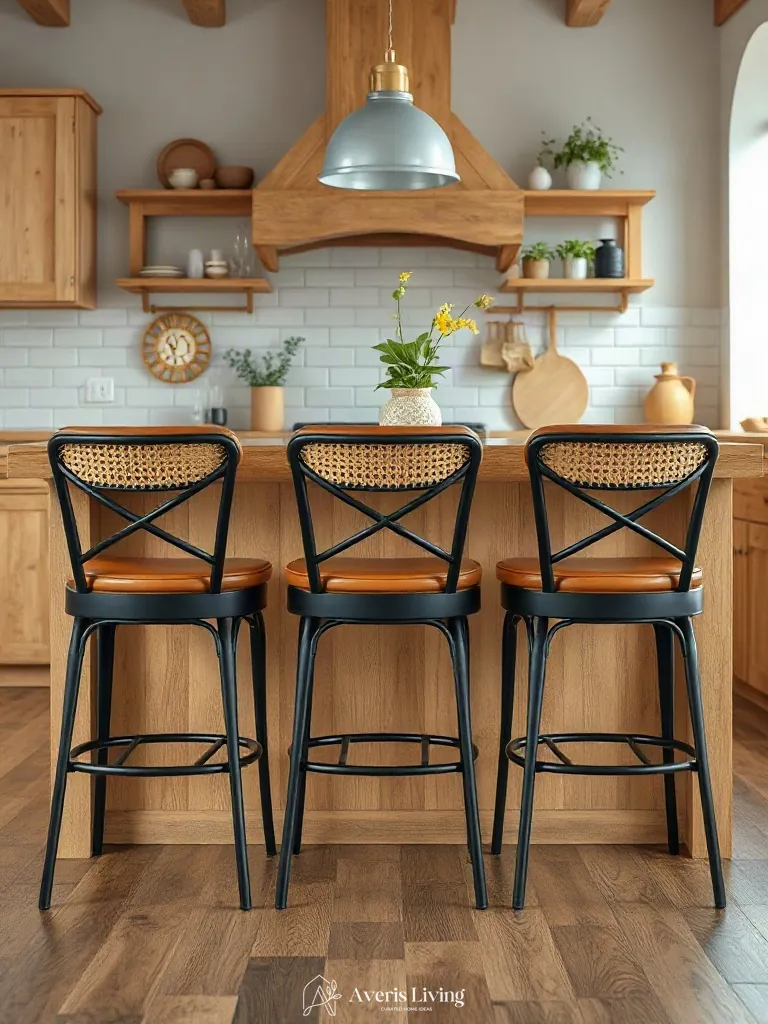
Introduce classic French bistro texture and lightweight transparency to perfectly balance the heavy mass of a rustic wood kitchen island. Sculptural cane-back counter stools introduce an airy, woven element that softens the substantial presence of reclaimed timber, preventing the cooking zone from feeling heavy or visually blocked.
Opt for black iron frames or blonde bentwood finishes to tie the natural rattan details into your broader hardware scheme. This thoughtful juxtaposition of raw, organic lumber with intricate open weave creates a refined, layered aesthetic that feels both approachable and undeniably chic.
Build a Custom Built-in Banquette Seating Nook Attaching to the Island
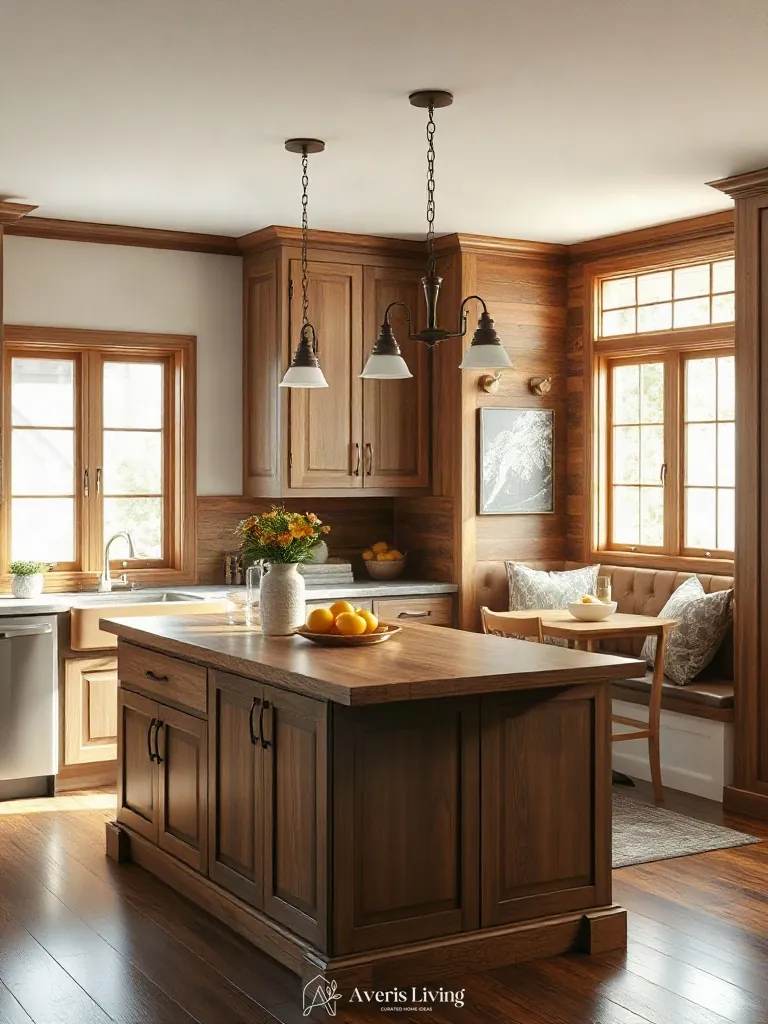
Merging casual dining directly with your cooking space is a masterclass in spatial efficiency. By attaching a custom built-in banquette seating nook to a rustic wood kitchen island, you create a seamless architectural anchor that eliminates the need for bulky separate furniture. This clever layout invites intimate morning conversations and relaxed weekend meals, turning the heart of your home into an effortlessly connected hub.
Craft the banquette using reclaimed white oak or weathered pine to echo the island’s timber tones. Add tailored cushions in neutral linen and pair the setup with wrought iron brackets to complete the artisanal, farmhouse-inspired aesthetic.
Feature a Live-Edge Walnut Dining Extension Flowing from the Island
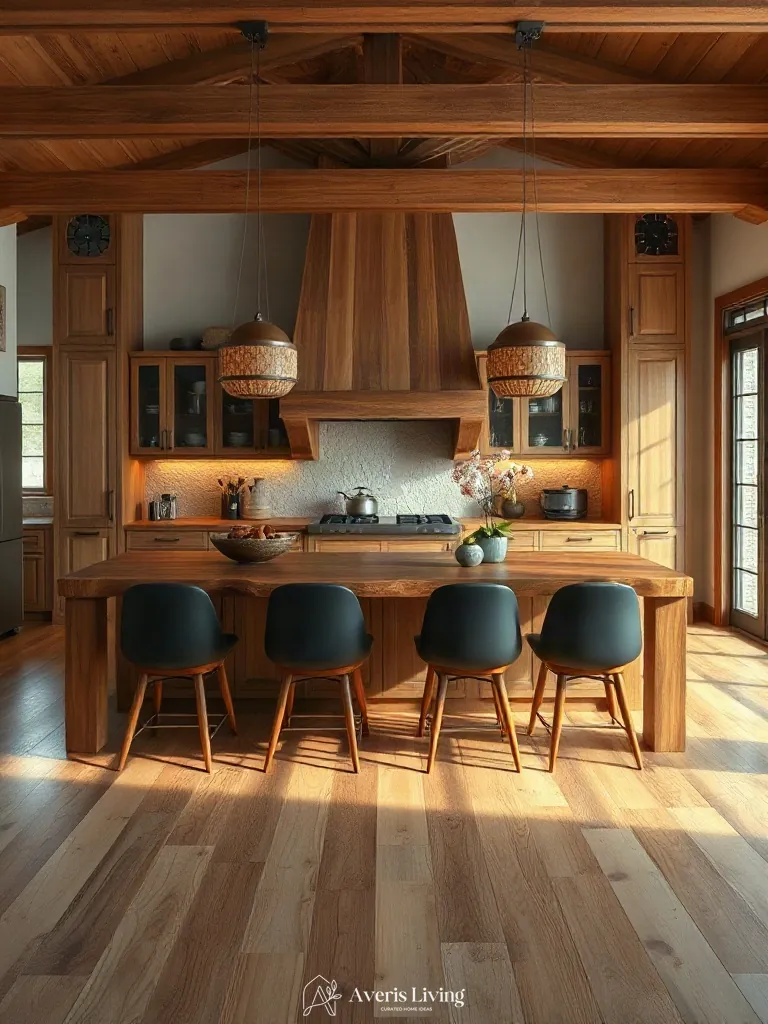
Blur the boundary between food prep and formal dining by anchoring your rustic wood kitchen island with a striking live-edge walnut extension. This organic architecture celebrates raw, undulating grain patterns and natural imperfections, creating a seamless transition from workspace to social hub. The rich, deep tones of American walnut introduce an upscale warmth that softens heavily utilitarian cooking zones.
Support the cantilevered slab with minimalist blackened steel brackets or a concealed structural plate to maintain the illusion of floating timber. Pair the setup with upholstered leather dining chairs to balance the rugged organic edge with refined comfort, establishing an inviting focal point.
Anchor the Seating Side with Low-Profile Upholstered Bar Stools
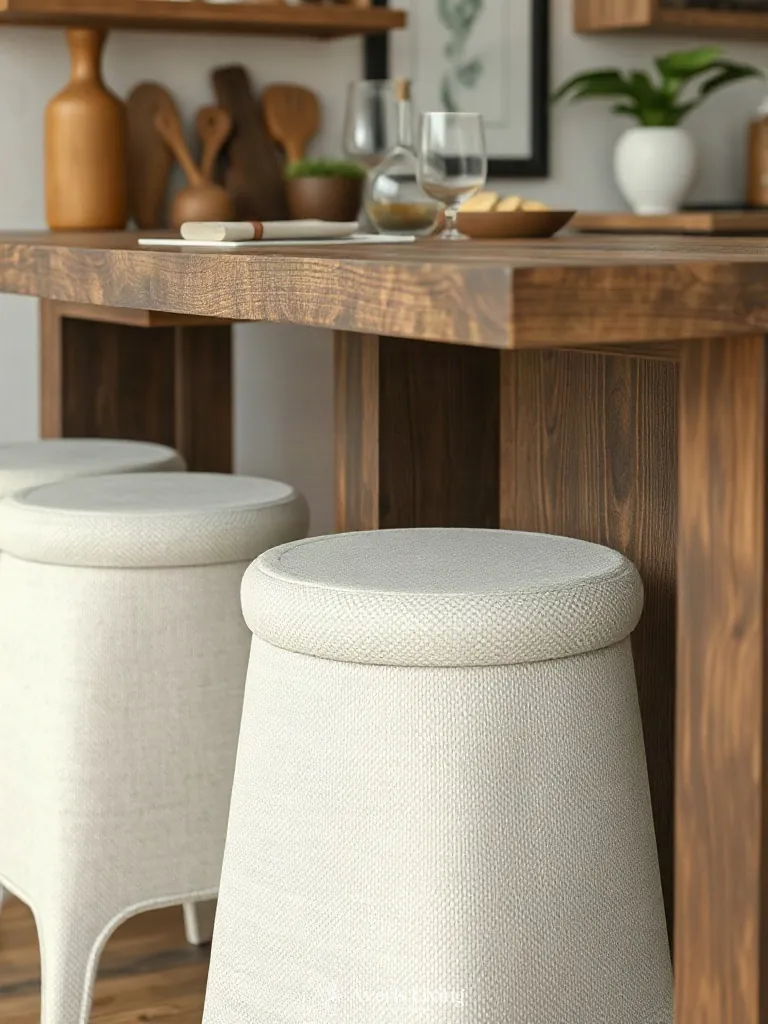
Introduce an unexpected layer of tactile softness against a rugged rustic wood kitchen island by pairing it with low-profile upholstered bar stools. Wrapped in creamy performance boucle, these streamlined seats tuck neatly beneath the overhang, softening the room’s heavy architectural lines while inviting lingering conversations over morning coffee.
Opt for brushed brass or blackened steel frames to anchor the seating without visual clutter. The textured fabric creates a sophisticated contrast against weathered oak or reclaimed pine, balancing raw organic beauty with everyday comfort and stain-resistant durability.
Style the Island Surface with Oversized Olive Branches in a Terracotta Urn
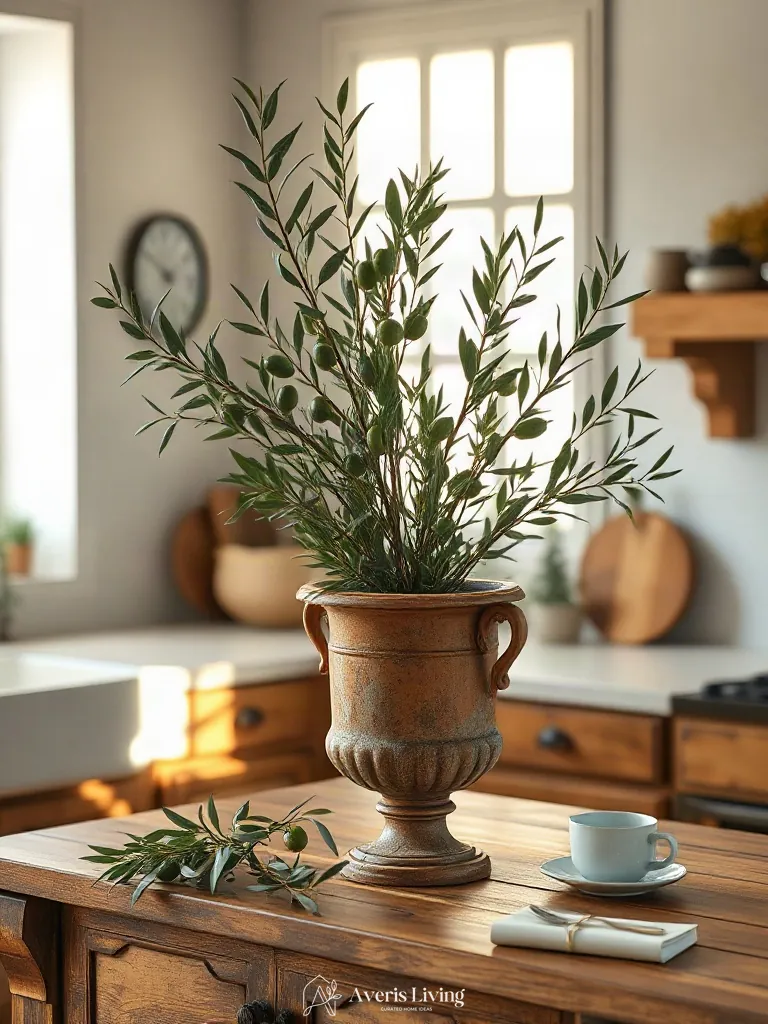
Introduce striking verticality to your rustic wood kitchen island by styling the surface with oversized olive branches tucked inside an aged terracotta urn. This arrangement instantly breaks up the horizontal expanses of timber, infusing the culinary workspace with architectural movement and earthy Mediterranean warmth that softens hard architectural lines.
Opt for heavily weathered earthenware or rustic pottery featuring natural patinas to anchor the organic display. The dusty green foliage contrasts beautifully against warm oak or walnut grain, creating an effortless focal point that feels both curated and authentically lived-in.
Drape Floor-to-Ceiling Belgian Linen Drapery Framing Nearby Windows
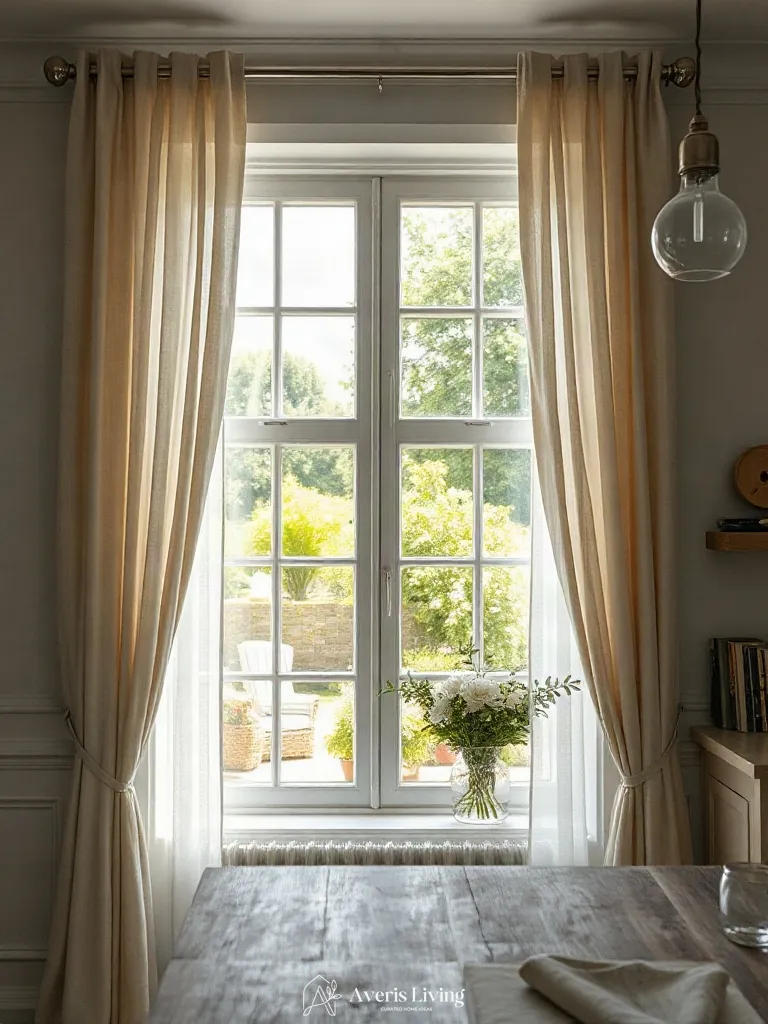
Introducing floor-to-ceiling Belgian linen drapery near a rustic wood kitchen island dramatically softens the hard geometric lines of modern cabinetry. The cascading natural textile folds introduce a tactile, organic movement that beautifully echoes the rich grain of weathered timber.
Opt for lightweight, unlined panels in neutral flax or warm ivory to filter sunlight gently across stone countertops. Hang hardware close to the ceiling line to maximize vertical height, creating an airy, layered aesthetic that grounds the room.
Create an Asymmetric Art Display on Open Shelves Above the Island
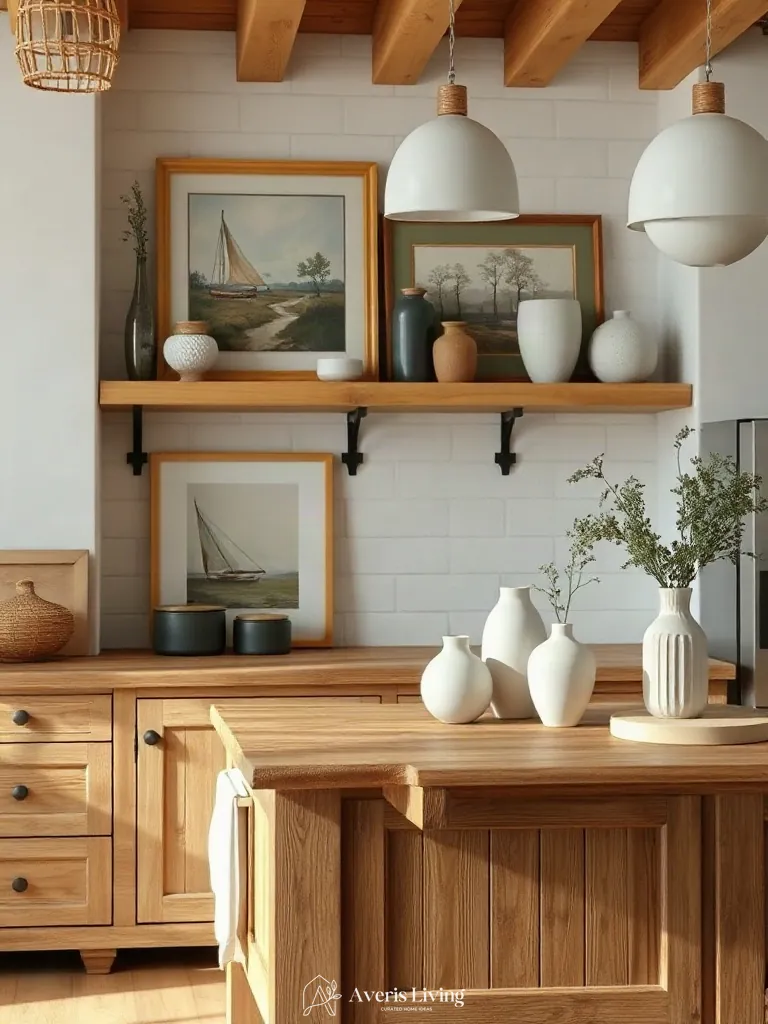
Elevate your upper sightlines by curating an asymmetric gallery on open shelving, injecting vibrant artistic depth directly above your rustic wood kitchen island. Mixing vintage oil paintings, ceramics, and weathered brass objects breaks up heavy cabinetry lines.
Balance heavier stoneware on one side with slender glassware opposite. This dynamic arrangement draws the eye upward, celebrating personal collections and seamlessly pairing curated fine art with organic textures in the heart of the home.
Arrange Hand-Thrown Ceramic Bowls and Wood Cutting Boards on the Island
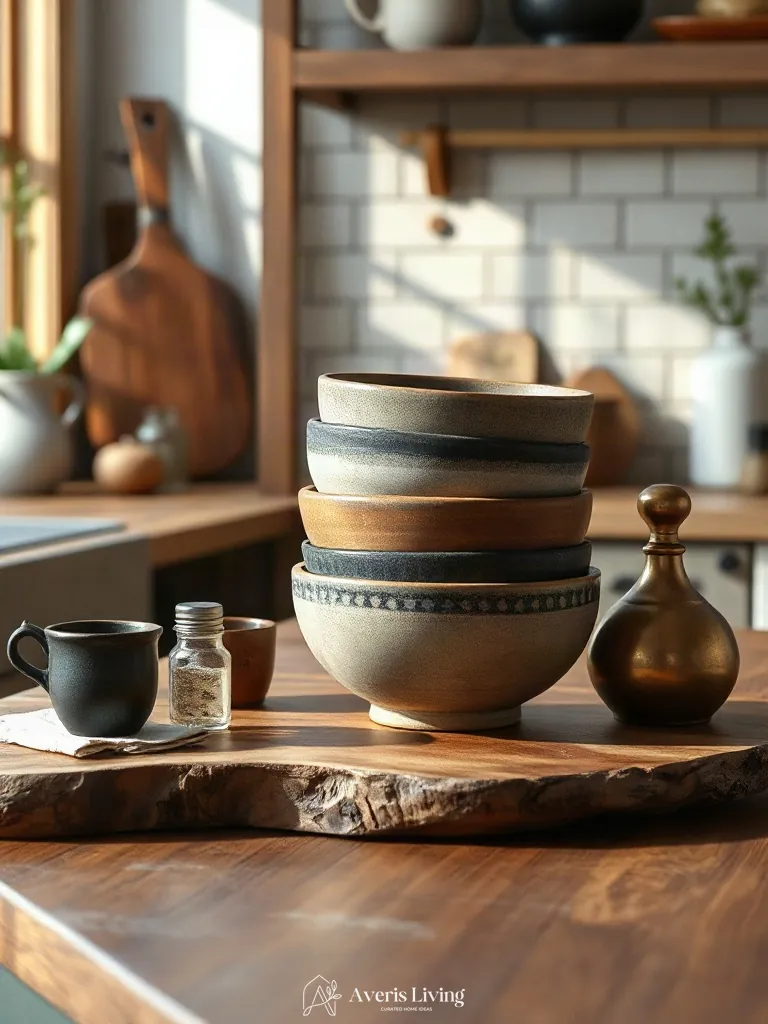
Elevate the surface of your rustic wood kitchen island by styling it with organic, artisanal objects that celebrate craftsmanship. Grouping hand-thrown ceramic bowls alongside well-worn end-grain cutting boards introduces an authentic, collected-over-time aesthetic that instantly softens the hard edges of cabinetry. This thoughtful layering of tactile materials breaks up vast expanses of timber while adding rich, earthy contrast.
Opt for ceramics featuring subtle reactive glazes paired with richly grained walnut or teak boards to enhance the visual depth. Leaving these functional pieces out on display ensures your culinary workspace feels deeply personal, welcoming, and effortlessly curated for daily living.
Incorporating a rustic wood kitchen island instantly transforms your culinary space into a warm, inviting heart of the home. By thoughtfully layering tactile materials, tailored lighting, and organic styling, you can achieve a bespoke look that feels both timeless and deeply personal.
Save your favorite ideas to your Pinterest boards and start planning your ultimate kitchen transformation today!