

Integrating an aesthetic wood desk workspace into your living room requires a delicate balance of ergonomic function and organic warmth. By anchoring your layout with rich honey-oak and walnut tones, your home office setup transitions from a utilitarian afterthought into an architectural feature.
Explore these 25 curated design strategies, spanning clever layout planning, custom built-ins, tactile material pairings, and atmospheric lighting to elevate your daily workflow.
Float an asymmetric walnut slab desk in the living room corner to preserve open traffic lanes.
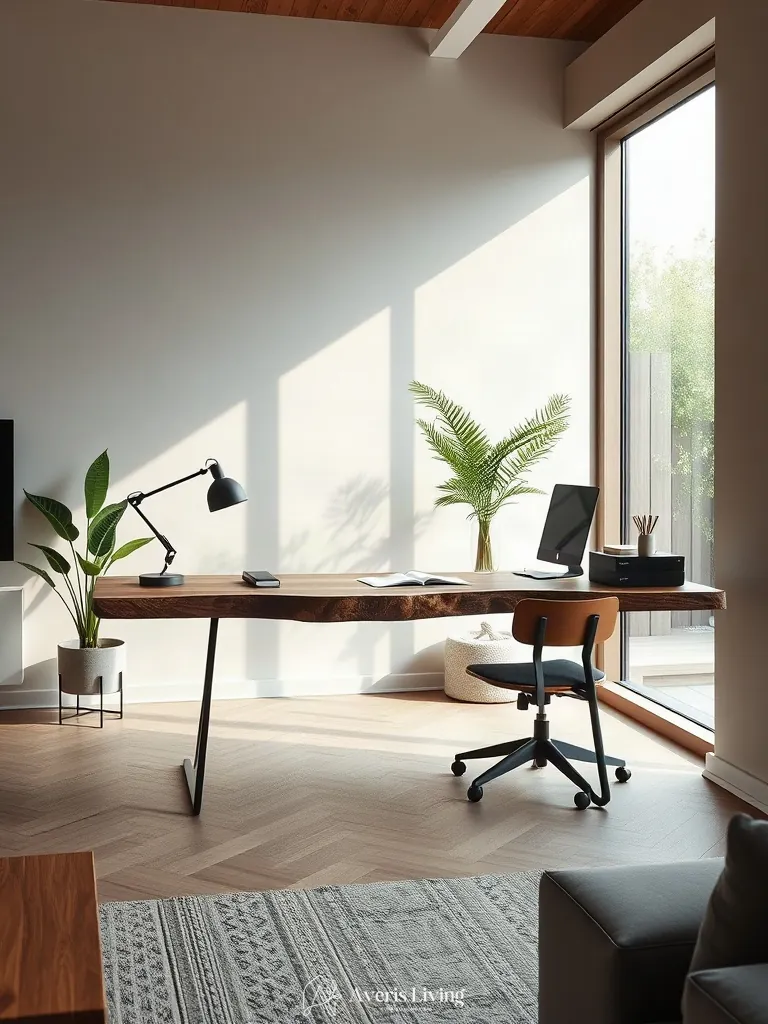
Floating an asymmetric walnut slab desk in an unused living room corner unlocks spatial fluidity while maintaining clear sightlines. By angling the live-edge timber away from primary traffic lanes, you preserve open floor pathways that connect adjoining seating zones. This intentional furniture offset prevents heavy visual blockades, utilizing the natural geometry of a rich walnut finish to bounce morning natural light across the perimeter.
Maintain a minimum clearance of thirty-six inches around all sides of the desk to ensure unobstructed movement. Anchor the floating layout with a 5×8 wool area rug that extends at least six inches beneath the tapered wooden legs, visually grounding the setup without crowding the room.
Anchor a honey-oak writing desk against a fluted accent wall to define a micro-workspace zone.
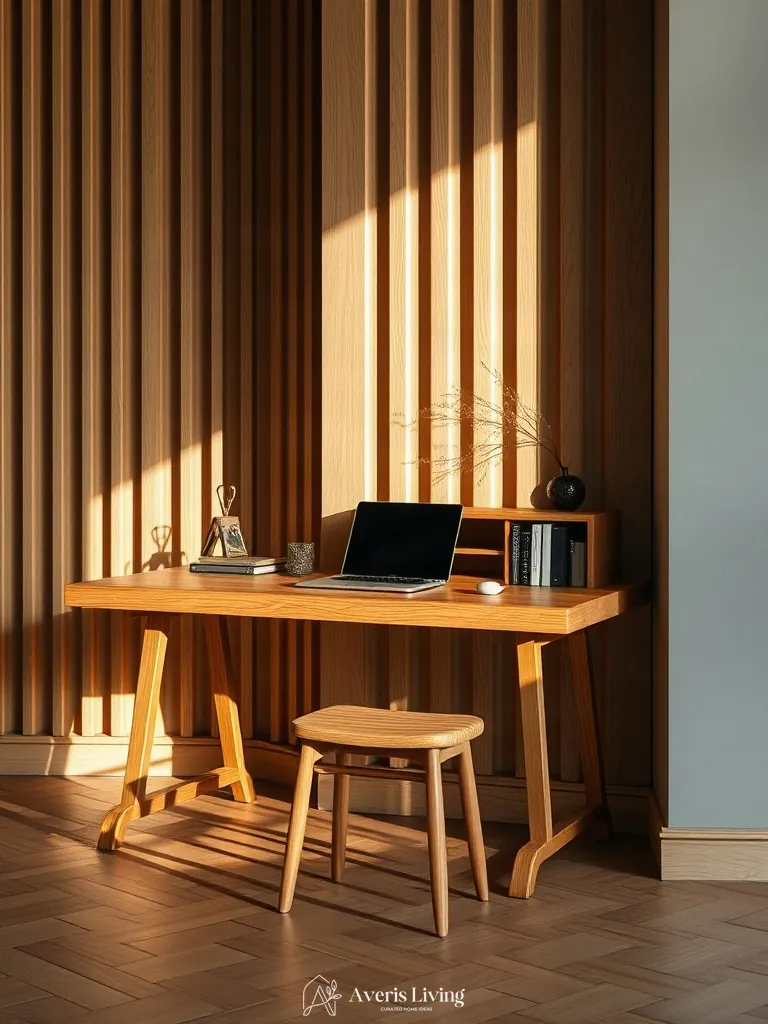
Fluted architectural textures establish immediate vertical zoning within an open floor plan. By anchoring a warm honey-oak writing desk directly against a rhythmic, concave-molded wall panel, you visually detach the study area from surrounding seating groups. This perimeter placement preserves central traffic corridors while using textural contrast to frame your aesthetic wood desk workspace without needing physical partitions.
Leave a strict forty-inch clearance behind the chair to allow smooth movement. Center a six-by-nine-foot wool area rug beneath both the desk and rear fluted panels to ground the micro-zone, ensuring the front legs of the seating remain entirely off the rug boundary for balanced proportions.
Position a tambour-front executive desk perpendicular to the sofa to create a natural room divider.
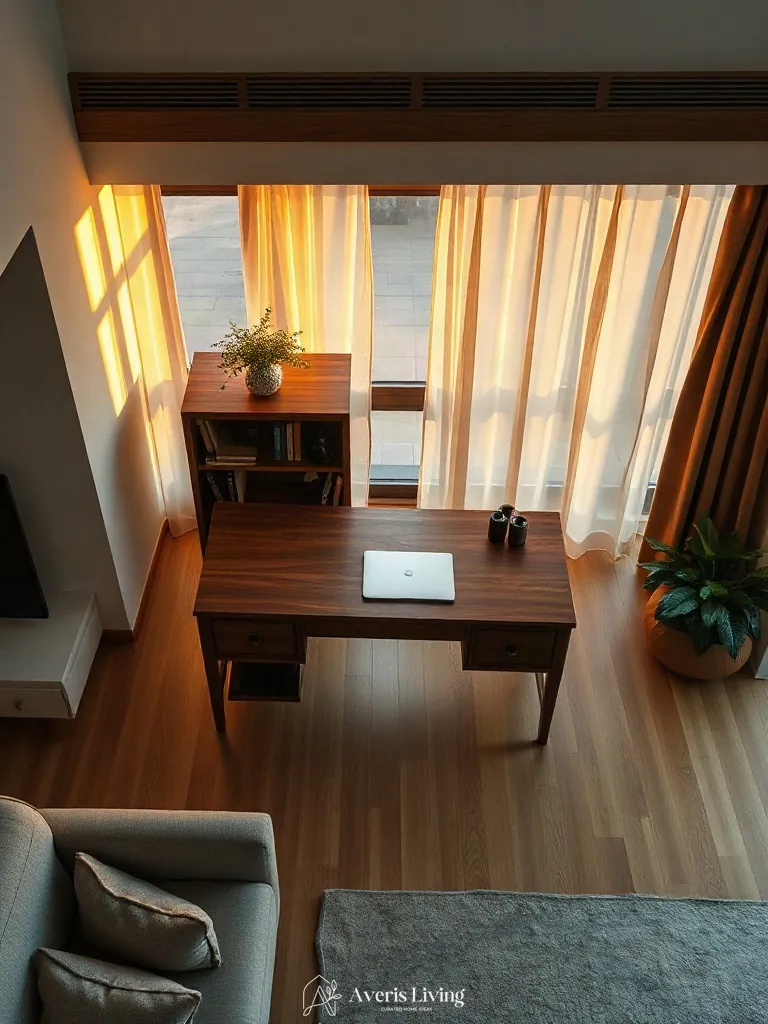
Positioning a tambour-front executive desk perpendicular to the sofa creates functional zoning within an open living room. This perpendicular layout establishes a distinct architectural boundary, separating relaxation zones from work areas while maintaining sightlines toward natural light sources. A solid teak tambour finish introduces rich texture that softens the transition between upholstered seating and heavy office utility.
Leave a strict thirty-six-inch traffic clearance behind the desk chair to allow seamless movement into the seating area. Anchor the entire arrangement using an eight-by-ten-foot wool area rug that extends beneath both the sofa front legs and the aesthetic wood desk workspace.
Recess a compact veneer workspace into a living room architectural alcove to banish visual clutter.
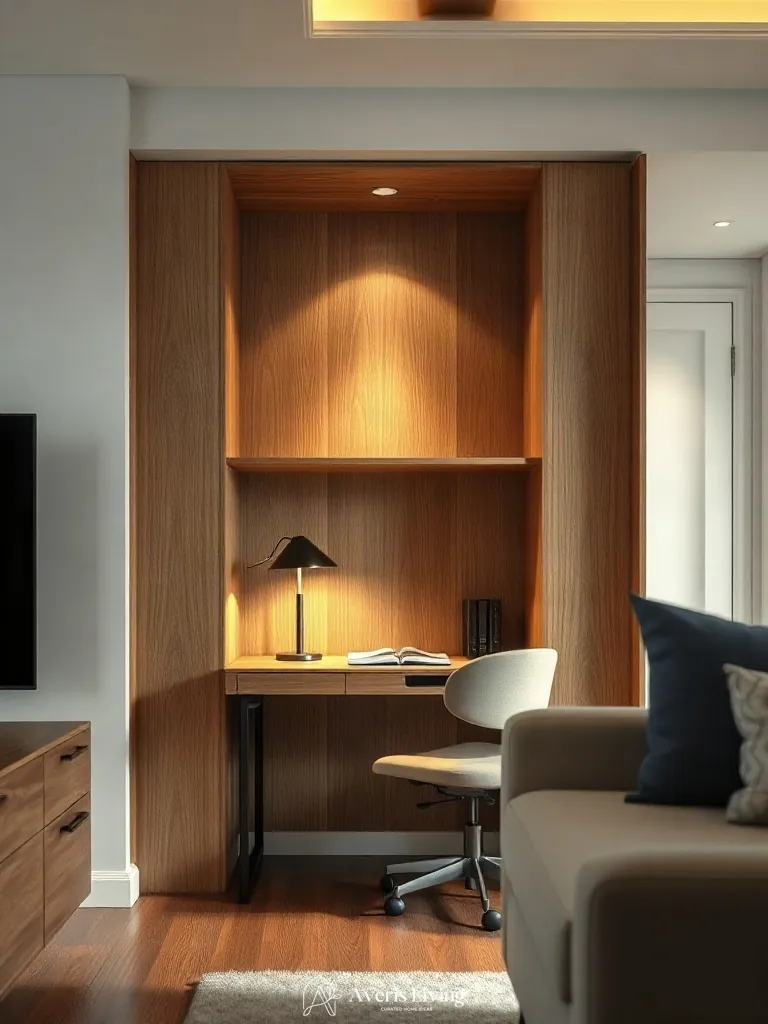
Recessing an architectural alcove provides a brilliant furniture-free corner strategy for your living room. By tucking an aesthetic wood desk workspace directly into the structural cavity, you completely clear the primary circulation paths. This spatial arrangement removes bulky furniture legs from peripheral sightlines, achieving optimal visual balance. The surrounding walls naturally frame the rich walnut veneer, anchoring the layout without disrupting the room’s open footprint.
To execute this flush alignment, measure your alcove depth to ensure a minimum twenty-four-inch knee clearance. Leave a precise three-inch breathing margin on each side of the desktop for clean drywall integration. Position your task lighting directly overhead to wash the veneer surface in warm illumination while keeping floor space entirely unobstructed.
Build custom honey-oak built-in shelving flanking a walnut desktop nook for seamless storage.
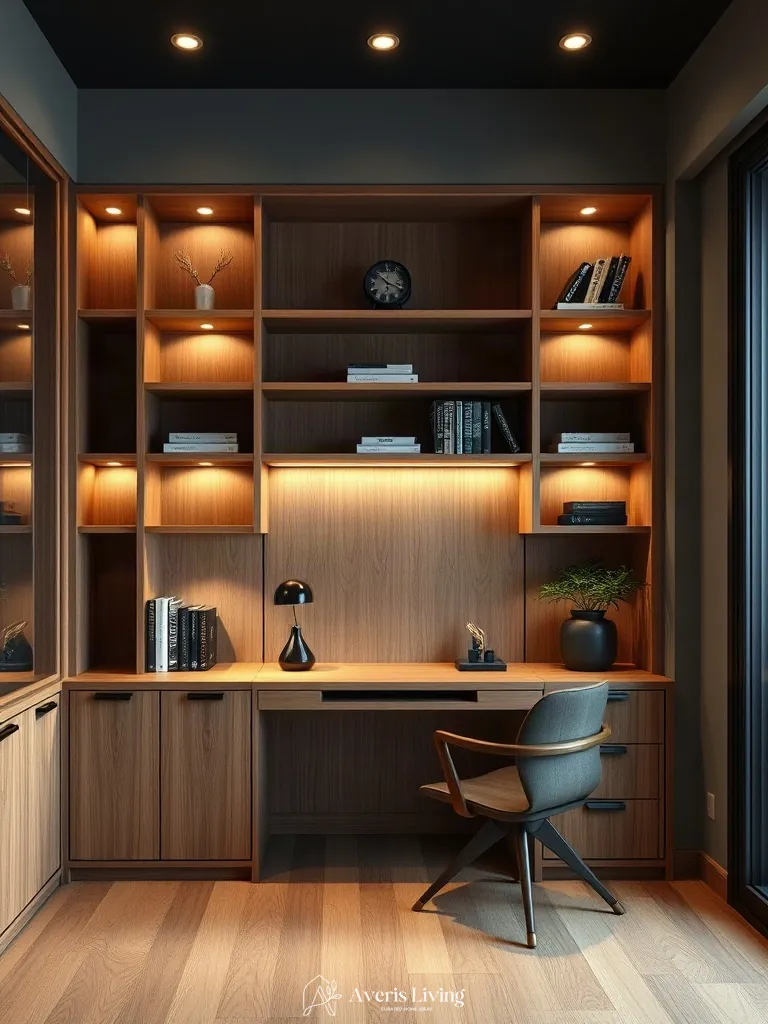
Integrating honey-oak built-in shelving flanking a rich walnut desktop nook creates a masterclass in architectural contrast for warm living rooms. This millwork anchors the perimeter with 12-inch-deep vertical cabinetry, drawing the eye upward to a newly framed shallow ceiling coffer detail finished in matching warm-toned oak trim. The dual-wood palette defines an aesthetic wood desk workspace by pairing honey-toned vertical storage with a deep brown work surface.
To execute this installation, mount the 1.5-inch-thick solid walnut desktop directly into structural wall studs at a standard 30-inch typing height. Secure the flanking 3/4-inch rift-sawn honey-oak bookcases using heavy-duty concealed French cleats, ensuring precise alignment with the perimeter of the overhead coffered ceiling grid for a truly custom, high-end architectural finish.
Frame an arched living room niche with vertical walnut battens to house a custom floating desk.
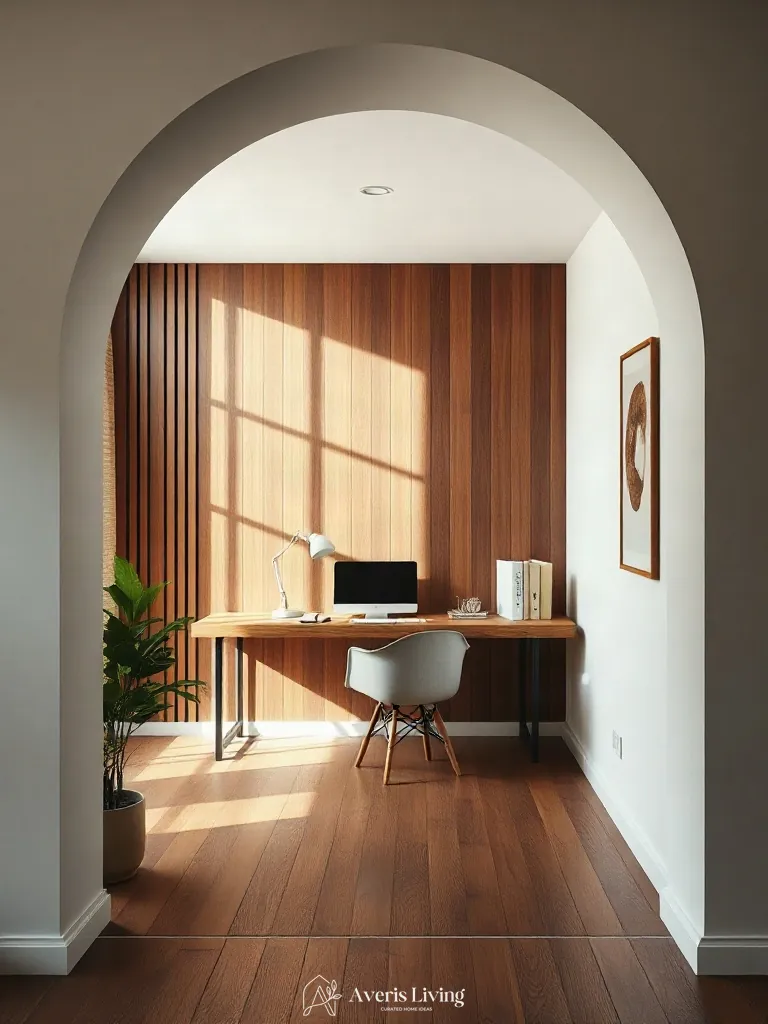
Framing a living room arched alcove with vertical walnut battens elevates an architectural recess into a high-end aesthetic wood desk workspace. The rhythmic shadow play of 1×2-inch tongue-and-groove slats contrasts against smooth micro-cement plaster, anchoring the perimeter of the curved opening with tactile warmth.
Install a concealed 2-inch thick solid walnut floating slab anchored directly into studs using heavy-duty steel concealed brackets. Ensure a 1/4-inch expansion gap along the curved radius to allow for natural timber movement against the finished wall.
Install a floor-to-ceiling honey-oak bookcase integrating a fold-down walnut secretary desk.
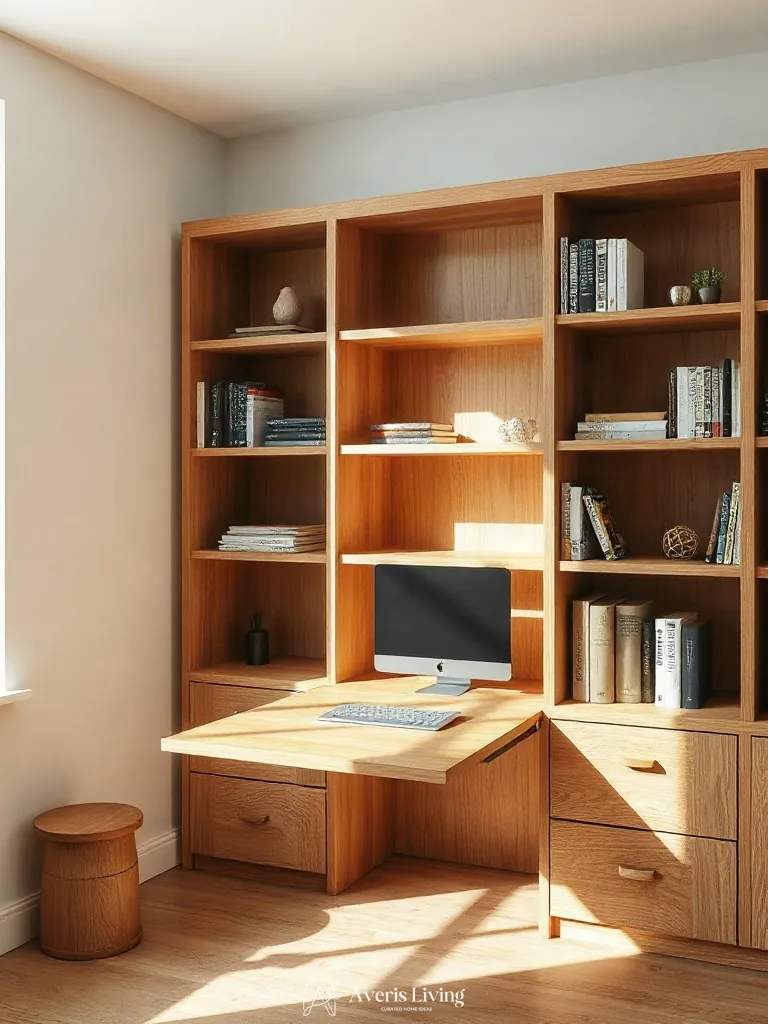
Installing a floor-to-ceiling honey-oak bookcase with an integrated walnut secretary desk draws the eye upward, significantly raising the perceived ceiling height in a warm living room. This vertical architectural millwork elongates wall planes while establishing a sophisticated aesthetic wood desk workspace.
Anchor the 12-inch-deep vertical uprights directly into studs using heavy-duty structural screws. Conceal the drop-down walnut writing leaf with heavy-duty brass knife hinges, ensuring the drop-leaf surface rests precisely at a standard 30-inch typing height when open.
Construct a low-profile window seat that wraps seamlessly into a matching walnut writing desk.
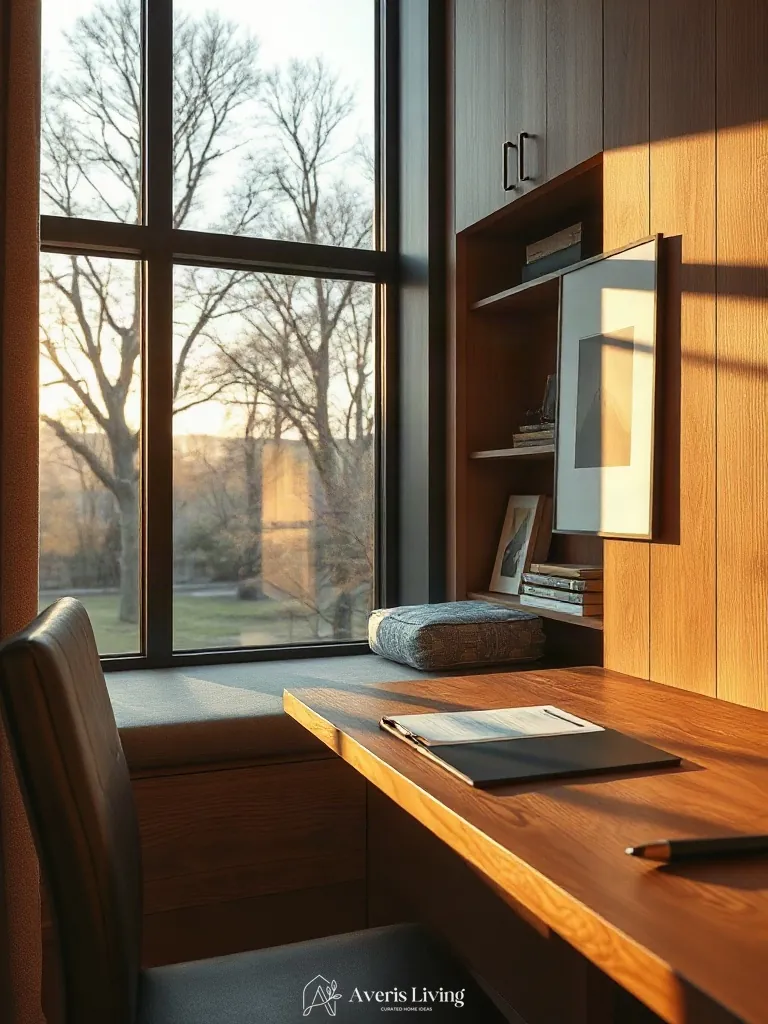
Integrating built-in joinery transforms a sunlit living room perimeter into a cohesive architectural feature. Constructing a low-profile window seat that miters seamlessly into an aesthetic wood desk workspace maximizes natural illumination while maintaining a streamlined layout. Utilizing FAS-grade American walnut veneer over marine-grade plywood ensures both structural integrity and rich, consistent grain patterning throughout the unified platform.
Anchor the 18-inch high window bench directly to wall studs using concealed steel ledger angles, extending the top surface continuously into a 30-inch standard-height writing desk. Miter the corner joint at a precise 45-degree angle to create an uninterrupted waterfall grain effect. Recess a low-voltage LED strip channel beneath the desk overhang for integrated task lighting.
Pair a live-edge walnut desk slab with a textured boucle office chair for organic contrast.
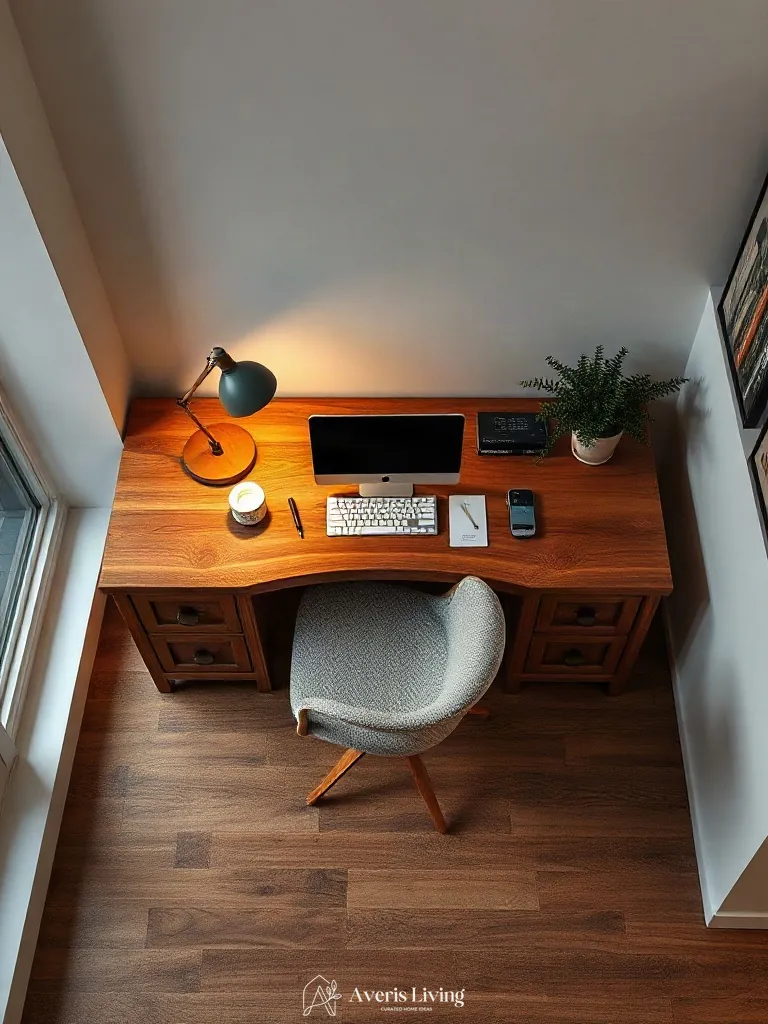
Pairing a live-edge American black walnut slab with a heavy-loop bouclé office chair introduces a sophisticated interplay of tactile finishes to your living room. The rich, oiled grain of the hardwood features undulating sapwood details that catch evening lamplight, while the nubby, high-texture wool-blend fabric absorbs illumination, creating dimensional contrast against smooth plaster walls.
Select a two-inch-thick walnut slab finished in matte hardwax oil and mount it on minimalist bronze pedestals. Pair this with a cream-toned, heavy-textured bouclé executive chair featuring a swivel base to complete your aesthetic wood desk workspace.
Mount a solid honey-oak desktop onto blackened-steel hairpin brackets for an industrial-warm aesthetic.
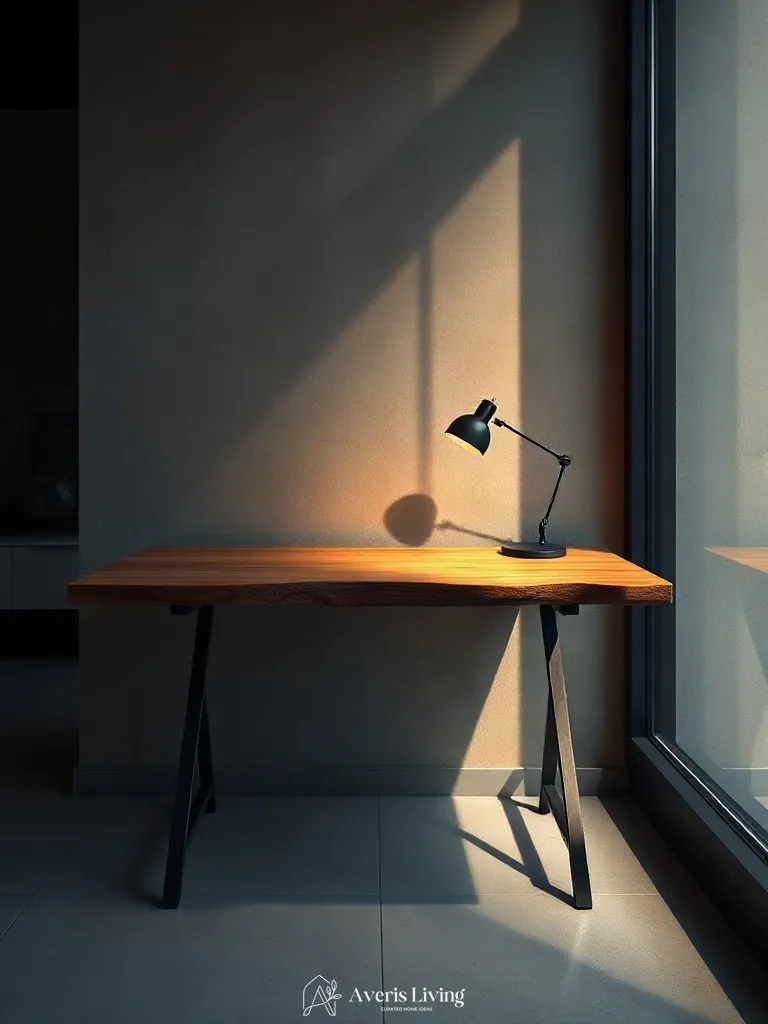
Marrying raw burnished steel with the golden, tactile warmth of a solid 1.5-inch honey-oak slab creates striking material tension. In a living room, this industrial juxtaposition catches daylight obliquely, highlighting the open wood grain against matte metal brackets.
Secure heavy-duty three-rod blackened-steel brackets directly into studs using two-inch structural screws. Position the desktop at a standard thirty-inch height to balance the heavy structural elements while establishing a refined aesthetic wood desk workspace.
Layer a rich leather desk mat over a honey-oak veneer desktop to ground the writing zone.
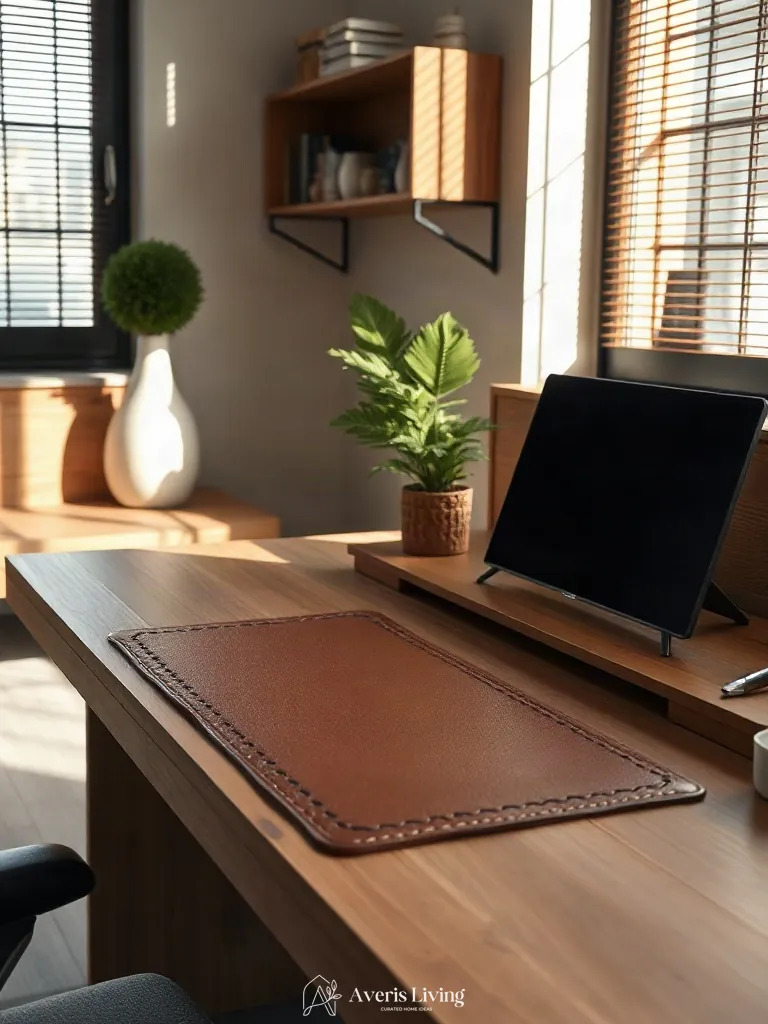
Marrying tactile opposites defines a curated living room aesthetic wood desk workspace. Laying a full-grain bridle leather mat across a warm honey-oak veneer desktop introduces a butter-soft, matte contrast to the reflective grain. As morning sunlight strikes the surface, the pebbled leather absorbs the glare, highlighting the linear warmth of the wood underneath.
Select a 3mm-thick vegetable-tanned leather pad measuring 36 by 18 inches. Center it precisely four inches from the front edge of the oak desktop to establish a defined writing zone while preserving the natural wood perimeter.
Tile the living room workspace accent wall with matte zellige tiles in warm honey-oak tones.
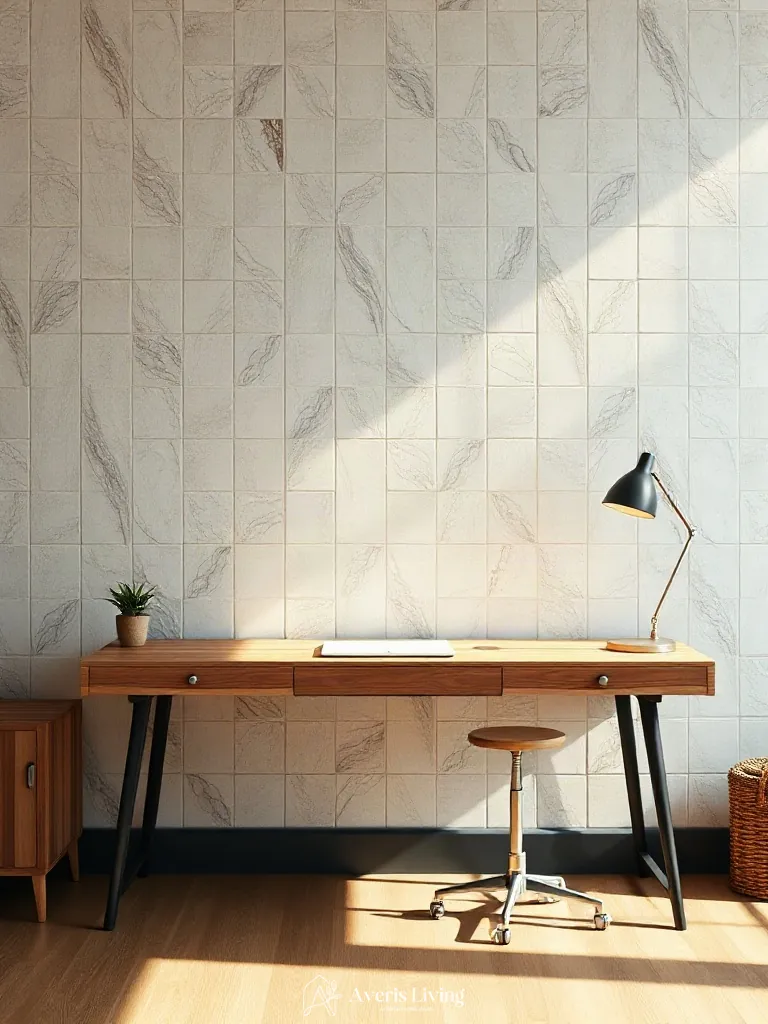
Introduce tactile variation to your aesthetic wood desk workspace by cladding the backdrop in Moroccan zellige tiles. Each 4×4-inch handmade clay tile features a glazed, undulating surface that catches midday sunlight, casting dynamic shadows across adjacent white oak surfaces.
Install the tiles using a tight 1/16-inch grout line matching the honey-oak glaze tones. Finish with a matte neutral sealer to preserve the raw, chalky edges while highlighting the rich variations in texture behind the wooden desktop.
Contrast a dark walnut desk surface with a fluted plaster back panel finished in creamy lime wash.
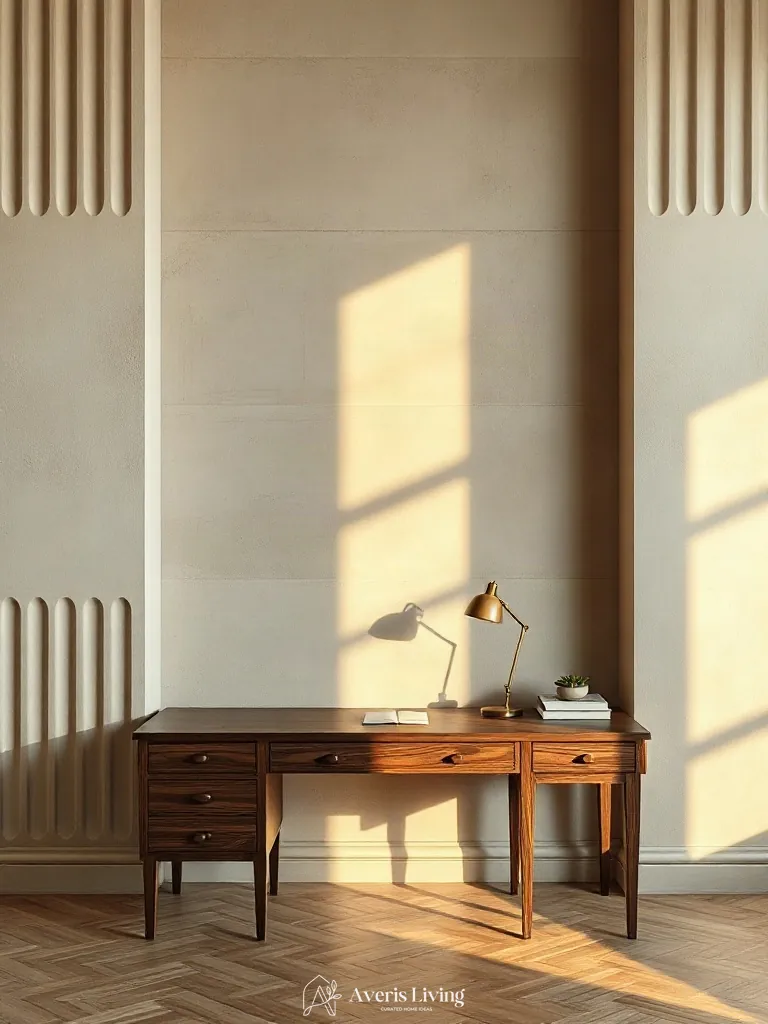
Pairing a rich American black walnut desktop with a fluted plaster back panel creates a sophisticated tactile contrast for your aesthetic wood desk workspace within a warm living room. The velvety, matte finish of creamy lime wash absorbs ambient illumination, diffusing golden-hour rays across its vertical ridges while casting delicate micro-shadows that highlight the hand-trowelled plaster texture against the dense, polished grain of the deep brown timber.
Construct the fluted backdrop using three-quarter-inch half-round MDF moldings embedded directly into the wet plaster before applying two coats of mineral-based lime wash. Set the solid walnut slab two inches forward from the relief panel to allow graze lighting from a ceiling uplighter to sweep down the flutes, emphasizing the dimensional relief and earthy materiality.
Mount an articulated brass swing-arm sconce directly above the walnut workspace for focused task lighting.
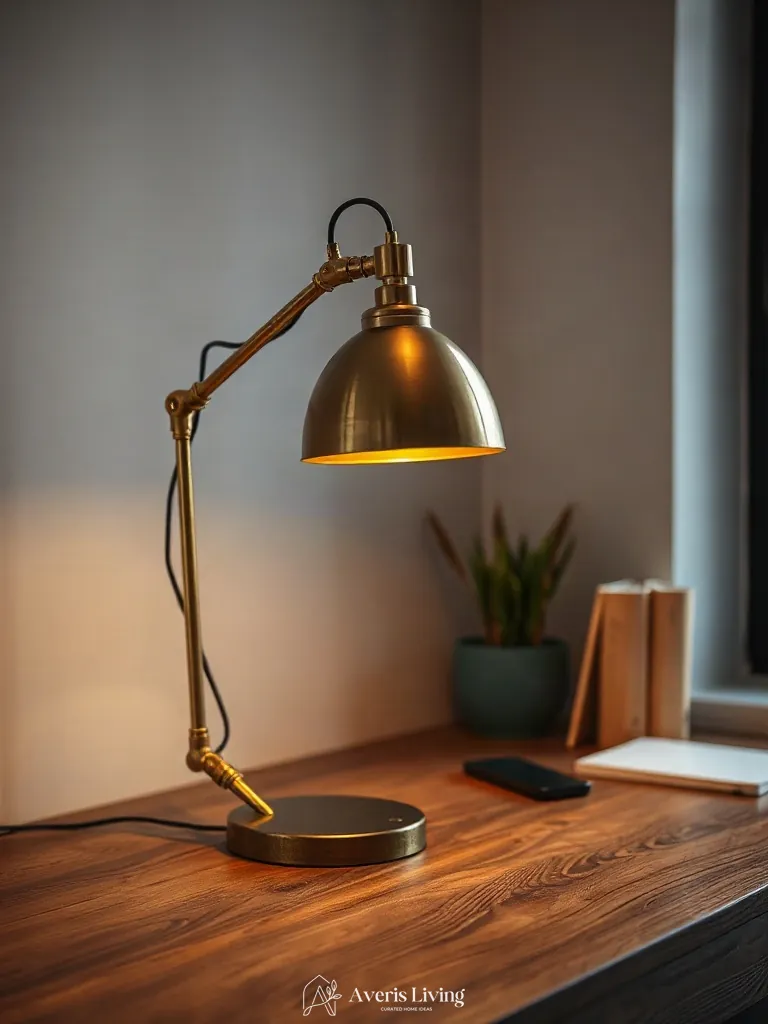
Integrating an articulated brass swing-arm sconce above your aesthetic wood desk workspace introduces vital task-lighting layers to the living room. Utilizing a warm 2700K LED bulb with a focused 30-degree beam angle casts targeted illumination directly onto the walnut surface, softening harsh shadows. This directional lighting architectural technique visually expands the vertical scale of the room by drawing the eye upward against the dark wood grain.
Mount the brass sconce fixture precisely 22 inches above the desktop surface to achieve optimal ergonomic coverage without glare. Position the arm centrally or slightly offset to balance the composition, ensuring the articulated joints allow adjustable reach for evening productivity tasks.
Recess warm 3000K LED strips beneath honey-oak floating shelves to illuminate the desk surface below.
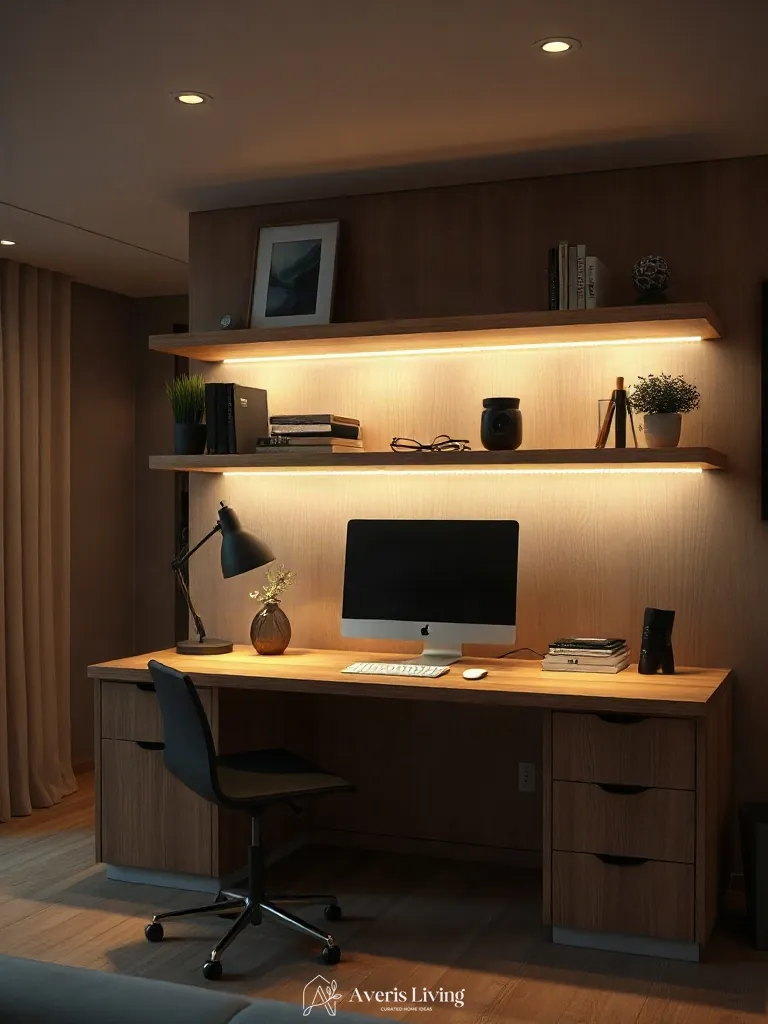
Integrating layered lighting architecture elevates any living room aesthetic wood desk workspace. Recessing warm 3000K LED strips beneath honey-oak floating shelves establishes a shadow-free ambient wash that enhances the room’s perceived scale. This precise Kelvin temperature softens vertical planes, eliminating harsh contrasts and highlighting the rich grain of the timber.
To execute this installation, mount continuous linear diode channels flush against the underside shelf edge, angling diodes outward at a 45-degree beam angle. This specific positioning bathes the workspace in a cohesive glow without producing distracting screen glares.
Suspend a woven rattan pendant lamp precisely 30 inches over the live-edge walnut desk.
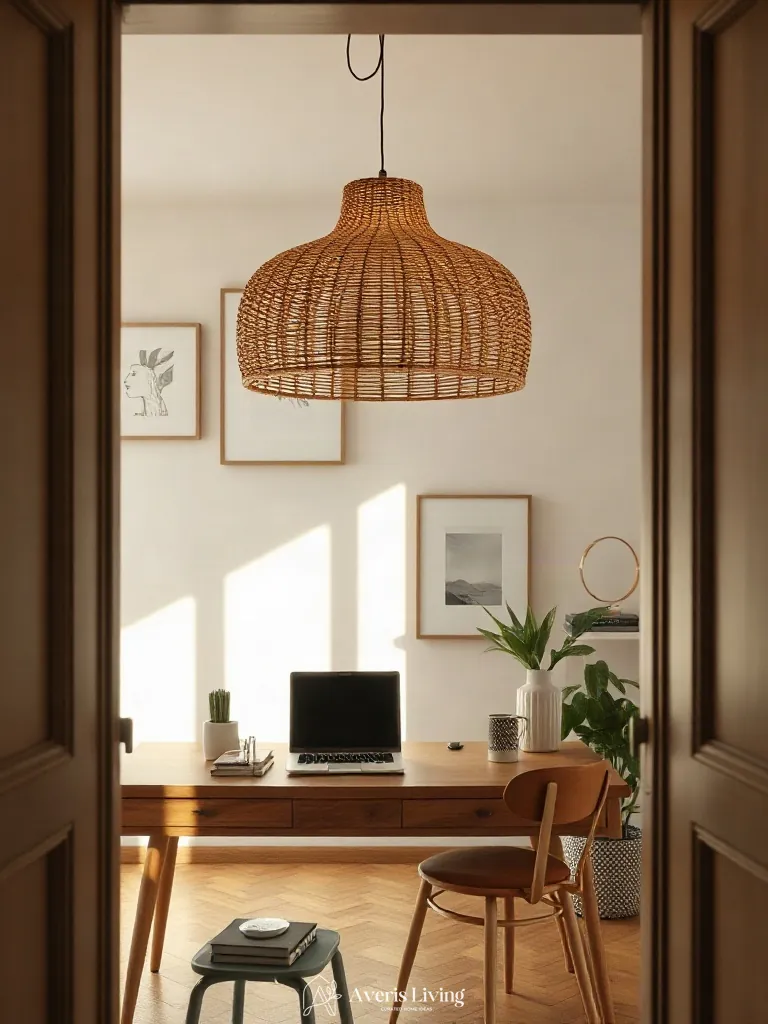
Suspending a textured fixture above an aesthetic wood desk workspace alters the vertical scale of a warm living room. A woven rattan pendant introduces organic shadow play, casting a wide 120-degree beam angle across the walnut grain. Utilizing a 2700K warm white LED bulb softens the downward illumination, bridging ambient living areas with concentrated task lighting while enhancing the natural timber tones.
Hang the pendant precisely 30 inches above the desktop surface to prevent glare while maintaining an intimate overhead glow. Hardwire the fixture to a wall-mounted dimmer switch, allowing seamless transitions from bright morning output to a moody evening ambiance suited for relaxed daily computing.
Place a heavy ceramic task lamp with an amber glass shade on the honey-oak desk for evening glow.
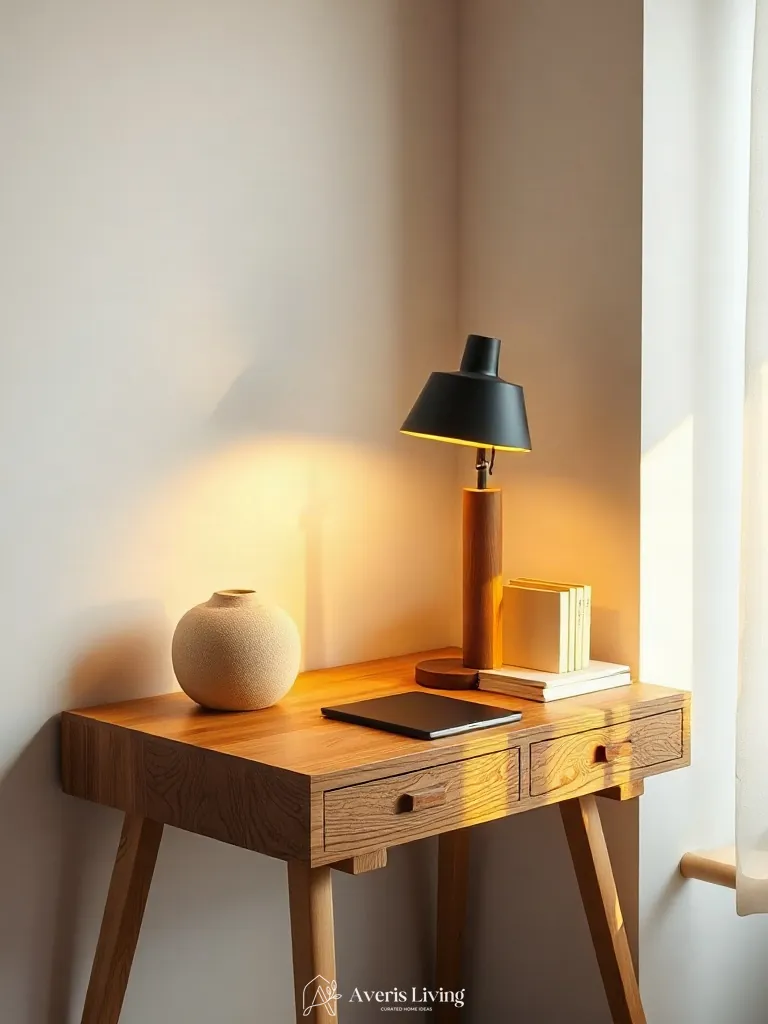
Integrating organic ceramic textures into your lighting architecture softens the visual geometry of a living room. A heavy earthenware task lamp introduces grounding tactility while layering functional lumens over an aesthetic wood desk workspace. By utilizing a 2700K LED bulb inside an amber glass shade, you generate a warm, low-glare pool of light with a focused 40-degree beam angle that accentuates the honey-oak grain.
Position the heavy ceramic base eight inches from the rear left corner of the desk, ensuring the amber shade’s bottom edge sits fourteen inches above the surface. This specific offset prevents harsh shadows and casts a golden evening glow that visually expands the corner boundaries of the room.
Style an ergonomic mid-century modern leather desk chair opposite a sculptural walnut partner’s desk.
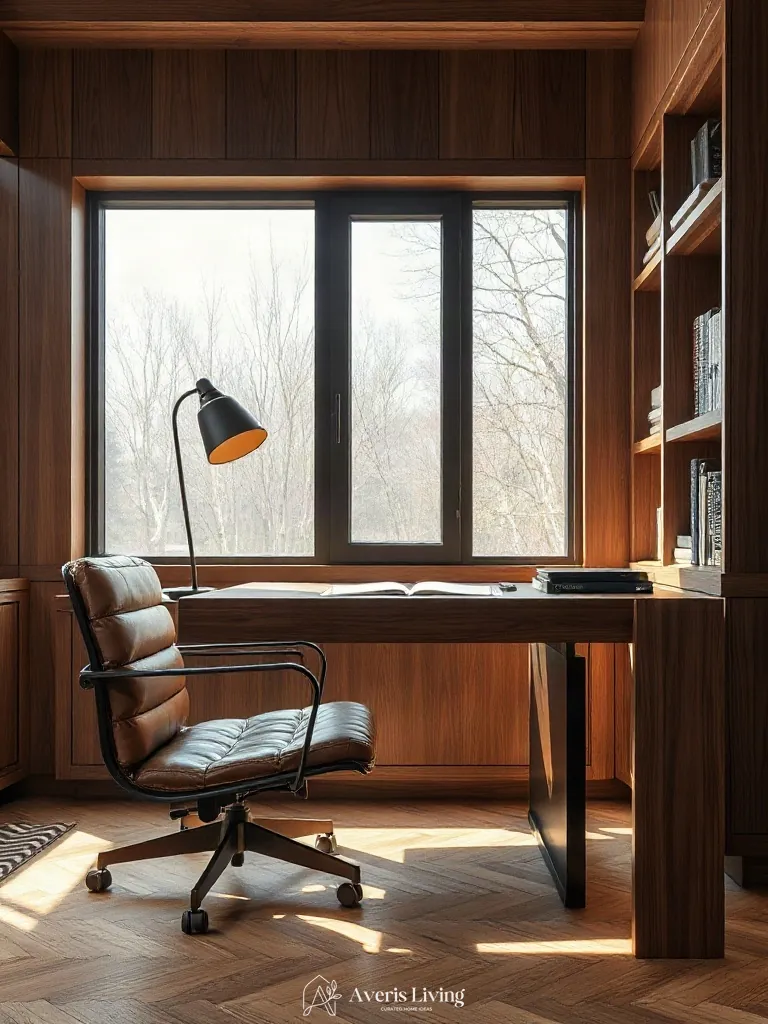
Anchor your warm living room with a sculptural walnut partner’s desk featuring dramatic double-pedestal proportions and tapered brass-capped legs. Paired with an ergonomic mid-century modern leather desk chair in cognac top-grain hide, this pairing creates a commanding visual focal point that grounds the aesthetic wood desk workspace layout.
Leave a strict 36-inch clearance path around the perimeter of the 72-inch partner’s desk to allow the sculptural wood grain and rich upholstery to breathe within the primary floor plan without crowding surrounding seating.
Introduce a fluted oak pedestal desk paired with an oversized mohair velvet accent chair.
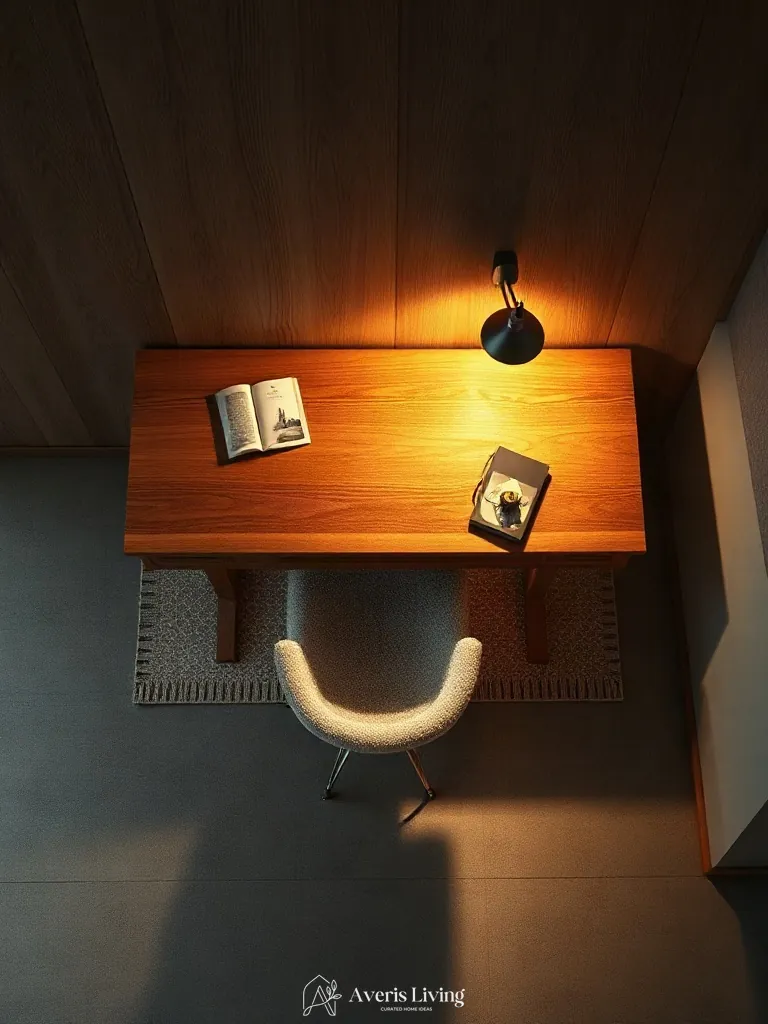
A fluted oak pedestal desk acts as a commanding architectural anchor within a warm living room. The thick, reeded cylindrical columns provide a striking textural contrast to smooth walls, while establishing a cohesive aesthetic wood desk workspace. Paired with a plush mohair velvet accent chair, the heavy visual weight of the oak is beautifully softened by the rich, tactile pile and enveloping proportions of the oversized seating.
Position the desk so its sculptural pedestal base remains fully visible from key sightlines. Select a mohair velvet chair featuring a deep 28-inch seat depth and tapered brass-capped legs to maintain an airy silhouette against the solid wood furniture.
Feature a cantilevered steel and walnut writing table as the primary living room accent piece.
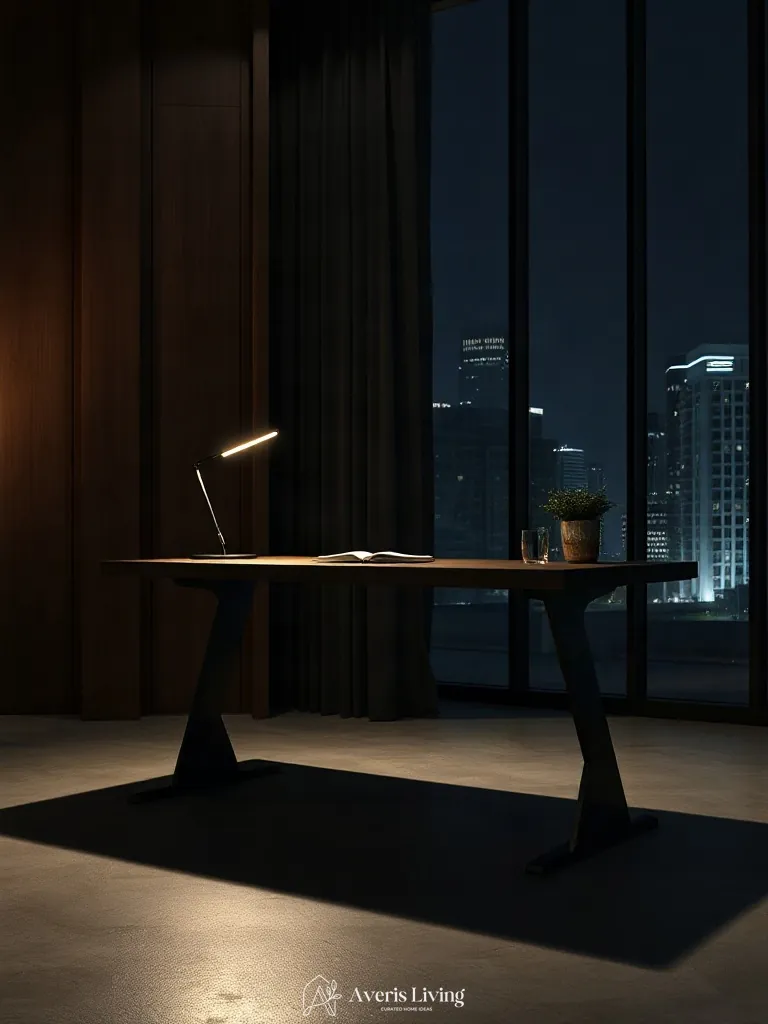
A cantilevered steel and walnut writing table immediately commands attention, serving as a striking focal point in your aesthetic wood desk workspace. The rich, grain-figured American black walnut top brings warmth, while the matte black powder-coated steel base creates an illusion of floating architectural suspension. This bold interplay of heavy timber and slender metal balances visual weight.
To anchor the composition, select a desk with a generous 60-inch span and pair it with a low-profile, aniline-dyed cognac leather armchair. Position the hero piece perpendicular to your main seating arrangement to define the functional zone without blocking ambient sightlines across the warm living room.
Position a minimal honey-oak trestle desk with a fluted modesty panel in the main living space.
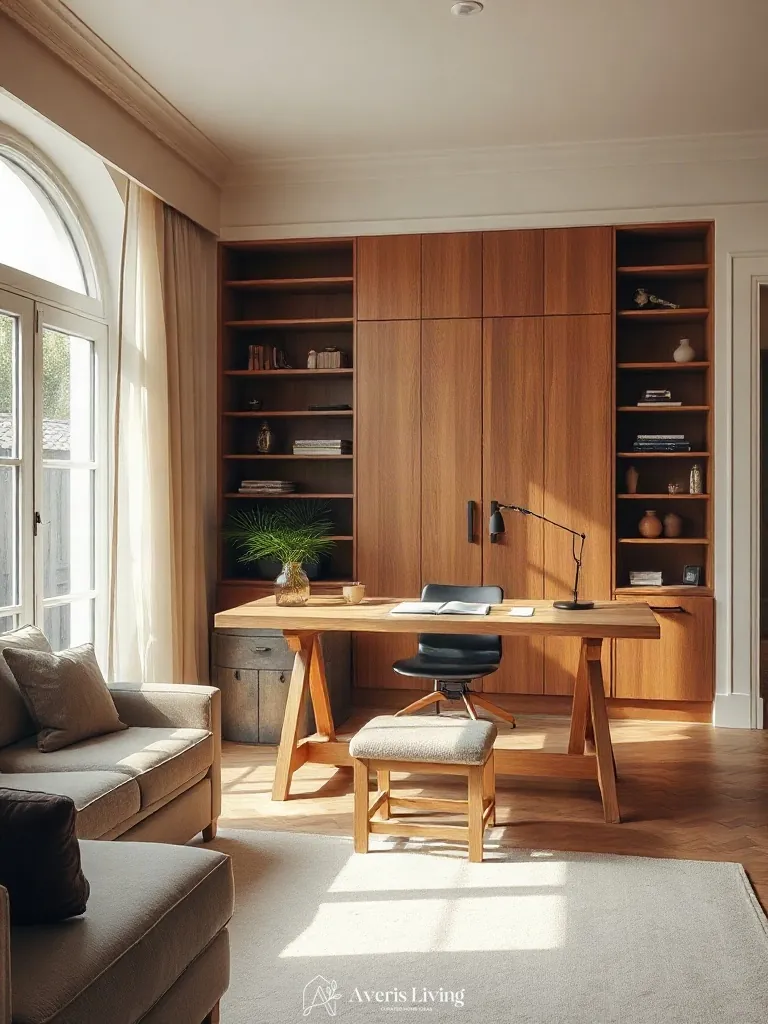
A honey-oak trestle desk featuring an architectural fluted modesty panel acts as a striking anchor for the living room layout. The balanced proportions of the trestle base provide visual lightness while grounding the room’s overarching design composition.
Position the hero furniture piece floating within the space, allowing at least three feet of clearance behind the chair. Pair the warm timber finish with delicate brass leg sabots to establish a sophisticated focal point for your daily aesthetic wood desk workspace.
Arrange handmade ceramic vases and a travertine tray on the walnut desk for curated organization.
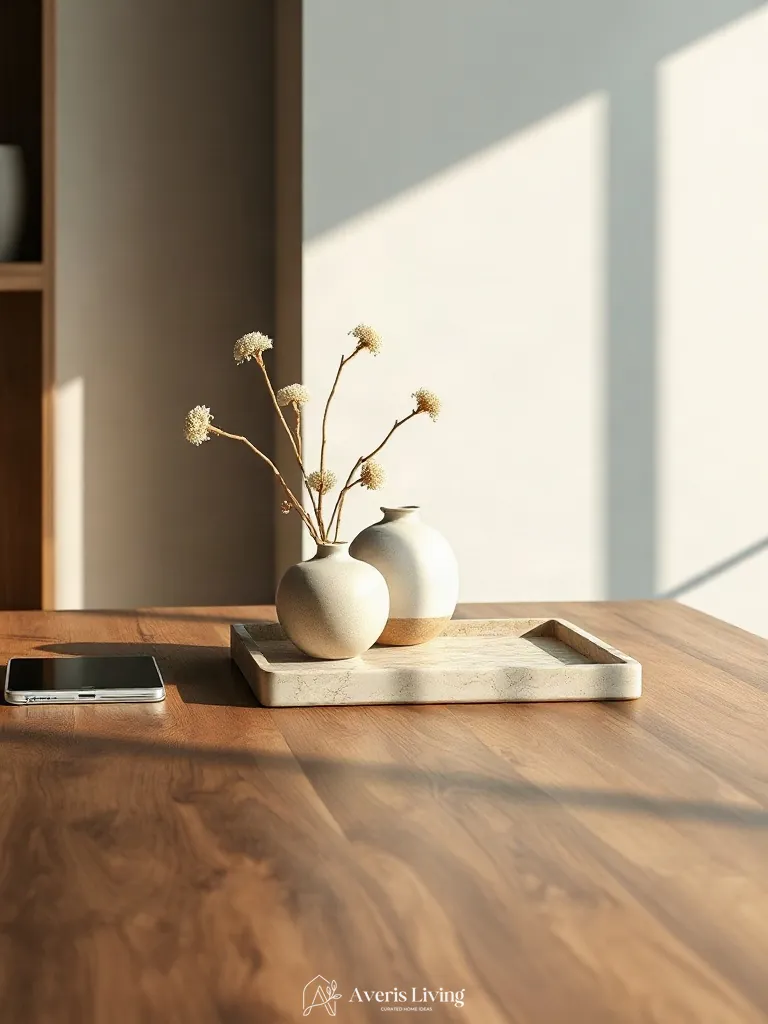
Styling an aesthetic wood desk workspace in a warm living room requires balancing organic textures with refined shapes. Pairing a porous, honed travertine tray with the rich, dark grain of a walnut desktop introduces immediate tactile contrast. Placing low-profile handmade ceramic vases atop the stone grounds the vignette, utilizing matte finishes that absorb midday light while preventing visual clutter across the surface.
Execute this arrangement by applying the rule of three for object grouping and scale contrast. Place a twelve-inch rectangular travertine tray off-center, then anchor it with a bulbous, textured ceramic vessel paired with a slender, bud-style vase to vary heights by at least four inches. Leave forty percent of the tray’s stone surface bare to maintain essential negative space.
Lean a gallery of linen-mounted botanical prints against the honey-oak desk backsplash.
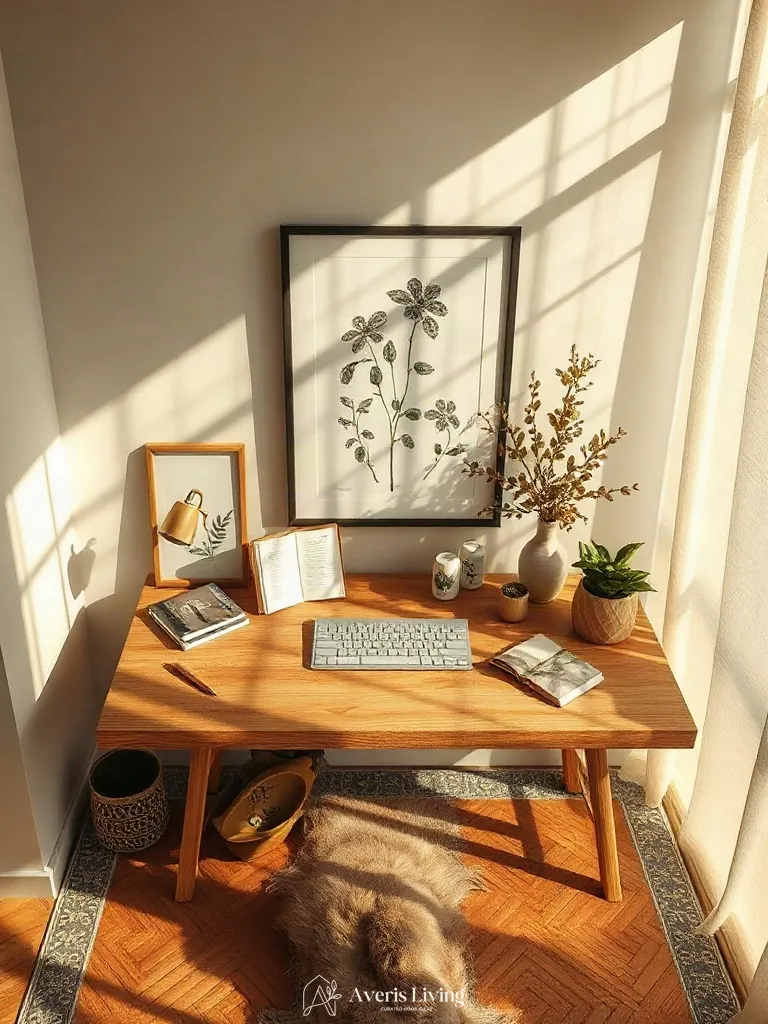
Leaning unframed linen-mounted botanical prints against the honey-oak backsplash introduces soft tactile geometry to your aesthetic wood desk workspace. The fibrous texture of natural flax linen contrasts sharply with the slick golden wood grain. Using varied vertical heights, such as an 8×10 fern study beside an 11×14 eucalyptus plate, creates dynamic scale contrast while preserving calming negative space.
To execute this look, stagger three fabric-backed panels directly on the desktop. Maintain a deliberate two-inch overlap between the frames to establish visual depth, anchoring the arrangement with a heavy brass wedge weight.
Set a large terracotta urn filled with dried pampas grass beside the walnut workspace to soften harsh angles.
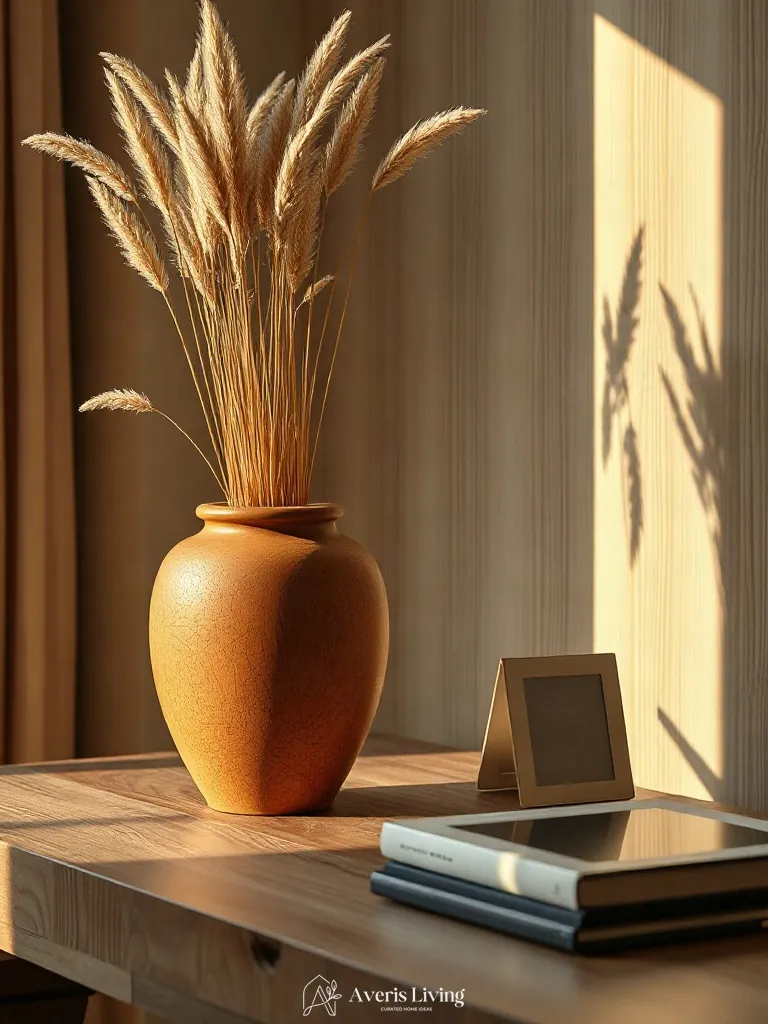
Integrating an oversized terracotta vessel introduces rich organic texture to your living room aesthetic wood desk workspace. The rustic porosity of unglazed clay juxtaposes the sleek, linear joinery of mid-century walnut furniture, instantly neutralizing harsh architectural angles. Scale contrast is vital here; a grand, floor-standing amphora demands visual attention, drawing the eye upward while grounding the corner.
Anchor the arrangement by filling a forty-inch-tall vessel with voluminous stems of dried pampas grass. Maintain crucial negative space by leaving at least twelve inches of breathing room between the perimeter of the urn and the desk edge, ensuring the heavy silhouette never crowds your functional work zone.
Drop a plush wool-silk rug beneath the honey-oak desk to anchor the living room office zone.
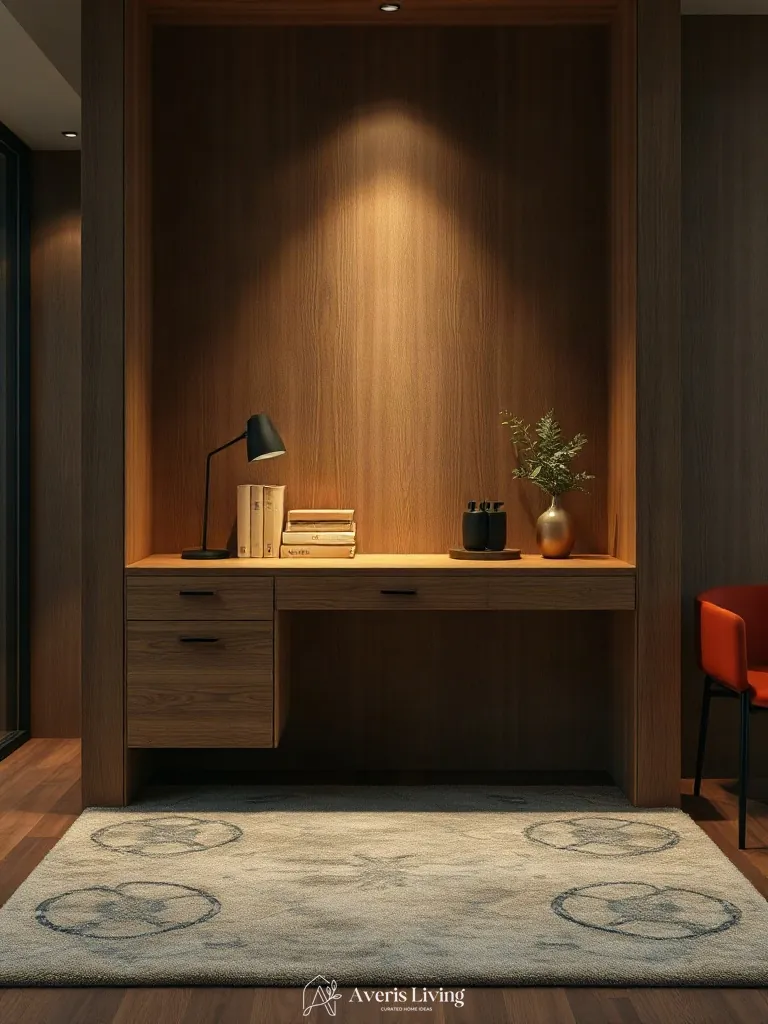
A high-pile wool-silk rug visually anchors an open-concept aesthetic wood desk workspace by creating a distinct boundary against hardwood floors. The tactile contrast between woven silk fibers and smooth golden oak introduces sensory depth. A heavy-weight 8×10 foot hand-knotted pile prevents the furniture zone from floating.
Extend the rug at least eighteen inches beyond the front and side legs of the desk. Pair this placement with generous negative space around the perimeter to maintain breathing room in the living room layout.
Designing an aesthetic wood desk workspace within your living room transforms productivity into an interior design statement. By combining warm honey-oak and walnut tones with thoughtful lighting and architectural built-ins, your home office will feel entirely cohesive and effortlessly stylish.
Save your favorite design ideas to your Pinterest boards and begin curating your ultimate modern workspace today.