

Welcome friends. As an interior stylist, I spend a lot of time thinking about how spaces make us feel, particularly when we are welcoming friends and family into our homes. There is a delicate balance to strike when designing a spare bedroom; you want it to feel curated and considered, yet entirely restful. Lately, I have found myself drawn to the Japandi aesthetic for these spaces. It beautifully marries the functional, cosy warmth of Scandinavian design with the intentional, pared-back elegance of Japanese interiors. The result is a wonderfully serene retreat that allows your guests to truly unwind after a long journey.
What I love most about this fusion is how forgiving it is on the wallet. Because the entire philosophy revolves around keeping things simple and uncluttered, you are naturally encouraged to buy less. Creating a Japandi guest room on a budget is not about hunting down cheap replicas of designer furniture; it is about embracing negative space, focusing on tactile natural materials, and making smart choices on the UK high street. Let me show you how to pull together a beautifully tranquil spare room without overspending.
Crafting Calm: The Japandi Guest Room Aesthetic on a Budget
At its core, the Japandi aesthetic is a masterclass in restraint, relying on a careful balance of clean lines, abundant natural light, and organic warmth to create a relaxing space. For a guest bedroom, this approach is wonderfully practical. Rather than filling the room with unnecessary decorative objects or bulky furniture, the focus shifts to creating a breathable environment. By stripping away visual clutter, you give the room a sense of quiet spaciousness, which is essential for helping visitors feel completely at ease the moment they drop their weekend bags.
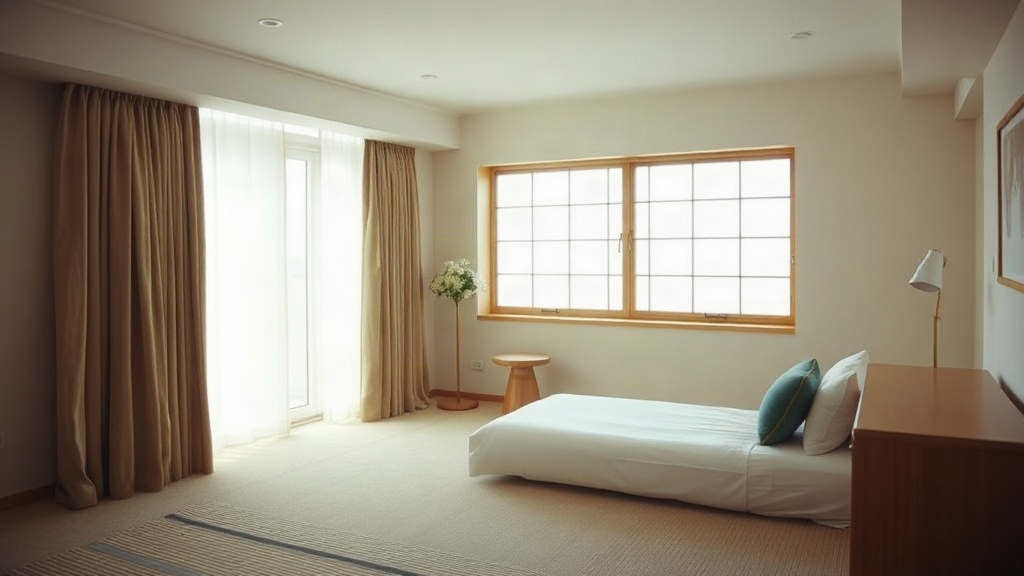
Embracing this minimalist mindset is your greatest asset when working with a strict decorating budget. When you only need a few key pieces to make the room work, you can afford to be selective about their shape and finish. A simple, low-profile bed frame, a beautifully textured rug, and a single piece of statement art can carry the entire scheme. You do not need to fill every corner. In fact, leaving empty space around your furniture allows the architecture of the room to breathe, making even the smallest box room feel intentional and airy.
To make this pared-back approach feel warm rather than stark, you must rely heavily on tactile materials. The magic lies in the subtle imperfections of natural elements. Think raw timber, slubby cottons, and matte ceramics. These materials absorb light beautifully, softening the edges of the room and creating a cocooning atmosphere. When you are shopping on a budget, look for these textures in affordable accessories like woven baskets or simple paper shades to instantly inject that essential Japandi warmth.
The Art of Understated Hues: Japandi Colour Palettes and Textures
Getting the colour palette right is the most crucial step in achieving a high-end Japandi look on a shoestring. We want to move away from stark, clinical whites and instead embrace a spectrum of warm, earthy neutrals. Picture soft oatmeals, muted taupes, and plaster pinks that mimic the look of traditional Japanese clay walls. These shades provide a beautifully soft backdrop that catches the morning light perfectly. By painting the walls, skirting boards, and even the ceiling in the same warm off-white, you blur the boundaries of the room, making it feel larger and infinitely more calming.
| Room Element | Designer Paint / Finish | High-Street Alternative | Ideal Material Pairing |
|---|---|---|---|
| Base Wall Colour | Farrow & Ball ‘School House White’ | Dulux Heritage ‘Pebble Grey’ (£42) | Smoked oak or walnut timber |
| Feature Texture | Authentic Tadelakt Plaster | Linen-effect paste-the-wall paper (£15/roll) | Matte, unglazed stoneware |
| Woodwork & Trim | Little Greene ‘Slaked Lime’ | Crown ‘Sail White’ Eggshell (£22) | Brushed brass or matte black iron |
| Ceiling | Farrow & Ball ‘Shadow White’ | Dulux ‘Timeless’ Flat Matt (£18) | Textured paper lighting pendants |
Texture is just as important as colour in a minimalist scheme. If your walls are perfectly smooth, the room can quickly feel a little flat. While authentic tadelakt or limewash plaster can be incredibly expensive, you can easily fake the look. I love using a subtle, textured linen-effect wallpaper on a feature wall, or even experimenting with a colour-wash paint technique using affordable trade emulsion. Pair these soft, chalky walls with contrasting accents of darker wood to ground the space and add that crucial architectural definition.
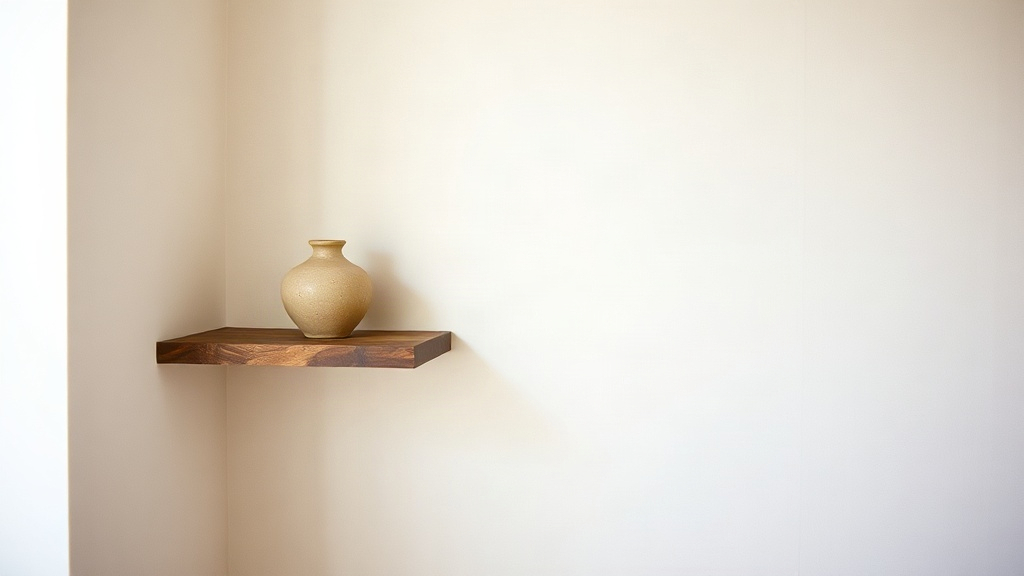
When planning your materials, remember that contrast is your friend. The softness of your wall colour needs to be balanced by the rawness of your furnishings. A simple pine shelf, perhaps stained to a darker, richer tone, paired with a matte, unglazed ceramic vase creates a beautiful visual tension. These small moments of contrast stop the neutral palette from washing out and keep the eye engaged. It is these carefully considered pairings that make a budget-friendly room look like it was styled by a professional.
Smart Sourcing for Japandi Style: Furniture Finds That Don’t Break the Bank
When it comes to furnishing your guest room, the bed is naturally the focal point. To capture that authentic Japandi silhouette, look for low-slung wooden frames with clean, horizontal lines. You do not need to spend thousands on artisan joinery; many UK high-street retailers have produced fantastic, budget-friendly iterations of the classic platform bed. A simple pine or ash frame from Argos or IKEA, perhaps treated with a subtle matte varnish to remove any cheap sheen, can look incredibly sophisticated. Keep the bedside tables equally unassuming to save precious floor space.
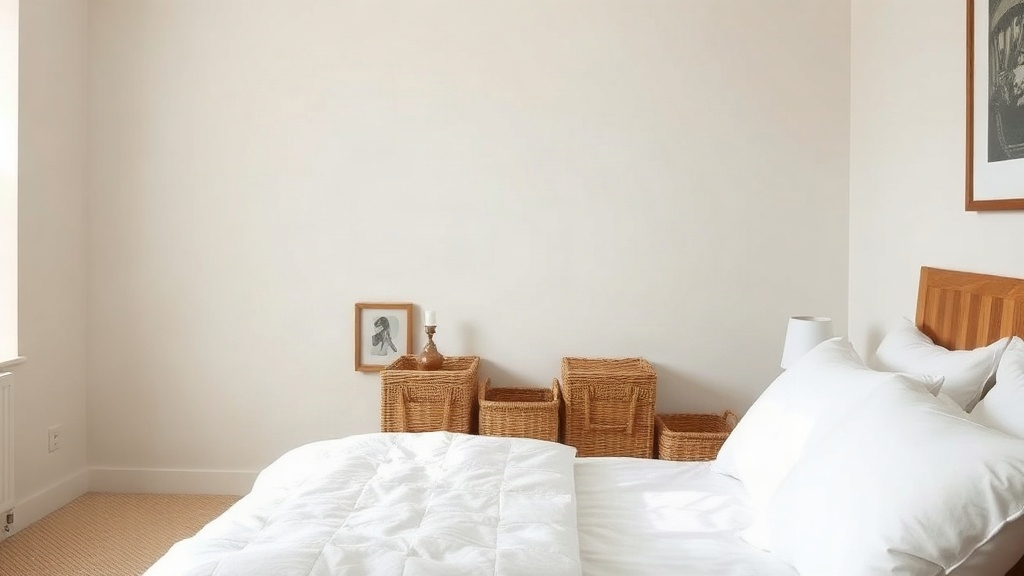
💡 Verity’s Styling Secret: To make a budget high-street bed frame look bespoke, swap out the standard factory hardware for matte black or brushed brass bolts, and use a heavily textured linen valance to hide any unsightly metal support legs underneath.
Storage is often an afterthought in guest rooms, but in a Japandi scheme, it must be seamless. Instead of a bulky, expensive wardrobe, consider a sleek, open hanging rail made from light wood or matte black metal. Beneath it, you can utilise large, woven seagrass or rattan baskets from shops like Dunelm or Next Home to hold spare blankets, towels, and your guests’ belongings. These natural materials bring an organic, handcrafted feel to the room while providing practical, affordable storage that does not dominate the space.
The secret to high-street shopping is knowing where to spend and where to save. Invest a little more in a comfortable, supportive mattress for your guests, but save on the secondary furniture. A vintage wooden chair picked up from a charity shop or Facebook Marketplace can serve as a beautiful, sculptural spot for guests to lay their clothes. By mixing one or two brand-new, affordable pieces with a weathered, second-hand find, you give the room character and ensure it does not look like a catalogue showroom.
The Soulful Details: Lighting, Linens and Organic Accents
Lighting is the ultimate mood-setter in any Japandi space. Overhead lighting should be soft and diffused, never harsh. The classic paper lantern pendant is a staple of this aesthetic, and wonderfully, it is also one of the most affordable lighting options available. A large, sculptural paper shade from a high-street store adds instant volume and a beautiful, glowing ambient light to the room. Layer this with secondary lighting; a small, matte ceramic table lamp on the bedside and perhaps a slender floor lamp tucked into a corner will allow your guests to control the mood perfectly.
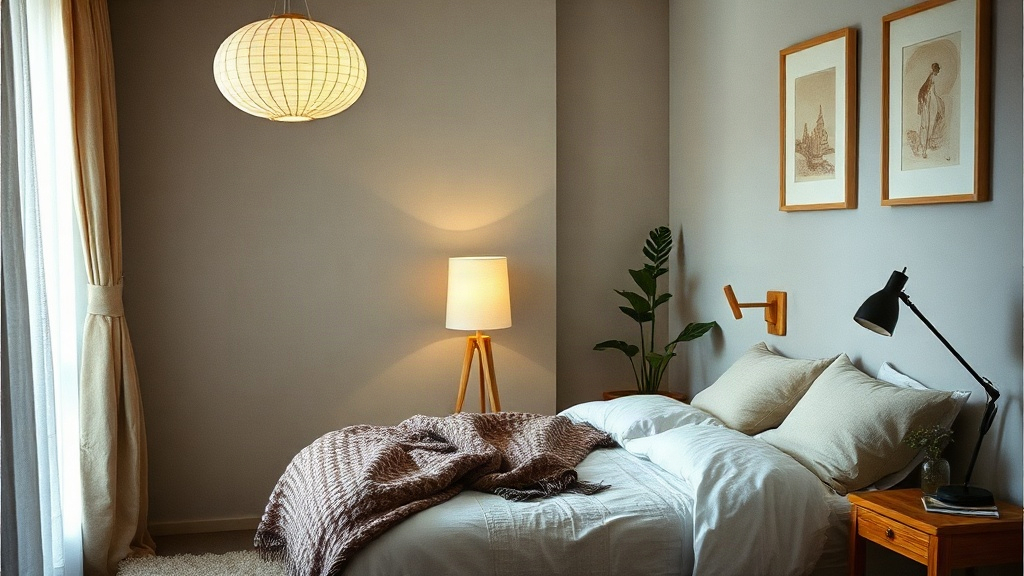
The bed linens are where you can really spoil your guests and reinforce that tactile, organic aesthetic. While pure, stonewashed linen is the dream, it can be prohibitively expensive. Fortunately, retailers like John Lewis and M&S offer superb linen-cotton blends that provide that same relaxed, slightly crumpled look for a fraction of the price. Stick to unbleached whites, soft greys, or muted clay tones. Layer the bed with a chunky wool or cotton waffle throw at the foot. This layering of textures makes the bed look incredibly comfortable and generous.
Finally, bring life into the room through organic accents. Japandi styling celebrates the beauty of nature, but it favours a minimalist approach over an indoor jungle. A single, graceful branch in a stoneware vase, or a sculptural, easy-care plant like a Ficus in a terracotta pot, is all you need. Keep artwork simple and abstract, perhaps a framed piece of textured handmade paper or a minimalist line drawing. These quiet, soulful details cost very little but they finish the room beautifully, ensuring your guests feel truly cared for during their stay.
Creating a beautiful, restful space for your guests does not require a huge budget, just a little thoughtfulness and a focus on what truly matters: comfort, calm, and beautiful textures. I hope these ideas help you craft a spare room that you are proud to share. Happy styling!
Warmly,
Verity xx