

Hello, and welcome back to averisliving.uk. I am Verity Innes Smith, and if there is one thing I have learned from years of styling homes across the UK, it is that our famously unpredictable weather demands practical design. We spend half the year dodging showers, stomping through muddy fields, and wrestling wet dogs into the house. A dedicated boot room is not just a country house luxury; it is a hardworking necessity that keeps the rest of your home clean and organised.
Creating a rustic boot room is about striking a balance between rugged durability and warm, welcoming aesthetics. You want a space that can handle dirt, damp, and daily chaos, yet still feels like a considered part of your home. The rustic aesthetic lends itself perfectly to this brief, relying on forgiving natural materials, robust finishes, and colours that echo the landscape outside your door.
Whether you are working with a spacious side extension or a narrow utility corridor, injecting a bit of countryside charm is entirely achievable. Today, I am sharing practical DIY decor ideas, styling tips, and high-street sourcing secrets to help you build a boot room that works incredibly hard while looking effortlessly stylish.
Embracing the Charm of a Rustic Boot Room
A successful boot room bridges the gap between the outdoors and your interior living spaces. By embracing a rustic aesthetic, you allow the room to age gracefully. Scuffs on the woodwork or a bit of mud on the floorboards feel like a natural part of the patina rather than a disaster that needs immediate cleaning.
The Enduring Appeal of Countryside Practicality
The traditional UK cottage entrance has always prioritised function, but it does so with an undeniable, quiet charm. Picture a space where wellies are neatly lined up against exposed brickwork, and thick woollen coats hang from sturdy iron pegs. This look is rooted in necessity, using materials that were historically available and built to withstand the rigours of rural life.
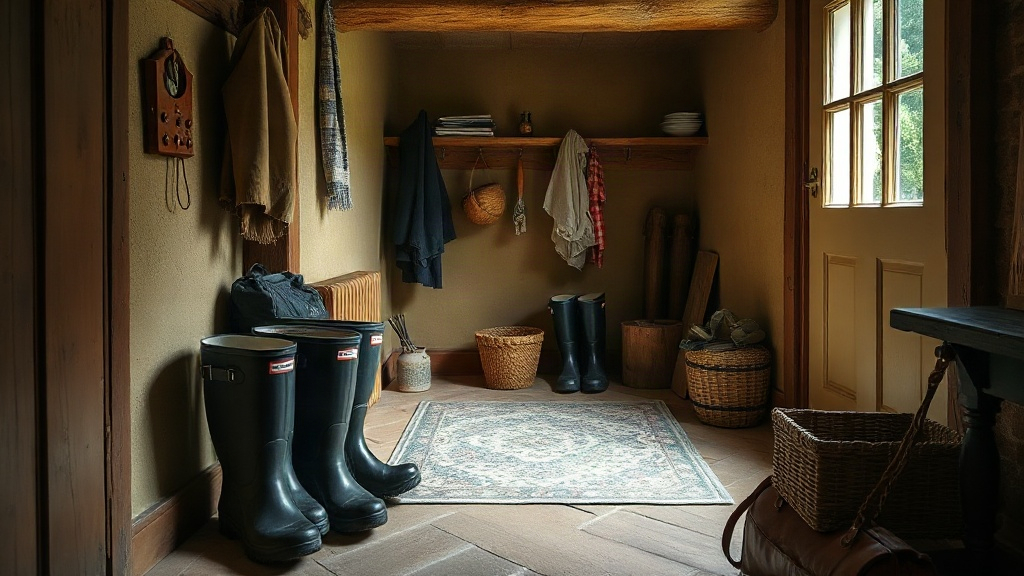
To recreate this feeling, start by stripping back unnecessary modern finishes. If you are lucky enough to have original floorboards or brickwork under your current flooring, consider exposing them. Alternatively, introducing tongue-and-groove panelling is an excellent way to add architectural interest to a plain plaster wall. It protects the wall from scuffing boots and provides a solid grounding for heavy-duty coat hooks.
Practicality should dictate your layout. Ensure there is a clear drop zone the moment you step through the door. A sturdy surface for dumping keys, a designated spot for wet umbrellas, and a clear pathway that does not force you to squeeze past bulky furniture will make the space function seamlessly during the morning rush.
Crafting a Welcoming First Impression
While the boot room is a utility space, it is often the entrance you and your family use most frequently. It deserves to feel just as welcoming as your formal front door. A rustic wooden bench is often the cornerstone of this space, providing a necessary spot to sit while pulling off stubborn Wellington boots.
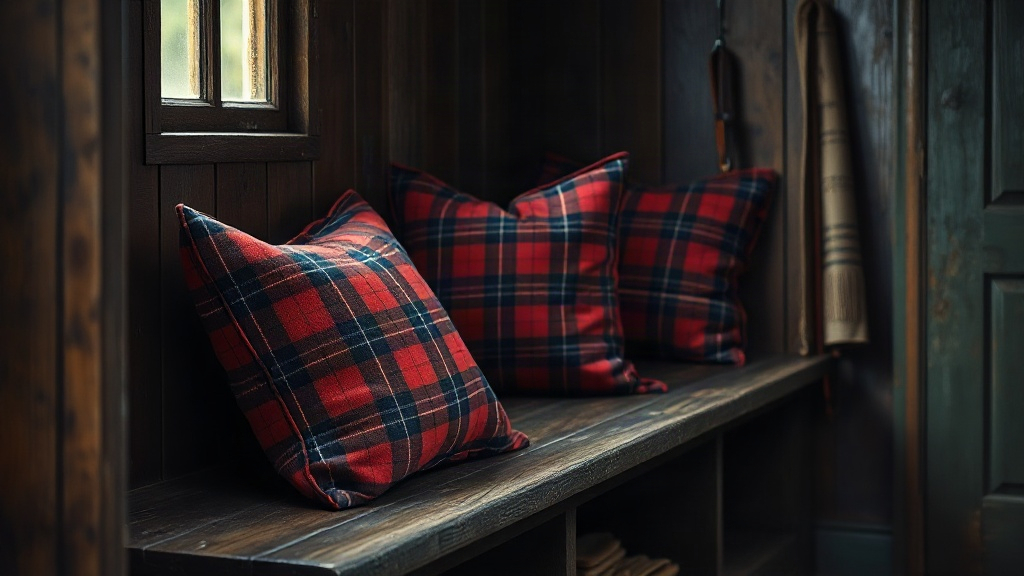
Softening this hard furniture is key to creating a welcoming atmosphere. Adding a seat pad or a scattering of cushions in a classic tartan or a subtle gingham check immediately introduces warmth. Look for fabrics that are machine washable or suitable for outdoor use, as they will inevitably encounter damp clothing and muddy paws.
Do not forget the practical accessories that make a house a home. A dedicated, sturdy hook for the dog lead, a small basket for treats, and a heavy-duty coir mat all contribute to the room’s purpose. Grouping these items thoughtfully rather than leaving them scattered turns everyday clutter into charming, purposeful styling.
A Palette Inspired by Nature’s Hues
Colour is a powerful tool in a boot room. Because these spaces are often small or lack large windows, it can be tempting to paint them stark white. However, white walls and muddy boots are a disastrous combination. Instead, look to the colours of the British countryside to create a forgiving, grounded scheme.
Earthy Tones and Muted Greens
Green is arguably the most successful colour for a rustic boot room. It blurs the boundary between the garden and the house, creating a seamless transition. A soft sage green on the walls or woodwork hides minor scuffs beautifully and pairs wonderfully with natural wood tones and brass hardware.
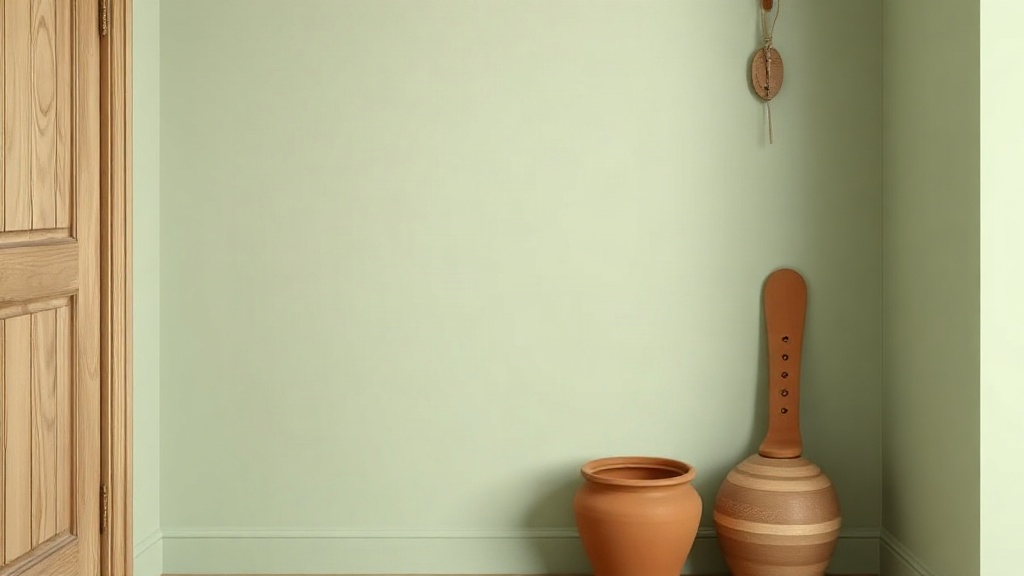
When selecting your paint, opt for a durable finish. Brands like Little Greene offer fantastic ‘Intelligent Eggshell’ or ‘Intelligent Matt’ finishes that are fully washable. Shades like ‘Ambleside’ or Dulux Heritage’s ‘Sage Green’ provide a lovely, muted backdrop that does not feel overly dark or oppressive.
To complete the earthy look, introduce accents of terracotta and natural timber. A weathered terracotta pot holding an umbrella, or a simple oak peg rail against the green wall, adds warmth and texture. These natural materials prevent the green from feeling too flat and tie the whole rustic aesthetic together.
Warm Neutrals and Cosy Accents
If green is not to your taste, warm neutrals are an excellent alternative. Avoid cool, blue-toned greys, which can make a small utility space feel chilly and industrial. Instead, opt for complex neutrals with brown or taupe undertones that mimic the colour of natural stone.
Farrow & Ball’s ‘Elephant’s Breath’ is a classic choice for a reason. It shifts beautifully in different lights, offering a warm, welcoming backdrop that is highly forgiving of dirt. Painting your woodwork, walls, and ceiling in the same warm neutral can also make a cramped boot room feel surprisingly expansive.
Against this neutral canvas, you can layer richer, darker accents. An antique wooden chest serves as both a focal point and excellent hidden storage for out-of-season gear. Draping a thick wool throw over a bench or chair adds a layer of tactile comfort, reminding you that you have stepped out of the cold and into a comfortable home.
Clever DIY Storage for Muddy Adventures
Bespoke boot room joinery can cost thousands of pounds, but this is one area of the home where DIY solutions often look better than highly polished, fitted cabinets. The rustic look thrives on a bit of imperfection, making it the ideal style for weekend upcycling projects and clever, budget-friendly builds.
Upcycled Finds and Bespoke Solutions
One of the most practical DIY projects for a boot room is building your own heavy-duty shelving and seating. Reclaimed scaffolding boards are inexpensive, incredibly strong, and come with a readymade weathered texture that suits the rustic aesthetic perfectly. You can source these easily from local timber yards or online marketplaces.
To create a bespoke boot rack, cut the scaffolding boards to size and sand them thoroughly to remove splinters, leaving the dents and marks intact. You can finish them with a clear wax like Briwax to protect the wood while enhancing its natural grain. Mount them on sturdy, industrial-style cast iron brackets sourced from hardware stores like Screwfix or B&Q.
If you prefer a painted look, coating the wooden supports or a backing board in a dark grey, such as Farrow & Ball’s ‘Railings’, adds a crisp, slightly more tailored edge to the rustic wood. Finish the project by attaching heavy-duty forged iron hooks for coats, ensuring they are spaced far enough apart to accommodate thick winter puffers.
Smart Organisation for Small UK Spaces
Many UK homes do not have the luxury of a vast, dedicated boot room. Often, we are working with a narrow hallway, a repurposed porch, or a sliver of space in the utility room. In these instances, vertical storage is your best friend. The goal is to get everything off the floor to create an illusion of space and make cleaning easier.
A Shaker-style peg rail running the entire length of your space is an incredibly efficient use of a narrow wall. You can hang coats, bags, dog leads, and even spare folding chairs from it. Installing a peg rail high up draws the eye upwards, while a second, lower rail is brilliant for encouraging children to hang up their own coats.
For seating in tight quarters, consider a small, built-in bench that spans the width of an alcove. You can build a simple frame using timber battens and top it with a piece of cut-to-size MDF or pine. Leave the space underneath open to slide muddy boots into, or add pull-out wicker baskets to hide away hats and gloves.
Textural Delights and Robust Materials
A rustic boot room relies heavily on texture rather than pattern to create visual interest. Because this room takes a battering from the elements, the materials you choose must be robust. The beauty of natural materials is that they tend to look better as they age, developing a patina that tells the story of your home.
The Beauty of Natural Wood and Stone
Flooring is arguably the most critical decision in a boot room. It needs to withstand heavy foot traffic, moisture, and grit. Natural stone, particularly tumbled limestone or durable flagstones, is a traditional choice that instantly anchors the room. Companies like Mandarin Stone offer excellent options that look as though they have been there for centuries.
If you prefer a warmer, slightly more industrial rustic look, herringbone brick slips are a fantastic alternative. They offer incredible grip underfoot and hide dirt exceptionally well. Whichever hard flooring you choose, ensure it is properly sealed to prevent muddy water from staining the porous surface.
To balance the cold, hard nature of stone or brick, introduce plenty of natural wood. A solid oak bench, even a small one, brings a vital touch of warmth. Oak is incredibly dense and hardwearing, meaning it will comfortably survive decades of people sitting on it in wet jeans and dropping heavy bags onto its surface.
Tactile Fabrics and Woven Wonders
Once you have your hard materials in place, you need to soften the acoustics and the aesthetic with textiles. A bare stone room can feel chilly and echoey, which is not the welcoming vibe we are aiming for. Rugs and runners are a simple way to introduce softness and define the space.
Jute is an excellent material for boot room floors. It is highly durable, relatively inexpensive, and its natural golden tones pair beautifully with rustic colour palettes. You can easily pick up a hardwearing jute runner from high-street retailers like Dunelm or IKEA UK. It acts as a brilliant dirt-trapper before people walk into your main living areas.
Woven storage is another essential textural element. Rattan or kubu wicker baskets are perfect for sliding onto shelves or under benches. They allow air to circulate, which is crucial for storing slightly damp items like gloves or scarves. Drape a chunky knitted throw over the edge of a basket or a bench to add a final layer of tactile comfort.
Sourcing Your Rustic Treasures in the UK
You do not need to spend a fortune at high-end bespoke joiners to achieve a beautiful rustic boot room. The UK high street, combined with our thriving second-hand market, provides everything you need to pull this look together affordably and sustainably.
High Street Heroes and Independent Gems
Our high street is brilliant for picking up the practical finishing touches that make a boot room function. John Lewis and Argos are reliable sources for sturdy, well-designed storage baskets and heavy-duty doormats. Look for brands like Turtle Mats, which are specifically designed to absorb maximum moisture and mud from wellies and paws.
For decorative but useful items, independent hardware stores and garden centres are goldmines. A heavy ceramic umbrella stand, for example, is a must-have to prevent wet umbrellas from dripping across your floor. You can often find beautiful, slightly imperfect glazed pots at local garden centres that serve this purpose perfectly.
Do not overlook the hardware itself. Swapping out cheap, shiny coat hooks for aged brass or cast iron alternatives is a quick, inexpensive update that dramatically alters the feel of the room. Retailers like Yester Home or Corston Architectural Detail offer beautiful, traditional hardware that adds instant rustic credibility to a space.
Sustainable Choices and Second-Hand Charms
The most authentic rustic spaces are those that look as though they have evolved over time. Buying everything brand new can result in a room that feels a bit like a stage set. Incorporating second-hand furniture is not only a sustainable choice, but it also guarantees your boot room will have character.
UK antique fairs, such as those at Ardingly or Newark, are fantastic places to hunt for boot room furniture. A battered vintage wooden console table can be repurposed as a narrow drop-zone for keys and post. An old wooden blanket box can serve as both seating and storage for bulky winter sports gear.
If you cannot make it to an antique fair, Facebook Marketplace and local charity furniture shops are equally useful. Look for solid wood pieces with good structural integrity. Do not worry about scratched varnish or water rings; a quick sand and a coat of hard wax oil will revive the wood while maintaining its hard-earned rustic charm.
The Art of Styling Your Rustic Space
Once the storage is built, the walls are painted, and the floor is laid, the final step is styling. Styling a utility space might seem unnecessary, but it is these final touches that turn a cold, practical room into a warm, inviting part of your home.
Thoughtful Details and Personal Touches
Start by dressing your shelves. While they need to hold practical items, you can mix in pieces that bring you joy. A row of small terracotta pots planted with hardy indoor herbs or ferns adds a welcome hit of greenery and life to the room. Plants thrive in the slightly cooler, draftier environment of an entryway.
Wall art is rarely considered for a boot room, but it makes a significant impact. A small, framed vintage print of a local countryside scene or a botanical illustration connects the interior with the outdoors. Hang it on a peg rail or prop it on a high shelf to keep it out of the way of swinging coats.
Finally, upgrade your everyday practical items. Swap a generic plastic dog lead for a handsome leather one, and display it proudly on a dedicated hook. Install a vintage wooden key holder rather than leaving keys in a messy bowl. When the everyday items are beautiful, the room naturally looks styled without feeling fussy.
Lighting to Enhance Warmth and Practicality
Lighting in a boot room needs to perform two jobs: it must be bright enough to help you find a matching pair of gloves on a dark winter morning, but warm enough to feel welcoming when you return home. Avoid harsh, cool-white overhead spotlights, which can make the space feel like a commercial changing room.
Instead, layer your lighting. A traditional wall-mounted lantern in an antique brass or verdigris finish adds fantastic rustic character. If your boot room is near a wet zone or an external door, ensure you choose a fitting with the correct IP rating for safety. Brands like Jim Lawrence offer beautiful, traditional designs that meet modern safety standards.
Supplement your main light with task lighting. A small, plug-in wall sconce or a directional spotlight positioned directly above the seating area is incredibly useful for lacing up boots. Always choose bulbs with a warm white colour temperature (around 2700K) to ensure the room glows invitingly against the dark, damp British evenings outside.