

If you spend any time scrolling through interior design feeds or flicking through Sunday supplements, you will undoubtedly have paused to admire a velvet sofa. It is one of those rare furniture pieces that manages to bridge the gap between traditional British elegance and contemporary comfort. As a stylist, I frequently specify velvet seating for clients looking to add warmth and texture to their living spaces. It brings a certain weight to a room, grounding lighter elements and providing a highly practical, durable surface for everyday life.
When we talk about the benchmark for this look in the UK, Cox & Cox frequently dominates the conversation. Their upholstery collections are beautifully proportioned, featuring muted, sophisticated colour palettes and considered detailing like turned oak legs or subtle piping. However, with their larger sofas often commanding prices well over the £2,000 mark, they represent a significant financial commitment. For many homeowners, dropping that much on a single piece of furniture simply isn’t feasible, especially when juggling other renovation costs.
Fortunately, the British high street has caught up brilliantly. You no longer need a designer budget to achieve that high-end, tactile aesthetic. Retailers like Dunelm, Next, and John Lewis have developed exceptional velvet ranges that mimic the premium proportions and matte finishes of luxury brands. In this guide, we are going to break down exactly what makes the Cox & Cox aesthetic so desirable, and how you can replicate it in your own home using some of the best affordable alternatives currently available on the UK market.
The Enduring Appeal of a Velvet Sofa
Velvet has a long-standing history in British interiors, moving from the grand drawing rooms of historic estates to the everyday living rooms of modern semi-detached homes. Its popularity is not merely a passing trend; it is rooted in the fabric’s unique ability to combine robust practicality with an undeniably luxurious finish.
Why Velvet Remains a UK Interior Staple
The primary reason velvet works so well in British homes is its relationship with light. In the UK, where natural daylight can often be flat or grey for several months of the year, velvet’s pile catches and reflects whatever light is available. This creates a subtle sheen and depth of colour that flat weaves or linens simply cannot replicate, making a room feel instantly warmer.
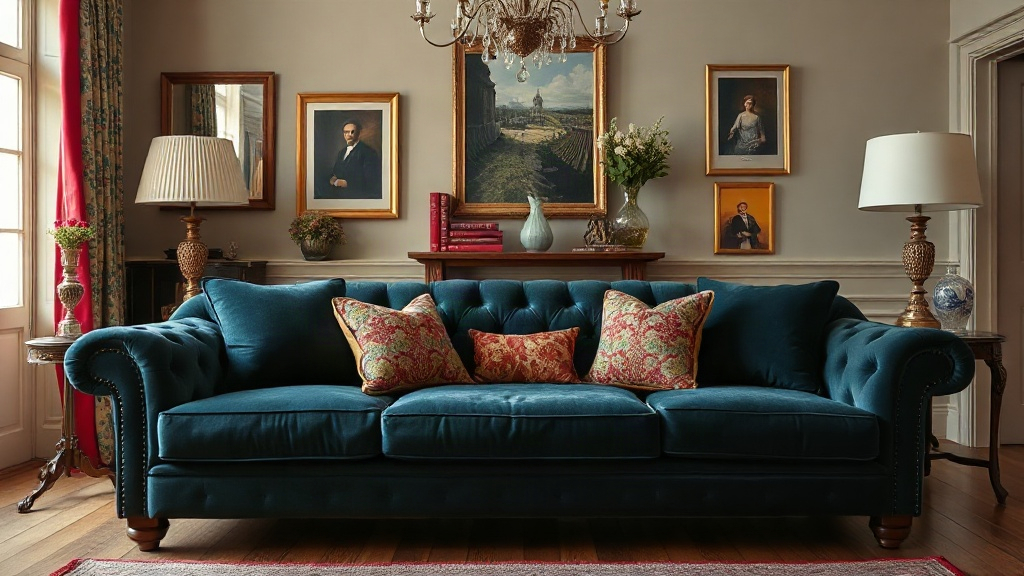
Beyond aesthetics, modern velvet is incredibly forgiving. While historically made from delicate silk, today’s upholstery velvets are typically constructed from hardy cotton blends or advanced polyesters. This means they are highly resistant to snagging—a crucial factor if you have pets with sharp claws—and they hold their shape exceptionally well under daily use.
Colour also plays a massive role in velvet’s enduring popularity. The fabric takes on dye beautifully, resulting in rich, saturated tones. We frequently see deep moss greens, ink navies, and warm ochres performing brilliantly in UK living rooms, offering a strong visual anchor that pairs perfectly with both neutral walls and dramatic, dark paint schemes.
The Signature Cox & Cox Look: Aspiration Meets Design
The Cox & Cox aesthetic is defined by a masterclass in restraint. Their sofas rarely feature overly fussy buttoning or exaggerated curves. Instead, they rely on clean, tailored silhouettes, single-bench seat cushions, and slim arms. This minimalist approach allows the quality of the velvet and the richness of the colour to take centre stage.
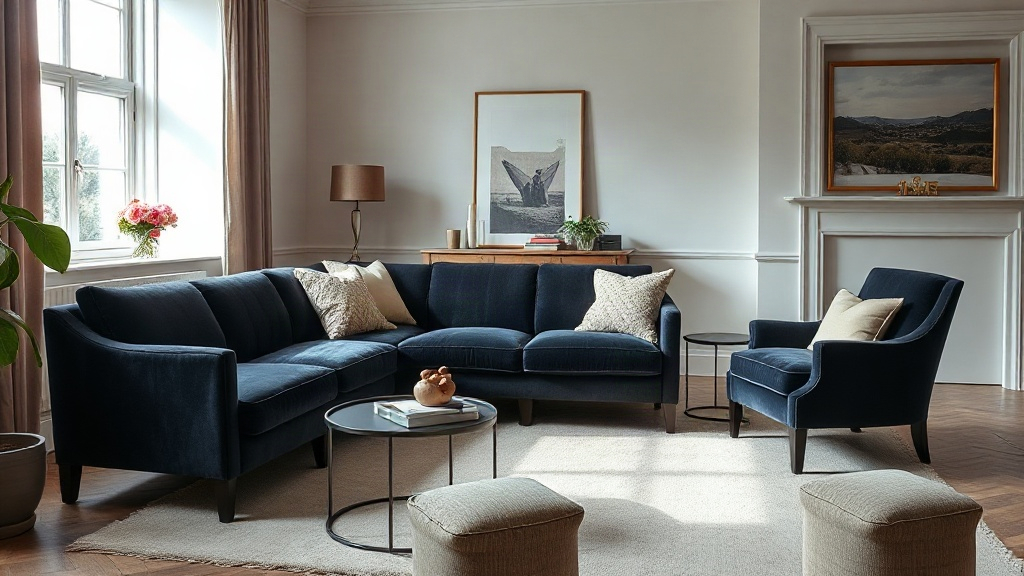
Another hallmark of their design is the leg detailing. You will often spot beautifully turned wooden legs, sometimes finished with antiqued brass castors. It is a subtle nod to traditional English furniture making, yet the overall shape of the sofa remains entirely suited to a contemporary, pared-back interior scheme.
This careful balance is exactly why their pieces are so highly coveted. They look just as appropriate sitting in a high-ceilinged Victorian terrace with ornate cornicing as they do in a newly built, open-plan extension. When we look for affordable dupes, these are the specific design markers—slim arms, single seat cushions, and elegant legs—that we need to hunt for.
Deconstructing the Cox & Cox Velvet Sofa
To truly understand how to find a worthwhile alternative, we first need to look closely at what you are paying for when you invest in a premium brand. It is easy to replicate a shape, but understanding the construction helps you make smarter compromises when shopping on a budget.
The Investment Piece: Price Point and Craftsmanship
A Cox & Cox sofa commands its price tag largely due to the materials used beneath the fabric. You are paying for a solid hardwood frame, typically glued, screwed, and dowelled by hand. This ensures the sofa will not creak or warp over time, providing a solid foundation that can last for decades if cared for properly.

The cushion fillings are another major factor. Premium sofas often use a high-density foam core wrapped in a thick layer of feathers or down. This provides the structured support of foam with the relaxed, squishy comfort of feathers. When shopping for budget alternatives, cushion filling is usually the first area where manufacturers cut costs, often relying entirely on synthetic fibres.
Finally, the velvet itself on a high-end piece is usually a pure cotton or a cotton-rich blend. Cotton velvet has a completely matte finish and a dense, luxurious pile that develops a natural patina over time. It feels incredibly soft to the touch, though it is worth noting that it can be more susceptible to marking and crushing than synthetic alternatives.
Key Design Elements and UK Living Room Suitability
One of the reasons the Cox & Cox design works so well practically is the slim arm profile. In standard UK living rooms, space is often at a premium. A sofa with bulky, rolled arms can eat up valuable floor space without offering any extra seating. Slim arms maximise the internal seating width, allowing a three-seater to fit neatly into a compact bay window.
The single-bench seat cushion is another brilliant design choice. Visually, it creates an unbroken, horizontal line that makes a room feel wider and less cluttered. Practically, it means nobody gets stuck sitting on the uncomfortable crack between two cushions during a film night.
When searching for your affordable alternative, keep these proportions in mind. A bulky frame covered in velvet can quickly look heavy and dated. You want to find pieces that maintain a sense of lightness, sitting slightly raised off the floor on visible legs to allow light to flow underneath.
Dunelm: Accessible Luxury for Every Home
If you are working with a strict budget, Dunelm is arguably one of the strongest contenders on the high street right now. Over the past few years, their upholstery collections have evolved dramatically, offering genuinely stylish silhouettes that look far more expensive than their price tags suggest.
Price Comparison and Material Choices
While a large Cox & Cox sofa might set you back £2,500, you can find incredibly similar styles at Dunelm for between £400 and £700. Ranges like the Beatrice or the Kendall offer that coveted slim-arm, tailored look. The primary difference at this price point lies in the fabric composition; Dunelm predominantly uses 100% polyester velvets.
Polyester velvet used to have a reputation for looking shiny or cheap, but manufacturing has improved vastly. Modern synthetic velvets have a wonderfully matte finish that closely mimics cotton. Furthermore, polyester is incredibly practical. It is highly resistant to stains, easy to spot-clean, and rarely suffers from the crushing or bruising that natural cotton velvet does.
The frames at this price point will typically use engineered woods or MDF alongside softer woods, rather than solid beech or oak. The seat cushions are usually foam-filled. While they might lack the sink-in luxury of a feather wrap, high-resilience foam actually requires far less maintenance, as you will not need to relentlessly plump the cushions to keep them looking neat.
Styling Tips for a Cosy, High-End Feel
The trick to making a Dunelm sofa look like a £2,000 investment is entirely in the styling. Often, budget sofas come with basic, slightly generic wooden or plastic legs. One of the easiest trade secrets is to unscrew these and replace them with solid wood, turned legs purchased online. This small £30 upgrade instantly changes the entire profile of the furniture.
Next, you must address the scatter cushions. Budget sofas frequently come with matching velvet cushions. Remove them immediately. To achieve a high-end look, you need contrast. Layer the sofa with cushions in different textures—think heavy linens, bouclé, or woven wools. This breaks up the solid block of velvet and adds visual interest.
Finally, consider your spatial arrangement. Pushing a sofa flush against the wall instantly makes a room feel like a waiting area. Pull your Dunelm sofa just three or four inches away from the skirting board. This tiny breathing space creates a shadow line behind the piece, giving the illusion of a larger, grander room.
Next: Modern Silhouettes, Practical Solutions
Next sits comfortably in the mid-tier bracket, offering an excellent middle ground for those who have a slightly larger budget but still cannot justify premium brand prices. Their ranges typically span from £700 to £1,200, providing a noticeable step up in build quality and fabric options.
Bridging the Gap: Style vs. Affordability
What Next does exceptionally well is variety. If you admire the Cox & Cox aesthetic, Next’s ‘Gatsby’ or ‘Sherlock’ ranges offer very similar clean lines and button detailing. They also offer a much wider array of fabric choices than entry-level retailers, allowing you to select spill-resistant velvets or denser, matte-finish fabrics.
At this mid-tier price, you also start to see improvements in suspension. Instead of basic webbing, Next often uses serpentine springs in the seat base. This provides a much firmer, more supportive sit and ensures the sofa will retain its shape for much longer than a purely foam-and-webbing construction.
The tailoring on a Next sofa is generally sharper, too. You will notice straighter seams, neater piping, and less puckering around the corners of the cushions. These small manufacturing details contribute significantly to how expensive a piece of furniture looks once it is sitting in your living room.
Layout Ideas for Contemporary UK Spaces
Next is particularly strong when it comes to corner sofas and modular velvet pieces. In many modern UK new-builds or open-plan extensions, a standard two-seater can look a bit lost. A velvet corner sofa is an excellent way to zone a large, open space, creating a dedicated living area without the need to build physical walls.
Because velvet is a visually heavy fabric, a large corner configuration can sometimes dominate a room. To counteract this, pair your Next sofa with visually lightweight furniture. A glass-topped coffee table or a wire-framed side table allows the eye to travel through the furniture, preventing the room from feeling cramped.
Lighting is also crucial when styling a larger velvet piece. Ensure you have varied light sources at different heights. A brass floor lamp positioned at one end of the corner sofa will cast a warm glow over the fabric in the evenings, highlighting the texture of the velvet and creating a cosy, inviting atmosphere.
John Lewis: Quality Alternatives, Thoughtful Design
If you want the closest possible match to a Cox & Cox piece in terms of build quality, John Lewis is your destination. Sitting in the £1,000 to £1,500 bracket, their upholstery is renowned for its longevity, classic styling, and excellent customer guarantees.
Durability and Fabric Options for Busy Households
John Lewis ranges, such as the Hendricks or the Bailey, offer that perfect blend of traditional craftsmanship and modern lines. Their frames are rigorously tested, and they often use the same glued, screwed, and dowelled construction methods as luxury bespoke makers. This is a sofa designed to withstand the rigours of a busy family home for a decade or more.
One of their standout offerings is the Aquaclean velvet fabric option. For households with young children or pets, this is a game-changer. The fabric is treated so that even stubborn stains like ink, wine, or chocolate can be wiped away using just water and a cloth. It provides the luxurious look of velvet without the constant anxiety of accidental spills.
The seat cushions on a John Lewis sofa frequently offer a hybrid filling—a foam core for stability, wrapped in a generous layer of fibre or feathers for that relaxed, high-end look. This gives you the best of both worlds: a sofa that looks invitingly plump but does not require daily maintenance to keep its shape.
Styling Your Velvet Sofa with Accessories
To make your John Lewis sofa look like it belongs in a high-end editorial spread, pay close attention to the immediate accessories. The Cox & Cox look relies heavily on a curated, considered environment. Start with a side table; a solid marble or dark wood piece next to the velvet adds an instant touch of sophistication.
Metals work beautifully against velvet. Incorporate antique brass or brushed bronze accents nearby—perhaps through a reading lamp or picture frames on the wall above. The warmth of the brass picks up on the slight sheen of the velvet, creating a cohesive, professionally designed feel.
Finally, anchor the sofa with a large rug. A common mistake is buying a rug that is too small, which makes the furniture look disconnected. Choose a large, muted rug—perhaps a faded traditional pattern or a textured jute—and ensure the front legs of the sofa sit comfortably on top of it. This ties the whole seating area together.
Verity’s Expert Styling Guide
Finding the right affordable alternative is only half the battle. How you present that sofa in your home will ultimately determine whether it looks like a budget buy or a bespoke investment piece. A few stylist tricks can completely transform the perception of your furniture.
Making Your Budget Velvet Sofa Look Bespoke
The most effective way to upgrade an affordable sofa is by investing in high-quality cushion inserts. Budget sofas often come with cheap, polyester-filled scatter cushions that look stiff and sit awkwardly. Replace the inserts with oversized, feather-filled pads (buy them one size larger than your cushion cover). This gives you that plump, relaxed ‘chop’ that screams luxury.
Your wall colour also plays a massive role. Velvet looks incredible against matte, chalky paint finishes. Consider painting the wall behind your sofa in a rich, complementary shade from brands like Dulux Heritage, Farrow & Ball, or Little Greene. A deep green velvet sofa set against a soft, plaster-pink wall creates an instantly expensive, curated aesthetic.
Drape a heavy, textured throw casually over one arm of the sofa. Avoid anything too thin or synthetic; opt for a chunky wool knit or a heavy linen. This adds a layer of relaxed sophistication, breaking up the solid block of velvet and inviting people to sit down and get comfortable.
Final Considerations for Your UK Home
Before you hit the checkout button on any sofa, you must measure your access points. This is the single most common mistake homeowners make. A beautiful velvet sofa is useless if it cannot fit through your narrow Victorian hallway or maneuver around a tight staircase return. Check the packaged dimensions, not just the assembled size.
Always order fabric swatches before committing. Velvet is highly reactive to light. A swatch that looks perfectly olive green in the bright fluorescent lighting of a showroom might look muddy and dark in a north-facing UK living room on a rainy Tuesday. Pin the swatches to your current sofa and observe them throughout the day.
Ultimately, a well-chosen dupe from the high street can provide years of style and comfort. By understanding the construction, choosing practical fabrics, and applying a few clever styling tricks, you can achieve that aspirational Cox & Cox aesthetic while keeping your renovation budget firmly intact.